

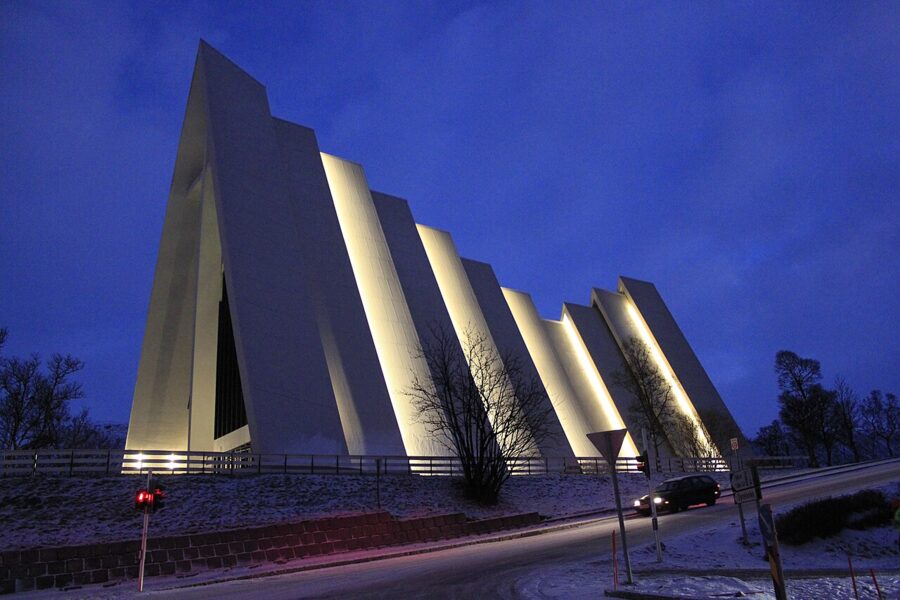
At half past twelve on a clear December day the sky over the Tromsøysund turns the blue of a gas flame, and the Arctic Cathedral on the far shore glows under its floodlights as if it were evening. The sun went below the horizon in late November and will not clear it again until mid-January. Those few hours of blue are the day, and Tromsø is arranged around making the most of them.

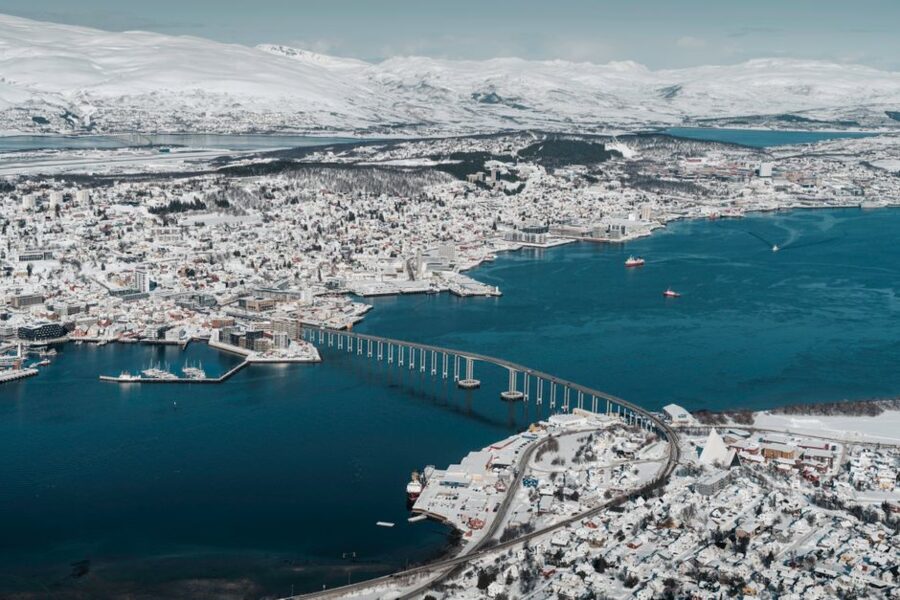
Tromsø is the largest city in Northern Norway, about 350 km north of the Arctic Circle, spread over the island of Tromsøya, the mainland suburb of Tromsdalen across the sound, and the big mountain island of Kvaløya to the west. It is the easiest base in the Norwegian Arctic: several flights a day from Oslo, coastal ships twice a day, buses and express boats out to the fjords and islands, and a compact centre with museums, a cable car and a pair of remarkable churches to fill the short winter days.
Come between late September and early April for snow, dark skies and the aurora; between November and January if you want whales as well; in February and March for the best of both, with deep snow and the light coming back fast. From 20 May to 22 July the sun does not set at all, and the city becomes a base for hiking, kayaking and late drives to white beaches on the outer islands.
There is no railway. You fly, usually via Oslo in about 1 hour 50 minutes, or you arrive on a Hurtigruten or Havila coastal ship, or ride the bus up from Narvik, the nearest station. The airport is about 5 km from the centre, and the Airport Express Bus covers it in about 20 minutes.
Getting there and getting around
Flying in, and the bus from the airport
Tromsø Airport Langnes sits on the west side of Tromsøya. SAS, Norwegian and Widerøe fly in several times a day from Oslo and from other Norwegian cities, there are direct flights from several European cities, and Visit Tromsø’s travel page points to Avinor for the current list. Tromsø is also the jumping-off point for Svalbard, about an hour and a half away with SAS, and it has a daily flight to Leknes in the Lofoten Islands.
The red Airport Express Bus waits outside arrivals and stops at the main hotels in the centre; on the winter 2026/27 timetable the Airport Express costs NOK 125 one way or NOK 200 return, bought online or on board. City buses 24, 26, 40 and 42 also call at the airport for the ordinary city fare, with little room for suitcases. A taxi takes about ten minutes, and the kiosks by the arrivals exit show the price before you confirm.
Buses, the bridge and walking the island
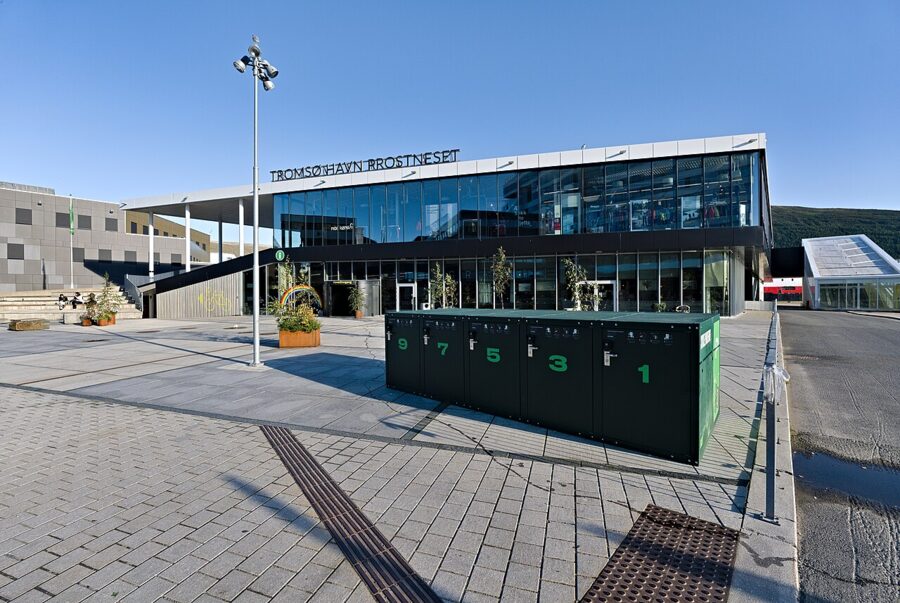
The centre is small enough to walk. City buses are run by Svipper, the county’s public transport brand, and they take no cash: tap a bank card on board or buy in the Svipper app. A single adult ticket inside Tromsø costs NOK 50, or NOK 30 off-peak on weekdays (09:00–14:00 and 17:00–01:00), and a 24-hour ticket NOK 140, according to Svipper’s bus fares.
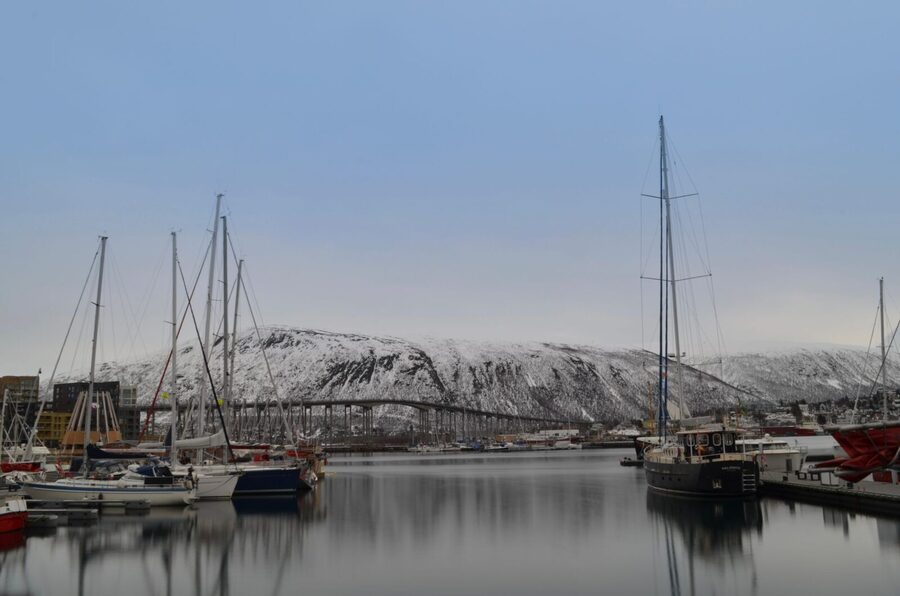
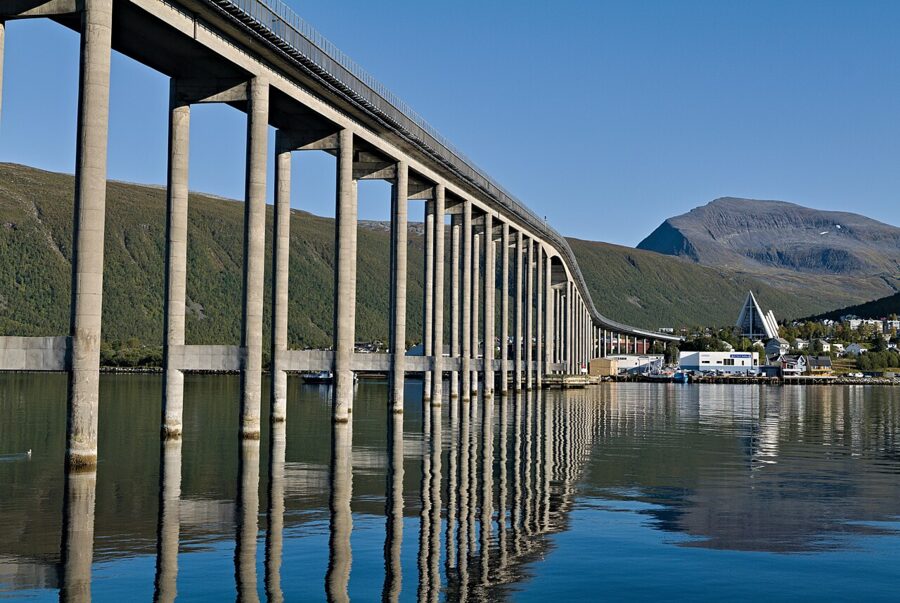
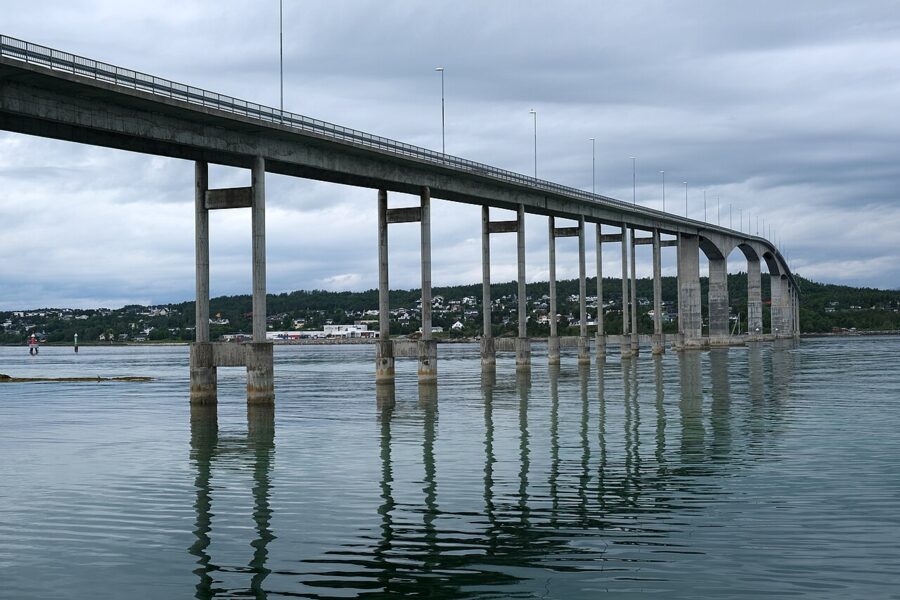
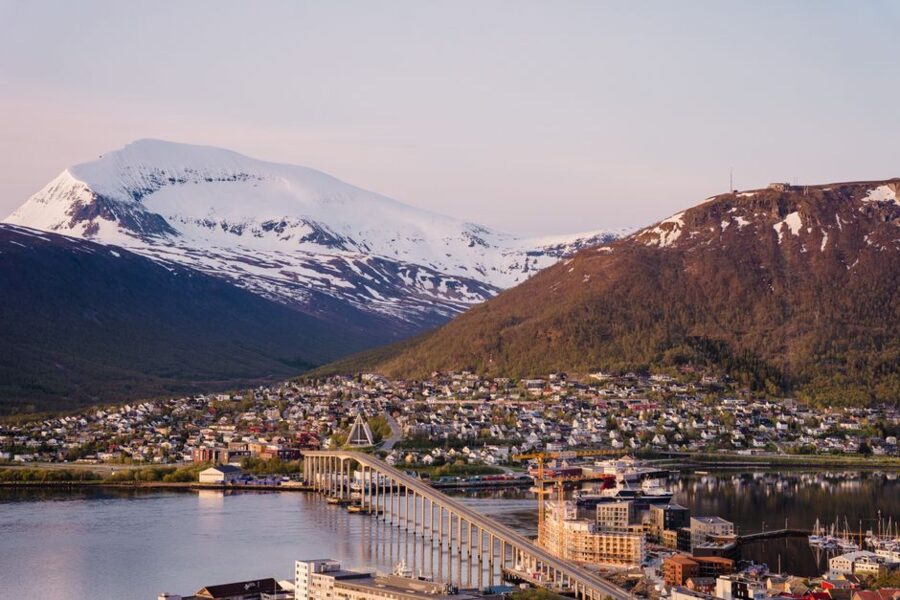
The Tromsø Bridge (Tromsøbrua), a little over a kilometre long, carries the road and a walkway from the island to Tromsdalen. It reopened to all traffic on 18 November 2026 after seven months of repairs that widened the cycle and walking lanes; when it shuts, cars use the Tromsøysund Tunnel under the water. The walk over takes about 20 minutes, and the wind is usually in your face one way or the other.
In winter, wear ice grips. The pavements are cleared and gritted, but packed snow on a slope by the harbour is as slippery as any mountain path, and the sports shops sell grips that pull over ordinary boots.
By sea and by road
Hurtigruten and Havila sail the coast between Bergen and Kirkenes all year and call at Tromsø twice a day, once in each direction. The express boats leave Prostneset for Finnsnes and Harstad to the south and Skjervøy to the north; since February 2026 every seat on the Troms express boats has to be booked for a named departure, so buy the ticket in the app before you walk down. The nearest railway is at Narvik, on the line from Kiruna and Stockholm, and Svipper’s line 100 bus runs from Narvik to Tromsø, with a daily long-distance bus from Bodø and Fauske through Narvik as well.
Hiring a car in winter
Car hire desks are at the airport, and a car is the easiest way to Senja or Lyngen. Winter roads here are narrow, icy and windy, and in Troms tyres need at least 3 mm of tread from 16 October to 30 April. Visit Tromsø’s road conditions page tells inexperienced winter drivers to take the bus or a tour, and I’d agree for a December aurora chase; for a March road trip, hire the car and check the Statens vegvesen traffic map for closures before you leave.
The city: what is worth your time
The Arctic Cathedral (Ishavskatedralen)
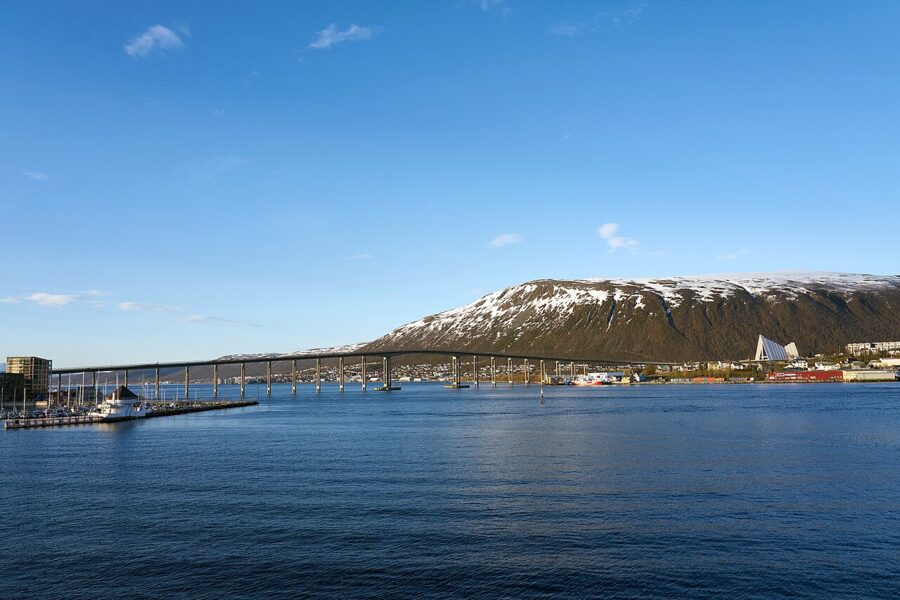

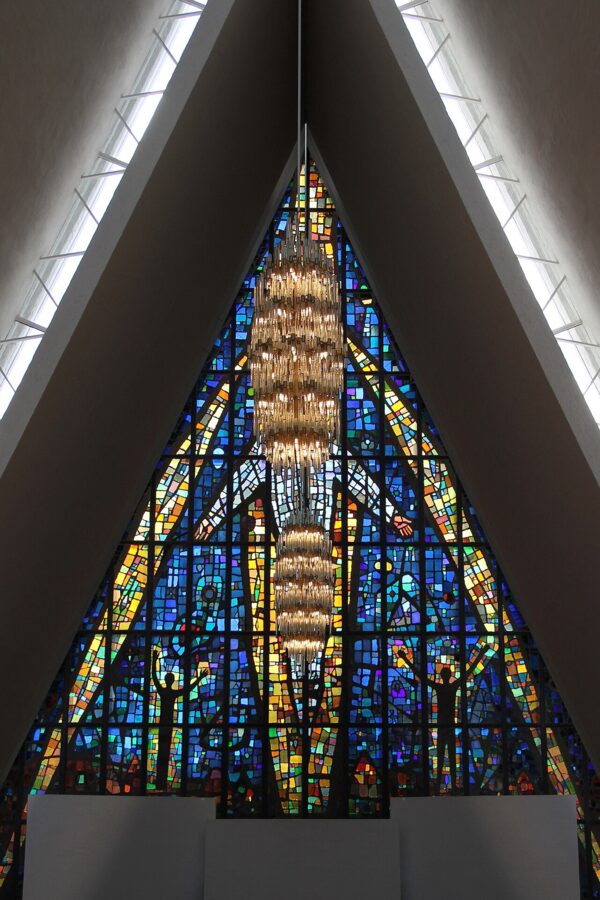
Its proper name is Tromsdalen Church, and it was consecrated on 19 November 1965 to a design by the architect Jan Inge Hovig: eleven aluminium-clad concrete panels on each side of the roof, stepped like ice floes, with a glass front facing the city. The east wall is a single glass mosaic by Victor Sparre, added in 1972, showing three rays of light from the hand of God. The organ, built in 2005, has 2,940 pipes.

Entry is NOK 90, free for children under 12 and for residents of Tromsø, and tickets are bought at the door. The church’s opening hours are 10:00–17:00 for most of the year, Sundays from 13:00 and a closure on Wednesdays between 13:00 and 14:00, stretching to 09:00–18:00 from 1 June to 15 August. It closes to sightseers for weddings and funerals, holds concerts through the year, and bans drones around the building. Buses 24 and 26 stop at Tromsdalen kirke, or you walk over the bridge.
Fjellheisen and Storsteinen
The cable car starts from Solliveien in Tromsdalen, about 15 minutes’ walk beyond the cathedral, and climbs in four minutes to Storsteinen, a shelf 421 metres above the sound. Gondolas leave on the hour and the half hour from 09:00 to midnight, with extra trips when the queue is long, and the Fjellstua café at the top stays open until 23:30. Fjellheisen charges NOK 645 return or NOK 415 one way for an adult, and NOK 310 return for a child aged 3 to 15.
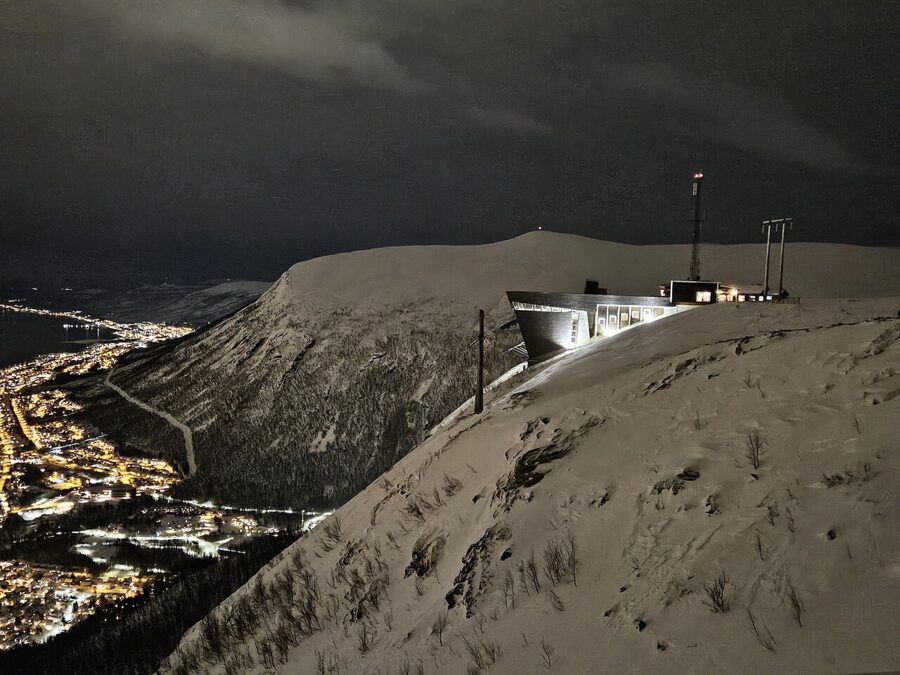

The station is being rebuilt, but the cable car stays open. During the work there is no parking at the lower station and no wheelchair access; drivers use the temporary free car park at Solstrandvegen 30, about five minutes’ walk away. In winter 2026/27 the ticket includes a shuttle bus from Scandic Ishavshotel on the harbour, running from 09:00, but the last one back leaves the lower station at 22:15, well before the last gondola down.
I’d go up in the last hour of the blue light and stay into the dark. On a clear evening the aurora can appear right over the city, and the northern lights guide covers the forecasts, the darker spots and the chase tours that leave Tromsø every night of the season.
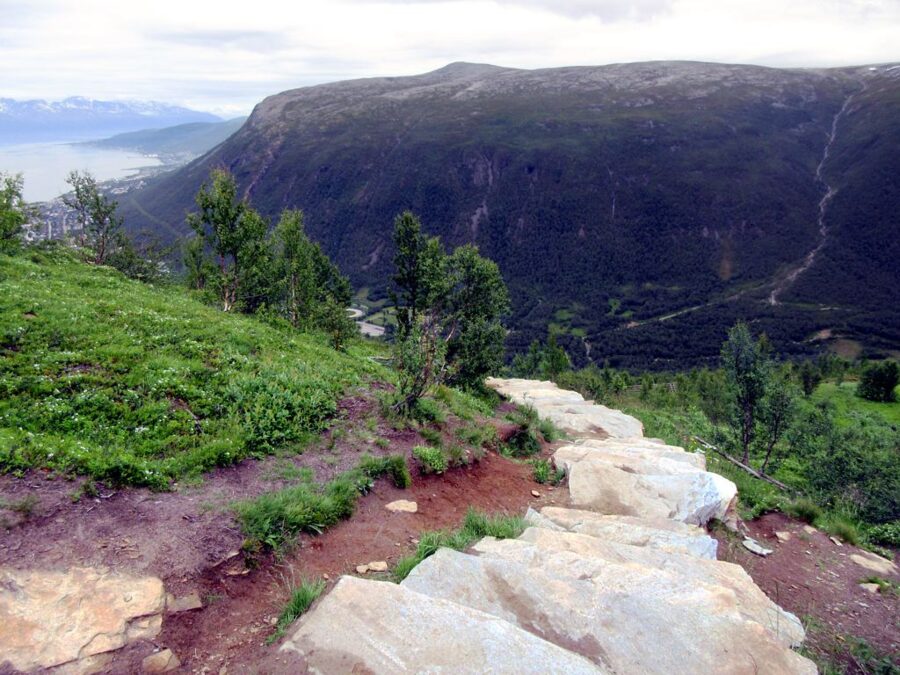

The Sherpa stairs (Sherpatrappa), a stone staircase built by Nepalese Sherpas, climb the same mountain beside the cable car. Visit Tromsø’s winter hiking advice asks people to keep off them in winter unless they have experience and equipment, because the steps are iced and parts lie in avalanche terrain. In summer they make a fine climb, and the one-way ticket brings you down.
Polaria and the museums
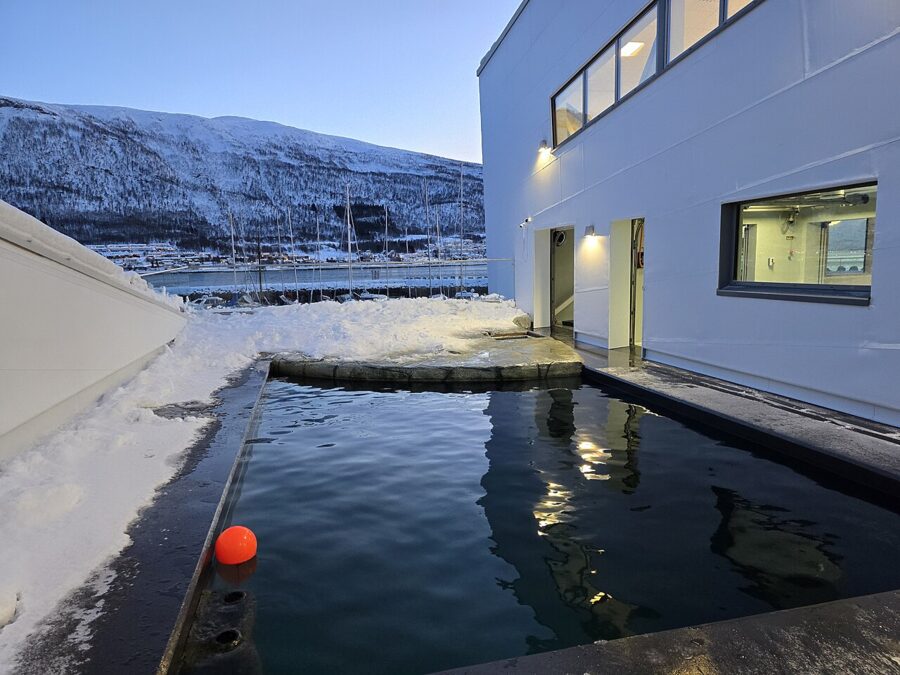

Polaria is the city’s Arctic aquarium, and its bearded seals are the reason to go: they are trained and fed at 10:30, 12:30 and 15:30, and the tank has a tunnel you can stand under. Entry costs NOK 395 for an adult or NOK 925 for a family, the doors open 10:00–17:00 every day, and the panoramic cinema shows short films on the aurora and Svalbard between the feeds. Polaria’s practical page lists the hours, and buses 33, 34, 40 and 42 stop outside.
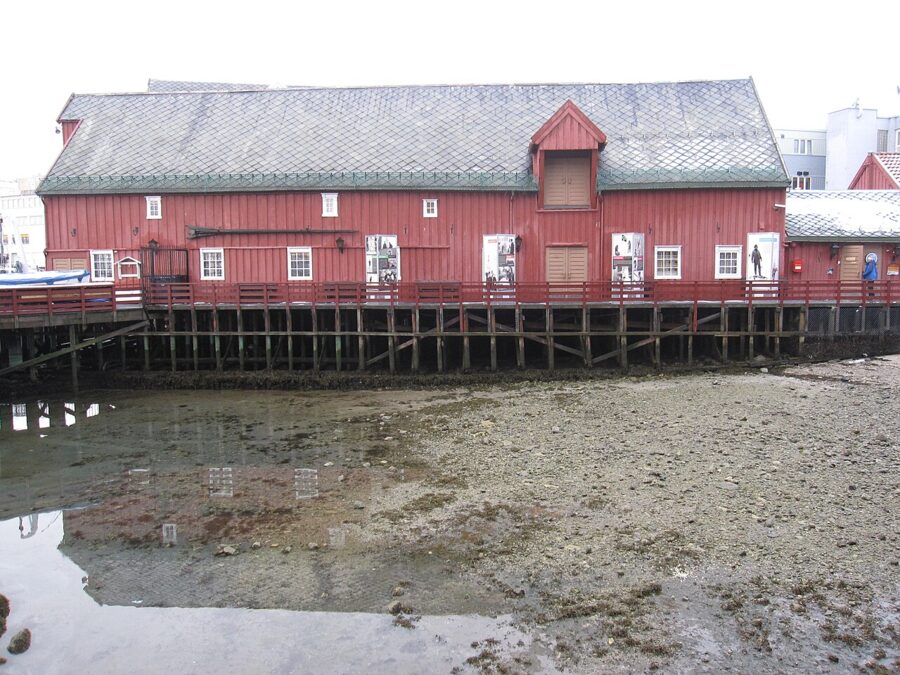

The Polar Museum on Søndre Tollbodgate is the one I would not skip. It tells the story of the sealers, trappers and polar expeditions that made Tromsø the gateway to the Arctic, Nansen and Amundsen among them; Amundsen flew out of Tromsø in 1928 and never came back. The Polar Museum opens 10:00–18:00 every day and charges NOK 130.
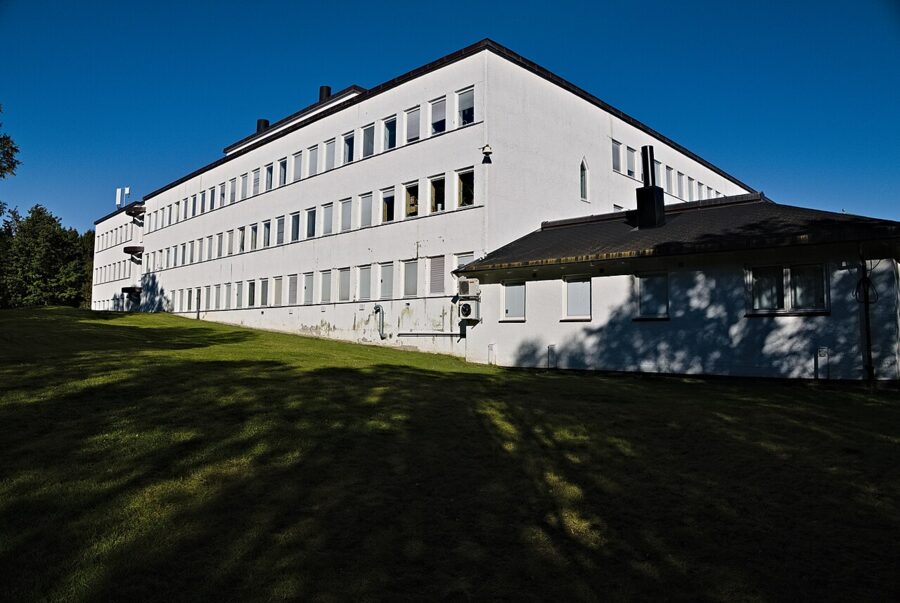
The Arctic University Museum of Norway, still called Tromsø Museum by most people, is 2.5 km south of the centre at Lars Thørings veg 10. Its Sami exhibitions are the best introduction in the city to the people who herded reindeer here long before Tromsø existed, and from September to May a guided tour of them runs on Fridays at 13:00. The university museum charges NOK 130, nothing for under-18s, and in winter opens 10:00–16:30 on weekdays and 11:00–16:00 at weekends.
If you plan to do most of these, price the Tromsø Pass against the single tickets. The Classic version covers the cable car, both university museums, Polaria, the science centre and the Arctic Cathedral, and it is sold only at the tourist information offices.
The harbour, Storgata and the old town
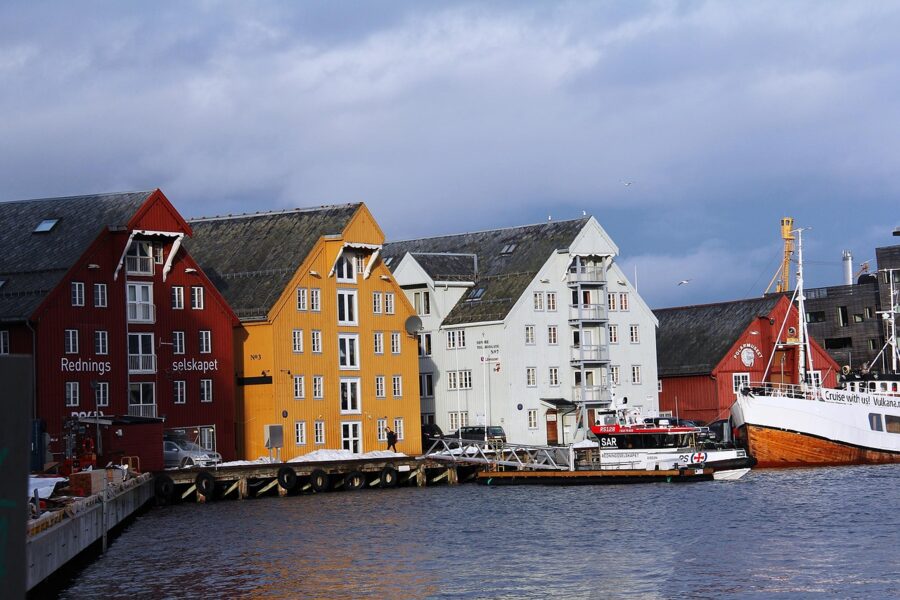
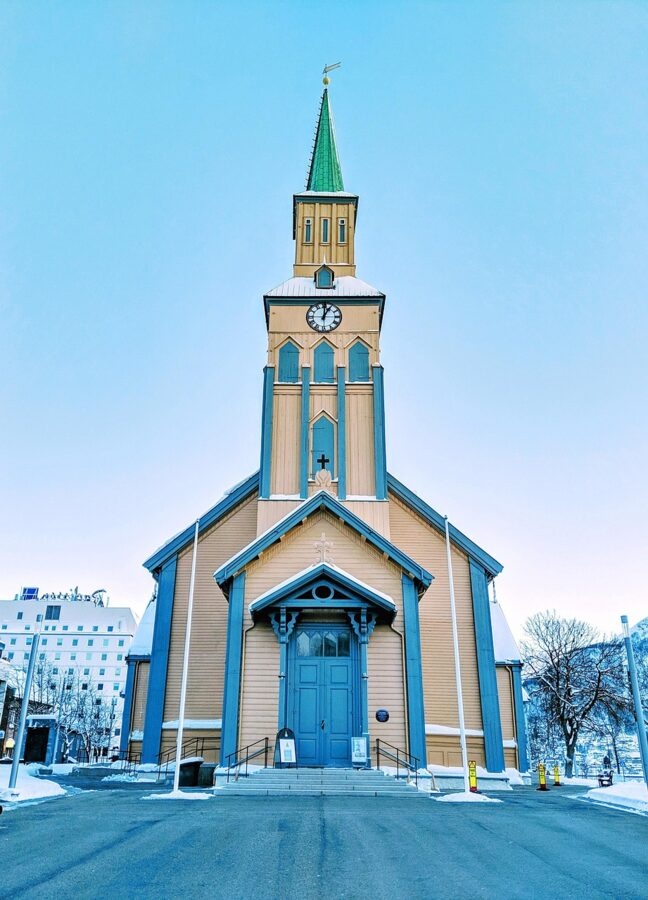
Storgata runs the length of the centre, and the best of old Tromsø lies within a few streets of it. The Domkirke, the town’s cathedral, is a yellow wooden church of 1861 by Christian Heinrich Grosch, standing in its own small park. North along the water is Skansen, the oldest part of the town; at the southern end, towards Polaria, the university museum keeps MS Polstjerna, the best-preserved sealing ship in Norway, which opens for visits in summer.
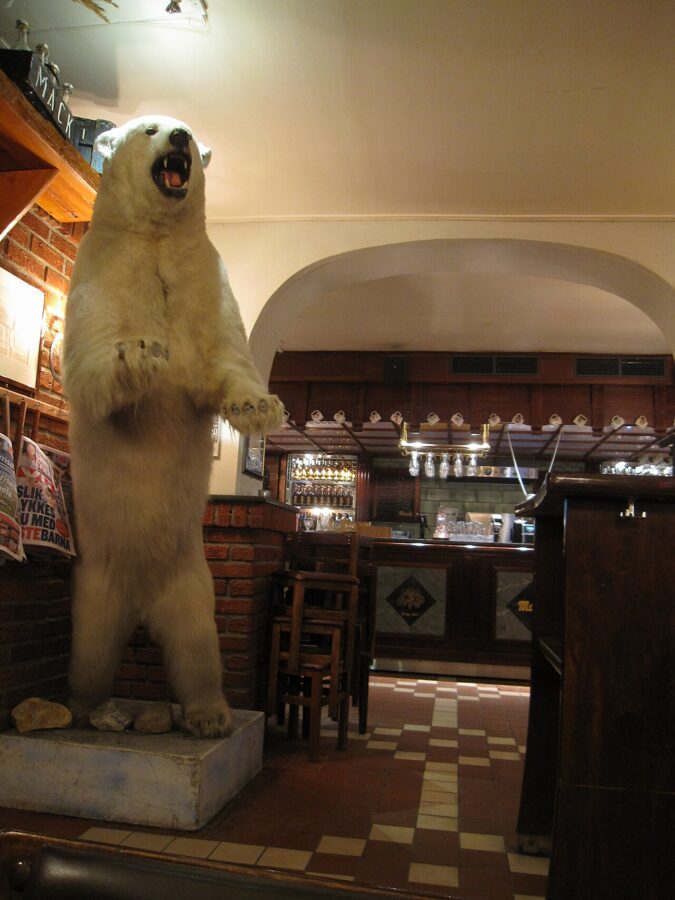
Ølhallen, the Mack brewery’s pub on Storgata, has poured beer since 1928 and now has 72 taps of Mack and other Norwegian brewers. It opens at noon from Monday to Saturday and at 13:00 on Sunday. The brewing itself moved out of town to Nordkjosbotn in 2012, but the hall, with its stuffed polar bear by the bar, is still where Tromsø meets.
Prestvannet and Telegrafbukta
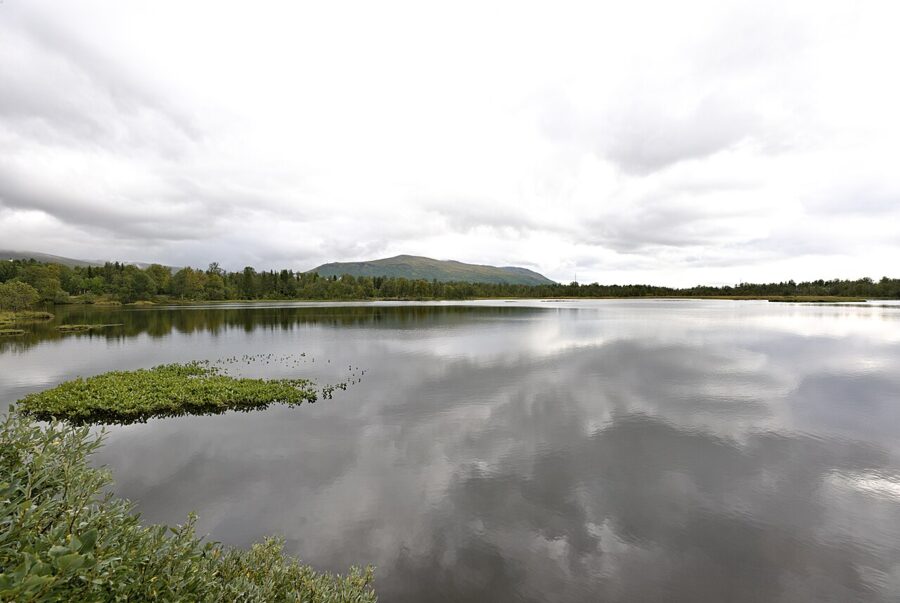
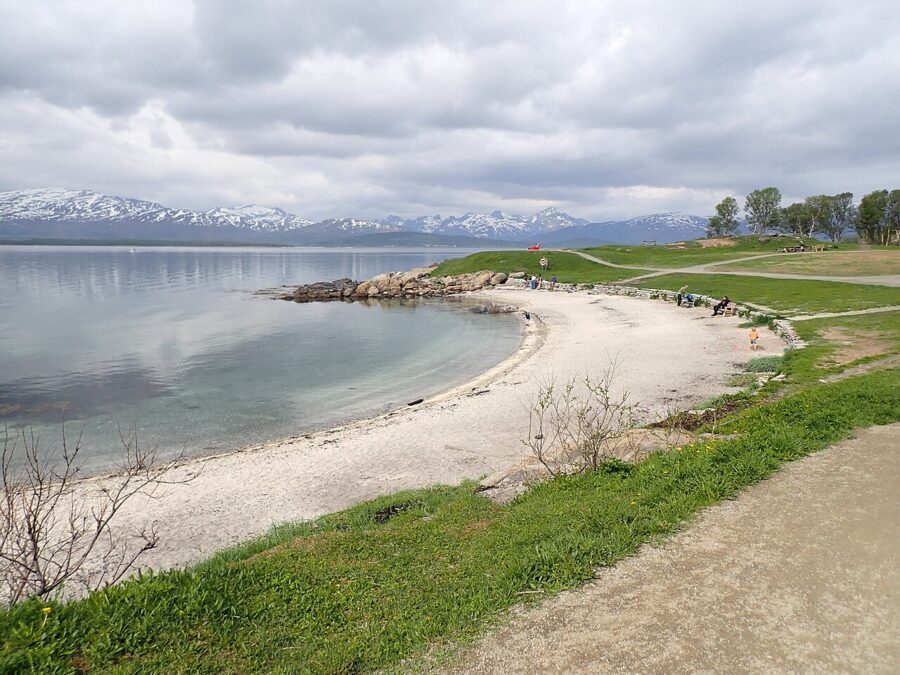
Two quiet places on the island are worth the bus ride. Prestvannet, a small lake on the high ground in the middle of Tromsøya, is the city’s easiest dark spot for the aurora, covered in detail in the northern lights guide. Telegrafbukta, the beach on the southern tip, is where Tromsø goes for a walk on a winter afternoon and for barbecues under the midnight sun; bus 33 stops there, and it is 300 metres from the university museum.

The seasons, month by month
In Tromsø the calendar decides what you can do more than the weather does. This is the pattern for an ordinary year:
| When | The light | What it is good for |
|---|---|---|
| Late August–October | Dark nights return; autumn colour in September | The first aurora, hiking before the snow, fewer people |
| November–mid-January | Polar night from about 27 November to 15 January; a few hours of blue twilight around midday | Aurora, whale watching, the Christmas city; short days for driving |
| Late January–March | The sun is back; days lengthen by several minutes a day | Dog sledding, reindeer, skiing, the film festival, Sami Week, the aurora |
| April | Long days, deep snow in the mountains | Ski touring; the aurora season ends early in the month |
| 20 May–22 July | Midnight sun | Hiking, kayaking, beaches, the summer bus to Sommarøy |
| Late July–August | The nights start to dim | Hiking, island drives, berry picking |
The polar night
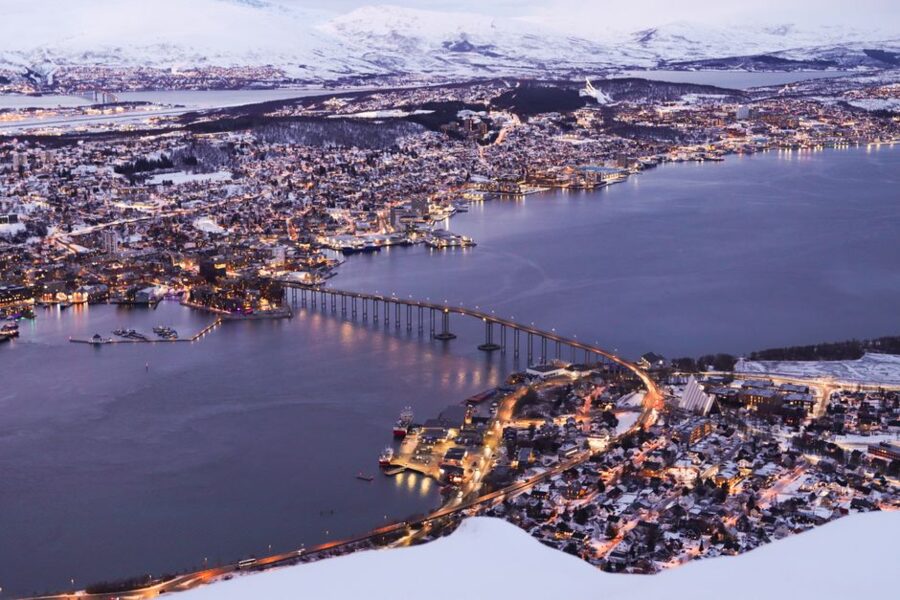
For about seven weeks the sun stays below the horizon, but it is not black all day. Around midday there are a few hours of twilight in blue, pink and violet, and the snow makes it brighter than it sounds. Plan the day around those hours: the cable car, the bridge or a drive out in the light, then the museums, a long lunch and the aurora at night.
For most people the aurora is the reason to come in these months, and Tromsø sits under the auroral oval; the forecasts, the tours and the places to stand are all in the northern lights guide. The film festival, Tromsø International Film Festival, fills the cinemas in the second half of January (18–24 January in 2027).
The returning light
The sun first lifts above the horizon around 15 January, but the mountains hide it from the streets for another week. Tromsø’s official sun day is 21 January, when people climb the steps of the Domkirke to see the first rays and the bakeries sell sun buns (solboller). After that the days lengthen fast, and by the March equinox Tromsø has as much daylight as Rome, with the snow still deep on the hills.
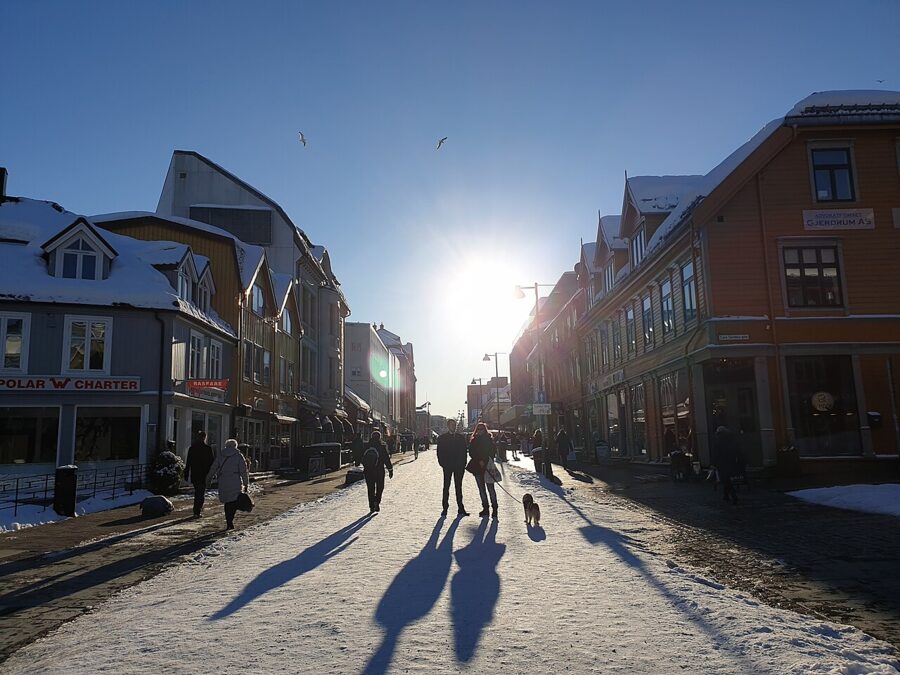

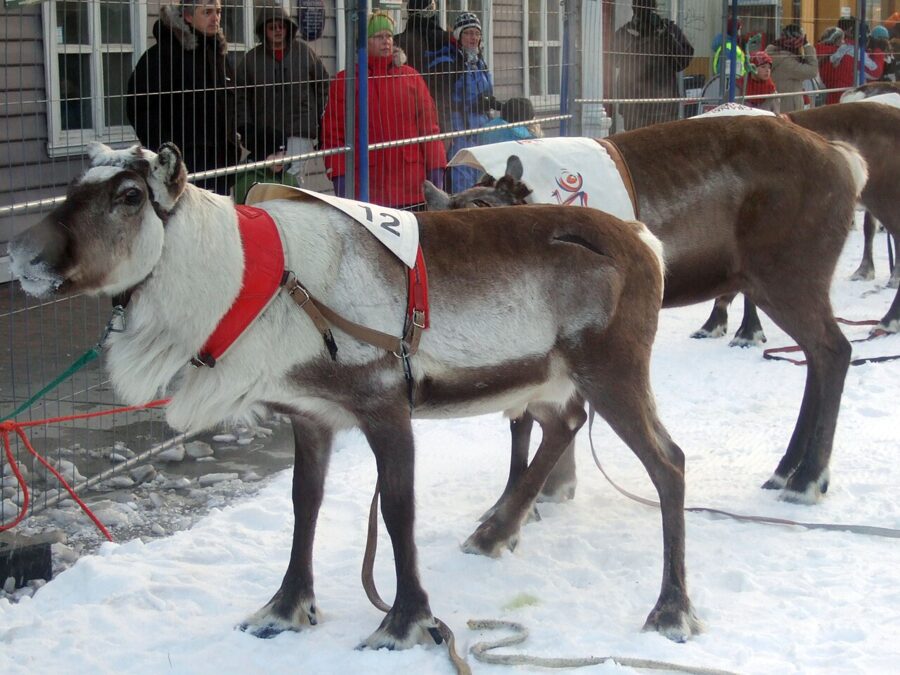
February is the month for Sami culture in the city. Sami Week (Samisk uke) runs around the Sami National Day on 6 February, with a winter market on Stortorget, and it ends with the Norwegian reindeer racing championship in the city centre, on Sunday 7 February in 2027. The music festival Nordlysfestivalen follows a few days later, from 11 to 20 February 2027.

The midnight sun
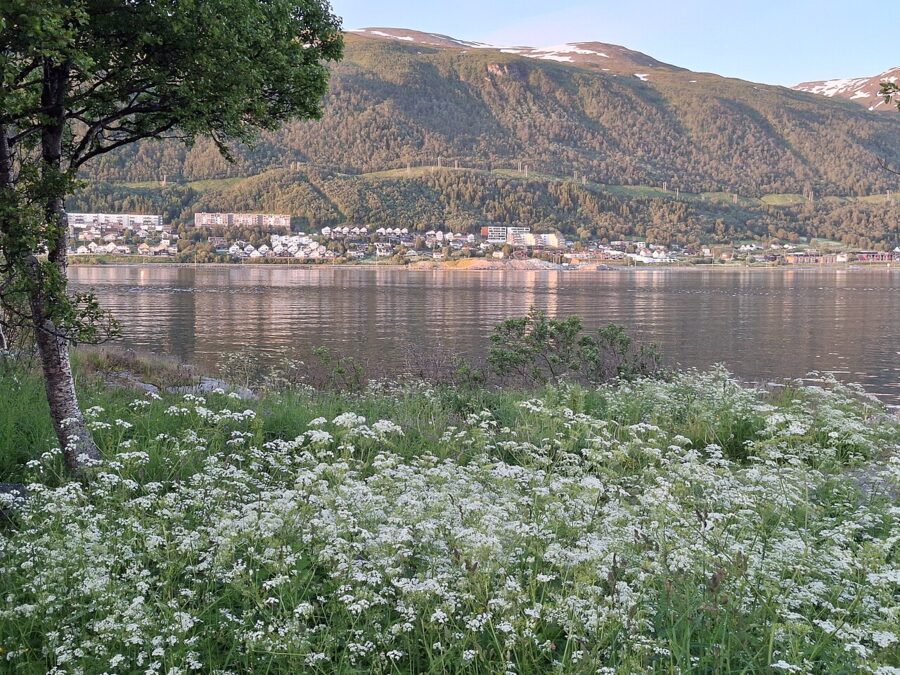
From 20 May to 22 July the whole disc of the sun stays above the horizon around the clock. The city stays up: people hike after dinner, eat outside on the quays and drive to the beaches on Kvaløya at midnight. The air is cool even on a sunny night, so carry a warm layer, and an eye mask if you sleep badly in daylight.
Trips out of Tromsø
Kvaløya and Sommarøy
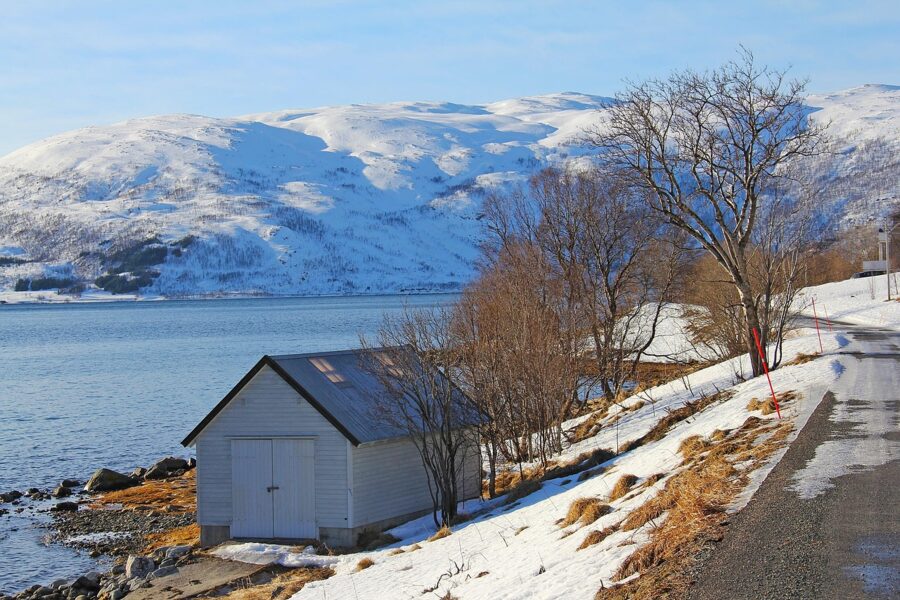
Kvaløya is the big island across the Sandnessund Bridge from the airport, and it is where Tromsø goes for mountains and beaches. Its roads run up long fjords to small villages: Ersfjordbotn, at the head of a steep fjord about half an hour from the centre, and Grøtfjord, with a white sand beach about 45 minutes out. Both are quieter than Sommarøy and better places to stop for an hour.
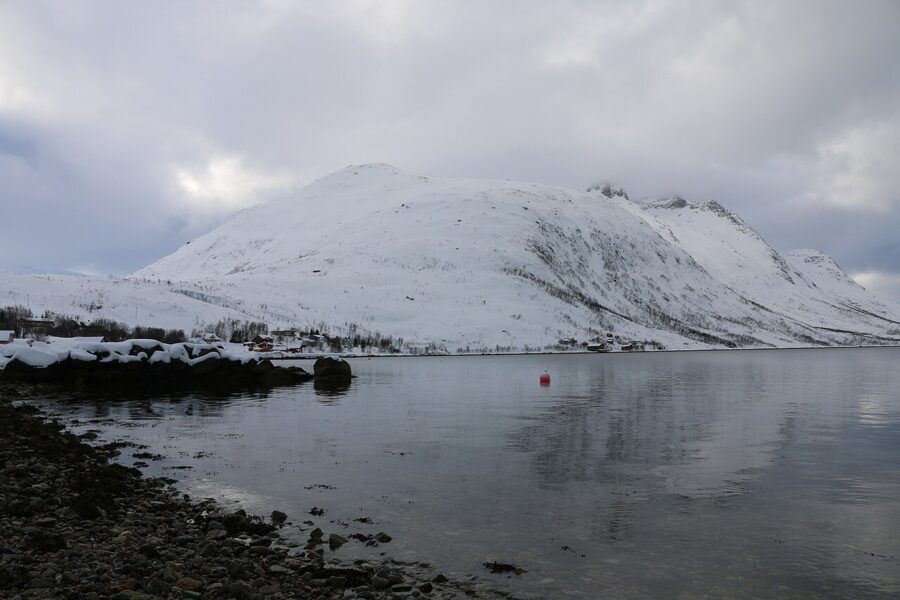

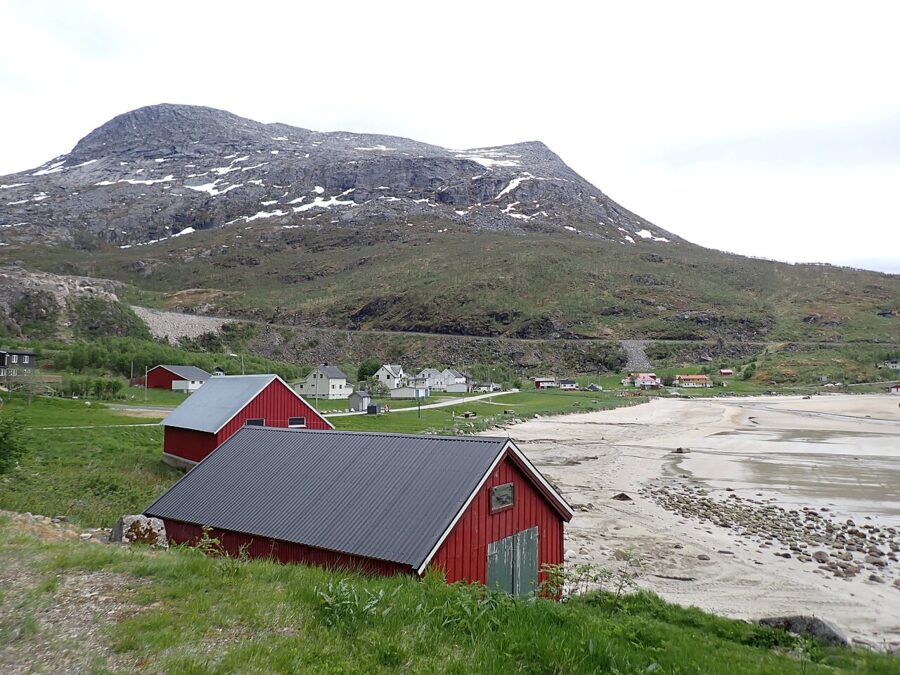

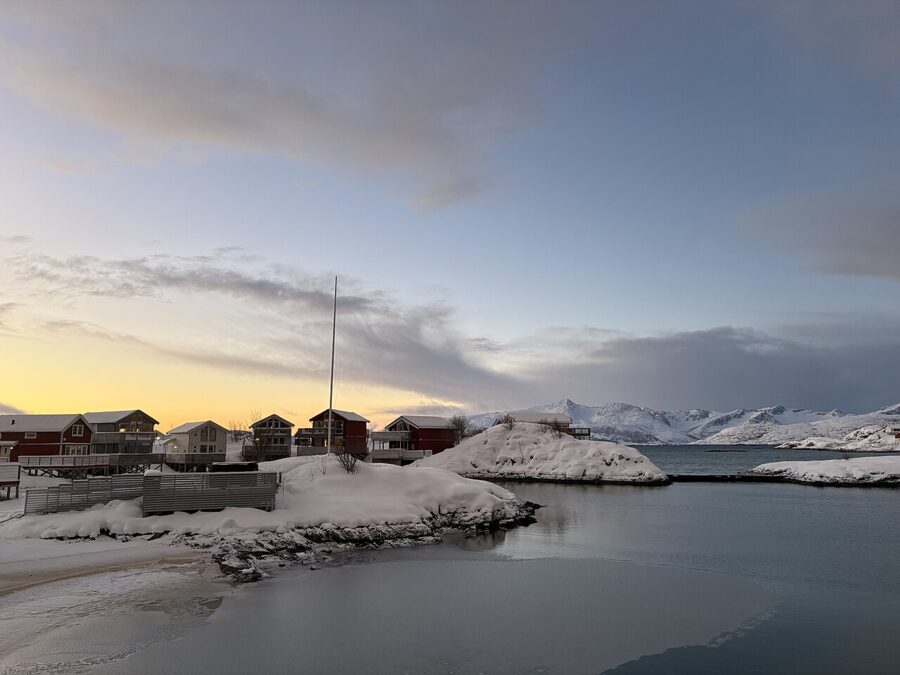
Sommarøy is the famous one: a fishing village on a pair of low islands off the far side of Kvaløya, with white sand, turquoise water and red sea cabins. It is about an hour’s drive along road 862 and still worth it; Sommarøy Arctic Hotel runs kayaking and boat trips in summer and sea safaris in winter, and Hekkingen, one of the oldest lighthouses in Northern Norway, is 15 minutes away by boat. Svipper’s route 420 bus runs from Tromsø via Hella and Brensholmen to Sommarøy on a timetable that changes with the season, and from June to August the Arctic Route summer bus adds a direct service for NOK 290 one way.

Kvaløya is reindeer grazing land in summer, and the herds walk the roads and even shelter in tunnels on hot days; slow down and give them room.
Lyngen
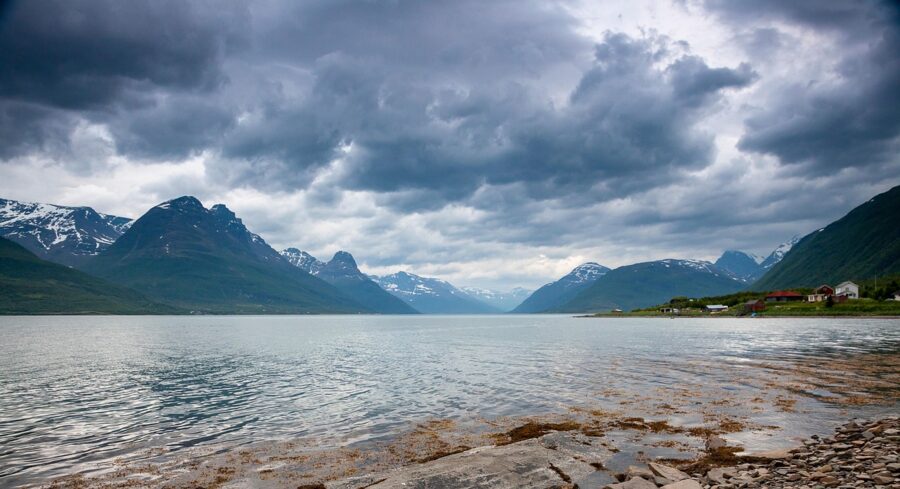
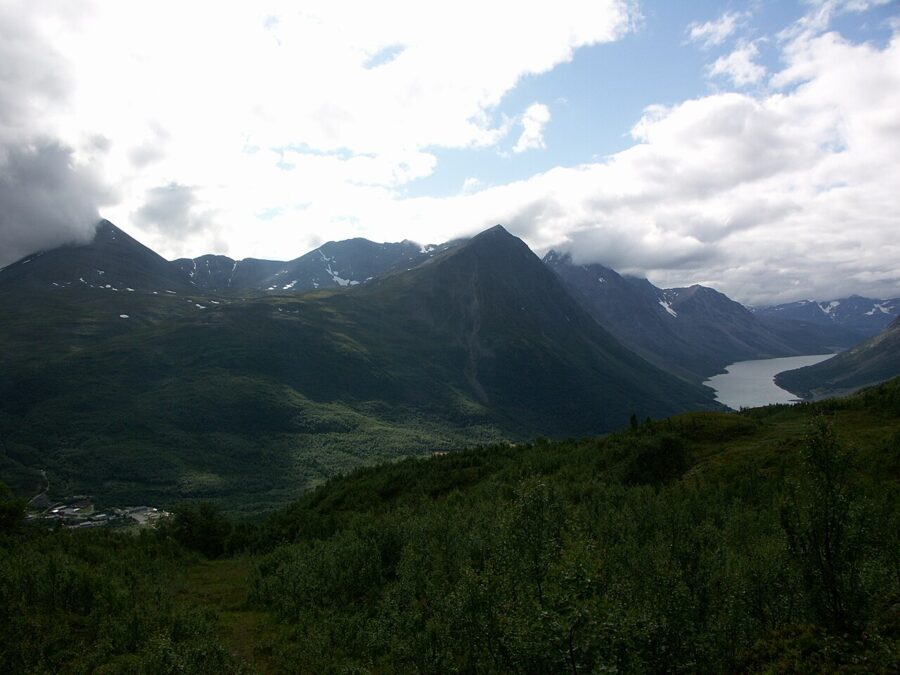
The Lyngen Alps rise straight out of the sea east of Tromsø, a peninsula of glaciers and peaks topped by Jiehkkevárri at 1,833 metres. Drive road 91 to Breivikeidet, about an hour from the city, and take the ferry across the Ullsfjord to Svensby; the crossing runs roughly every hour from early morning to late evening. From Svensby the road continues to Lyngseidet, where a second ferry crosses the Lyngenfjord to Olderdalen and the E6. Both crossings are on Svipper’s ferry timetables.
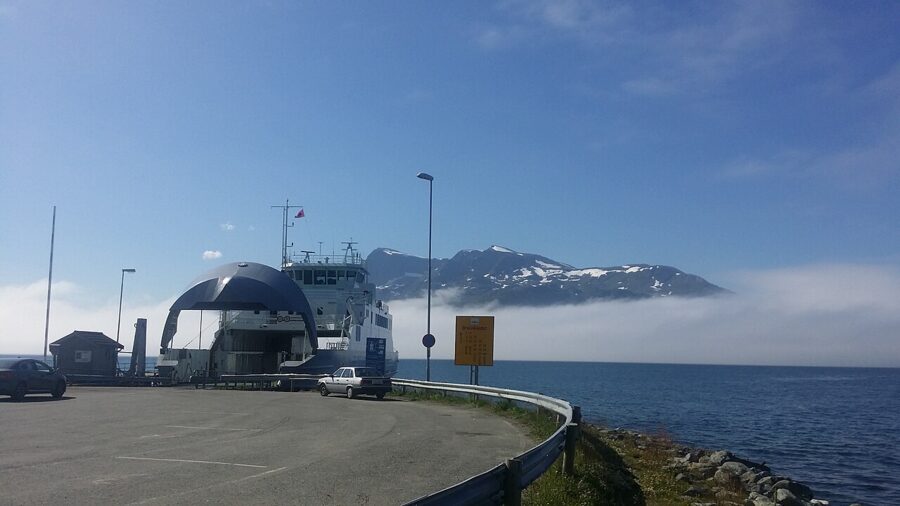

Lyngen rewards a night or two more than a day trip. In winter the mountains are avalanche country and belong to guided ski tourers, and the popular summer walk to Blåisvatnet, the blue glacier lake, is for experienced winter hikers only once the snow comes. If you want to stay, the glass igloos at Lyngen North on the far shore of the Lyngenfjord are covered in the glamping guide.
Senja
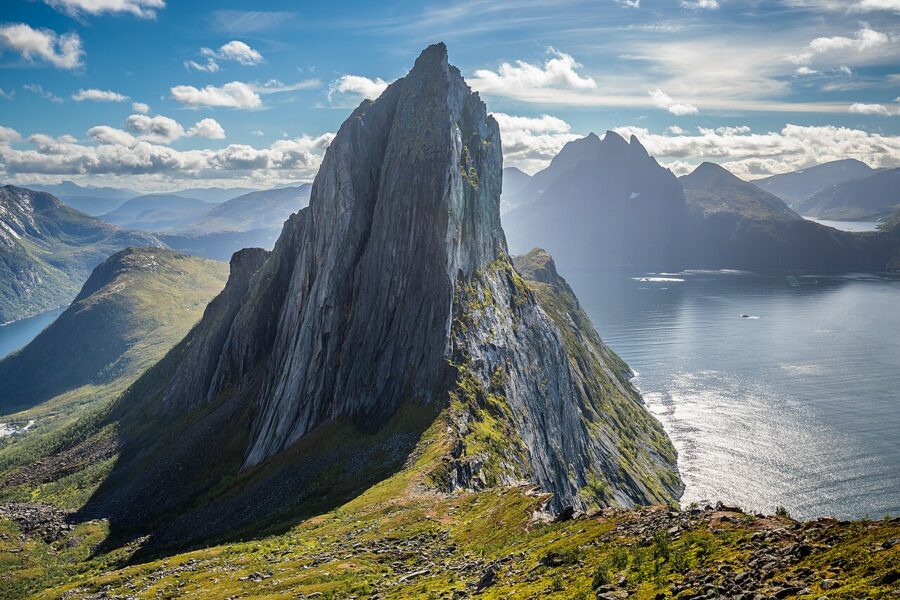
Senja, Norway’s second largest island, has the outer-coast drama of Lofoten with a fraction of the traffic, and it is close enough to Tromsø for a long day, though two nights suit it better. There are two ways in by car. The short one crosses Kvaløya to Brensholmen and takes the car ferry to Botnhamn on Senja’s northern tip, a 45-minute crossing with several sailings a day all year and extra ones from May to September. The long one runs south by the E8 and E6 to Finnsnes and over the Gisund Bridge, about two and a half hours from the city.
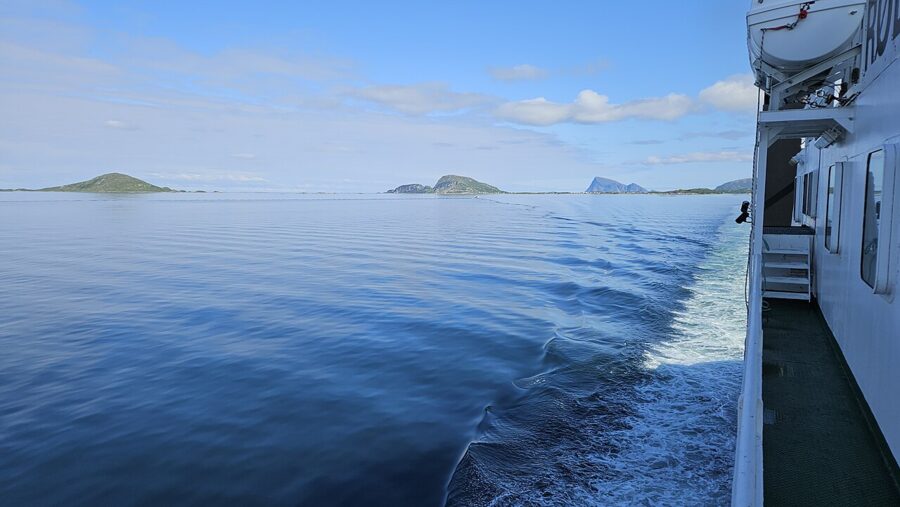

Without a car, the express boat from Prostneset reaches Finnsnes in about 1 hour 20 minutes, with at least a morning and an afternoon departure on weekdays, and buses go on to Senja from the terminal there; the boat times are on Svipper’s express boat timetables. From 15 December to 31 March the Arctic Route Senja bus runs daily from Tromsø through Finnsnes to Skrolsvik, Torsken and Mefjordvær, from NOK 750.


Whale watching
Orcas and humpback whales come into the fjords of Northern Norway in winter to feed on herring, and the season usually runs from early November to the end of January. They follow the fish, so the feeding grounds move: Visit Tromsø’s whale page names the fjords around Skjervøy and Kvænangen, north of Tromsø, for recent winters, and in the 2026/27 season most of the herring, and the whales with it, are in Altafjorden further north-east, with a few still seen on the eastern side of Kvænangen.
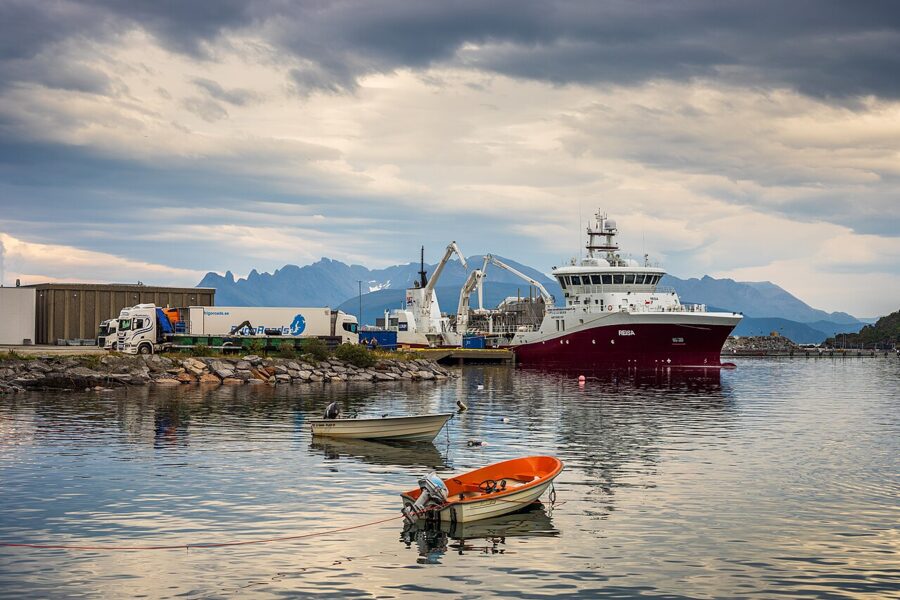

That makes whale watching from Tromsø a full day. Brim Explorer’s whale trips leave Tromsø by boat in the morning and return 9–10 hours later for NOK 1,990, or pair a 05:30 coach to Altafjord with a hybrid-electric boat for NOK 2,790 and a 13-and-a-half-hour day. The cheaper and slower alternative is to make your own way to Skjervøy and join a shorter trip from there. No operator can promise whales, and Visit Tromsø discourages swimming or snorkelling with them.
Dog sledding and reindeer
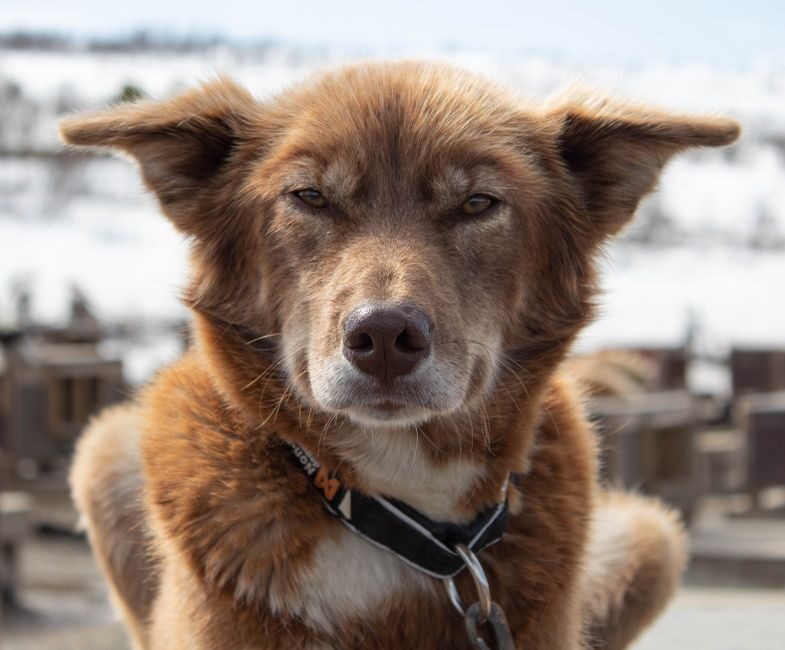
Tromsø Villmarkssenter on Kvaløya keeps more than 300 Alaskan huskies, and its husky café is open to anyone who just wants to meet them. Its self-drive dog sledding costs NOK 3,390 and puts two people in a sled for about 45 minutes, one driving and one riding, with transport from the city of 25–35 minutes each way, a warm lunch of bidos reindeer stew in a turf hut and thermal suits included; the whole trip takes about four and a quarter hours.
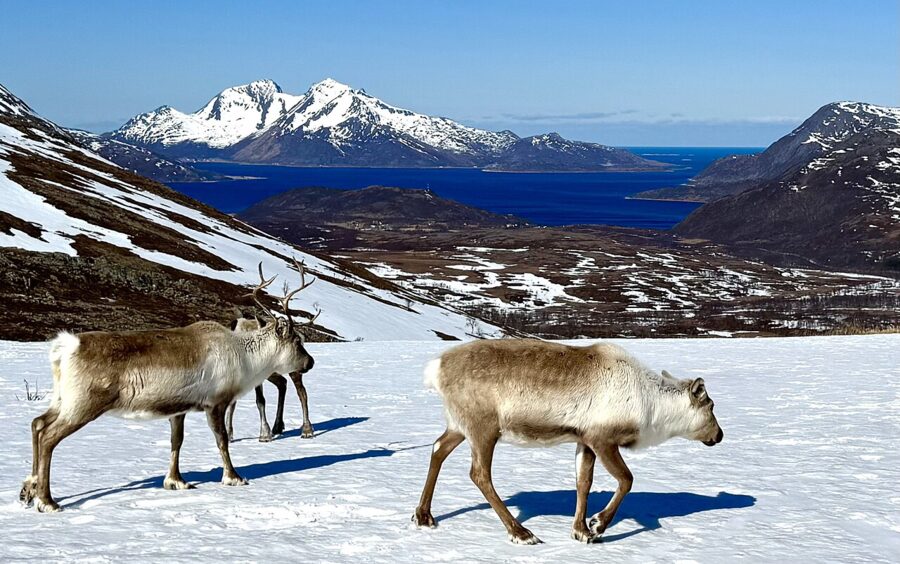
For reindeer, go to the people who herd them. Tromsø Arctic Reindeer is a Sami family business with a camp about 30 minutes from the city, open from 31 October 2026 to 4 April 2027; the longer day visit includes 25–30 minutes of reindeer sledding, feeding the herd and a meal in a gamme, the Sami turf hut, and costs from NOK 2,090.
Where to stay and eat, and what it costs
Where to stay
For a first visit, sleep in the centre of Tromsøya: everything is walkable, the Airport Express stops at the door, and the aurora tours pick up in town. Clarion Hotel The Edge, a glass block on the harbour, Scandic Ishavshotel on the quay, where the cable car shuttle starts, and Thon Hotel Polar all sit within a few minutes of Storgata, and Smarthotel Tromsø is the cheaper central choice. Rooms go fastest from December to March and around the film festival, so book well ahead.
Tromsdalen, across the bridge, has apartments and guesthouses within walking distance of the cable car and the Arctic Cathedral.
Out of town, Sommarøy Arctic Hotel puts you on the beaches of the outer coast, and Yggdrasiltunet on Kvaløya is a farm hotel with a café, saunas and walks from the door.
Eating and drinking
Tromsø eats well, and the menus run on fish, king crab, reindeer and cloudberries. Mathallen cooks with Arctic produce from named local farms and fishermen; its lunch menu runs from 11:00 to 15:00, with its own gravlaks at NOK 155. Fiskekompaniet on the harbour is the place for a seafood dinner, and Bardus Bistro serves its plates and its cocktails in a building of 1868 that started as a bakery and later became the first cinema in Troms.

For a long day trip, buy lunch at a supermarket in town: cafés on Kvaløya and Senja are few and often seasonal.
What a few days cost on the ground
| Item | Price (adult, 2026/27) |
|---|---|
| City bus, single ticket | NOK 50 (NOK 30 off-peak) |
| City bus, 24 hours | NOK 140 |
| Airport Express Bus | NOK 125 one way, NOK 200 return |
| Fjellheisen cable car | NOK 645 return, NOK 415 one way |
| Arctic Cathedral | NOK 90 |
| Polaria | NOK 395 |
| Polar Museum or the university museum | NOK 130 each |
| Whale watching from Tromsø, full day | NOK 1,990 |
| Reindeer sledding with a Sami family | from NOK 2,090 |
| Self-drive dog sledding | NOK 3,390 |
A city day with the cable car, a museum, Polaria and a bus ticket comes to around NOK 1,300; add a whale day and a reindeer day and three days come close to NOK 5,500 a head before beds and meals. The aurora from a dark spot on the island costs a bus fare.
The road west
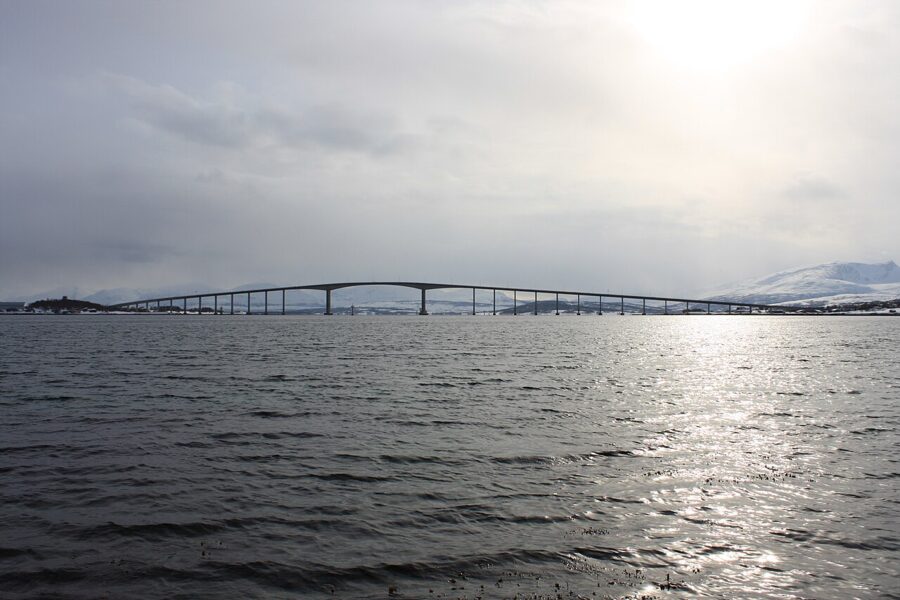
On the last afternoon, take the road out over the Sandnessund Bridge and follow it along Kvaløya towards Ersfjordbotn as the blue drains out of the sky. The fjord walls close in, the city glow drops behind the ridge, and within half an hour you are somewhere dark enough for the aurora to show without a guide.

Drive back the same way and walk down to the quay at Samuel Arnesens gate. Across the sound the Arctic Cathedral will be where you left it: lit, white, and waiting for the hour of blue at half past twelve tomorrow.