
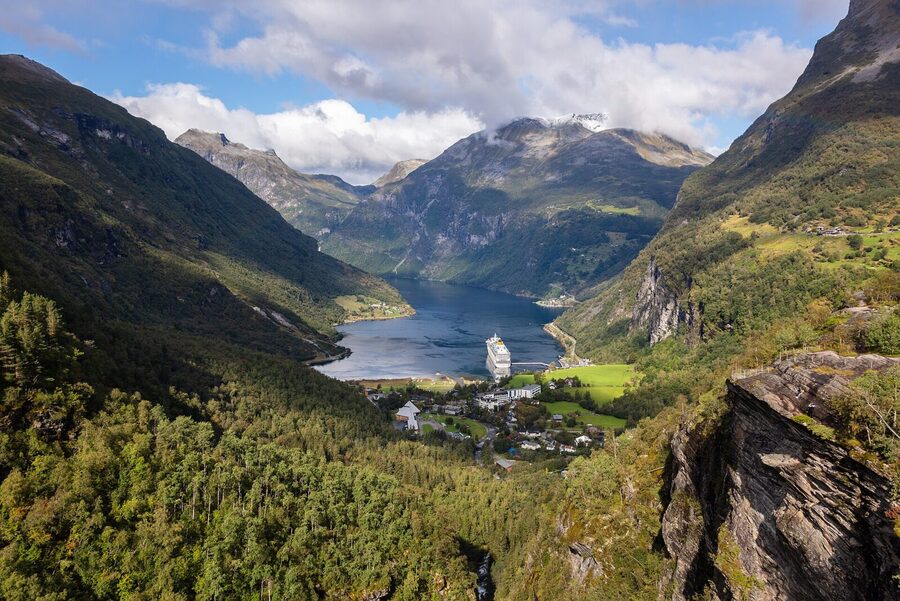

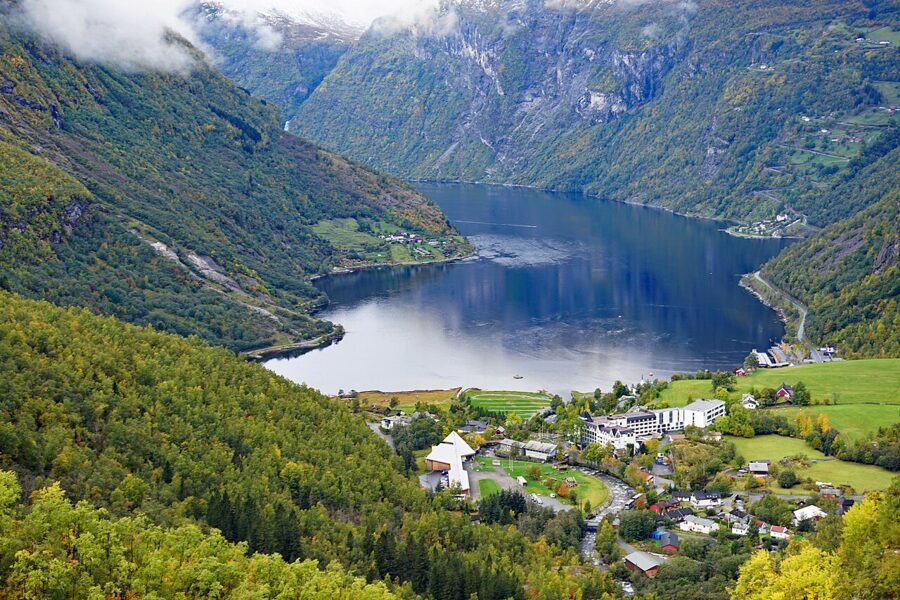
The last of the eleven hairpins on the road out of Geiranger ends at a railing called Ørnesvingen, the Eagle Bend, just below the 620-metre crest at Korsmyra. From there the whole inner Geirangerfjord lies underneath you: the village at its head, the Seven Sisters falling off the north wall, the ledge farm of Knivsflå beside them, and on most summer days a cruise ship parked in the middle of the water like a hotel that took a wrong turn. At 08:00 you may have it to yourself; by late morning the coaches have found it.
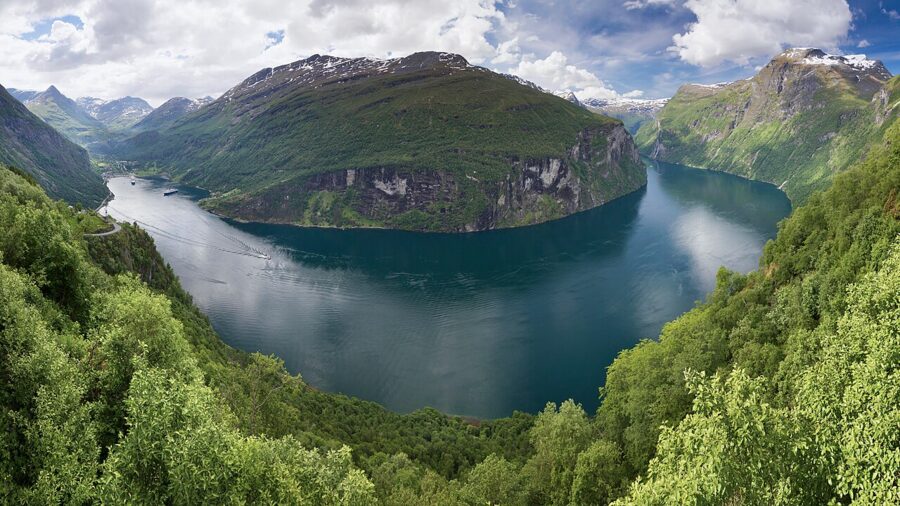
The Geirangerfjord is the 15-kilometre inner end of a chain of water that starts as the Storfjord east of Ålesund, narrows into the Sunnylvsfjord at Hellesylt and turns east for its last stretch to Geiranger. Since 2005 it has been on the UNESCO list with the Nærøyfjord as the West Norwegian Fjords. You come for the walls: near-vertical rock on both sides, waterfalls dropping straight into the fjord, and abandoned farms on ledges nobody would build on today. Of all the Norwegian fjords, it is the one with the most famous view and the busiest summer, and both are worth working around.
There are three ways in. From Ålesund it is about two and a half hours by car, with the 13-minute Linge–Eidsdal ferry and the Eagle Road at the end, or three hours by boat straight up the fjord. From Oslo and the east you drive in over the mountains past Dalsnibba on a road that is open only from spring to late autumn. In summer a daily Vy express bus links Oslo, Geiranger and Ålesund, and the northbound Hurtigruten ships turn into the fjord from June to August.
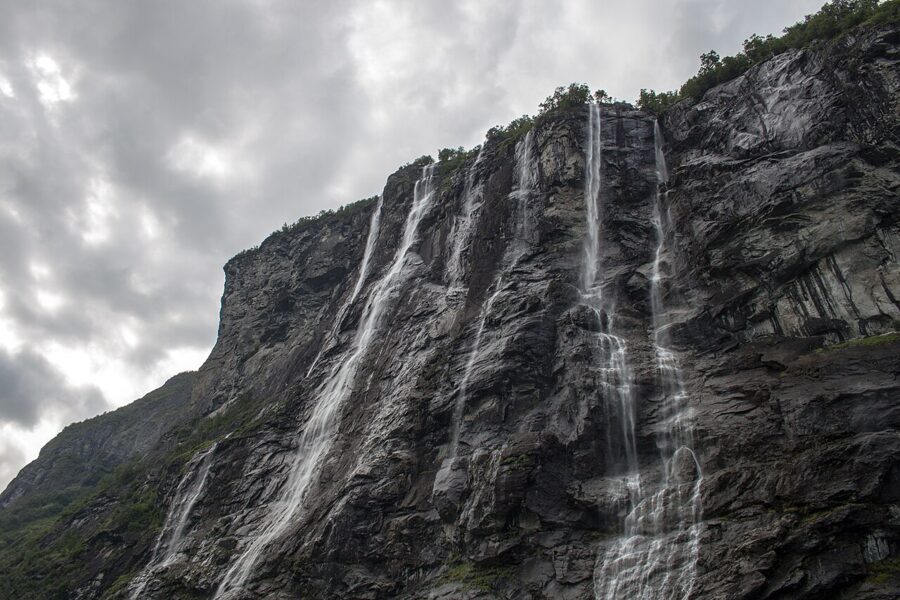
Come between late May and the end of June for the waterfalls at full strength and snow still on the tops, or in early September for thinner crowds with every road still open. July and August are lovely and busy, with cruise ships most days. Give it two nights: one day on the water and the farm paths, one on the viewpoints and the road north over Trollstigen. In winter only the road from Eidsdal stays open, but the boat from Ålesund keeps running.
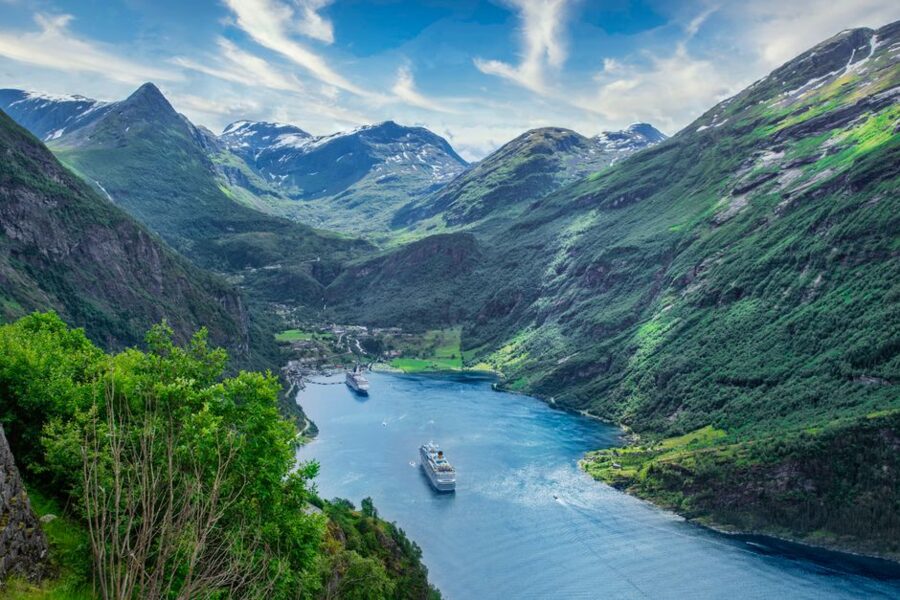
Getting there
From Ålesund: road, ferry, bus or boat
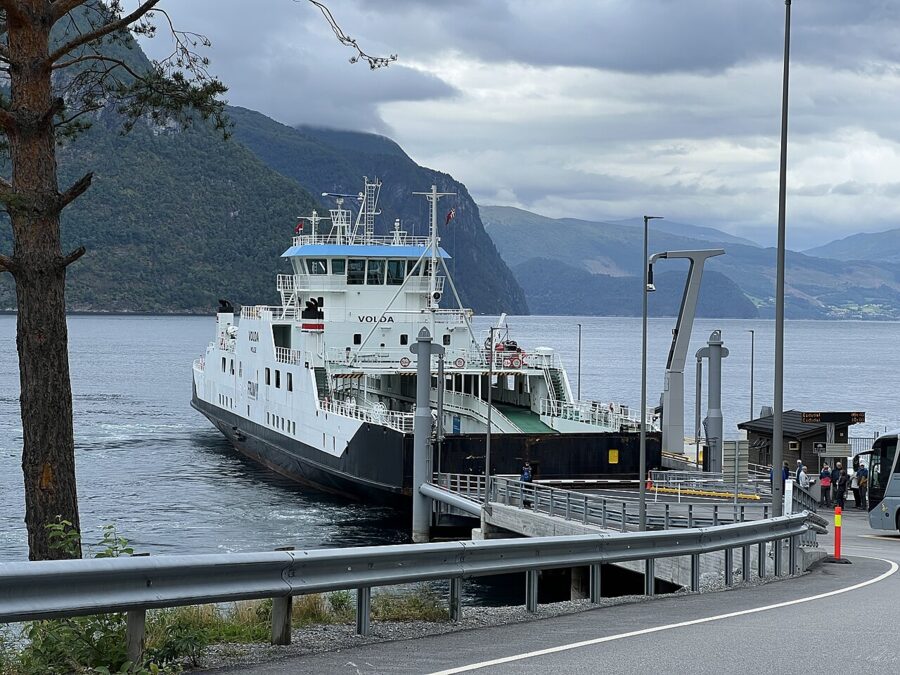
Ålesund is the nearest city and airport, with several flights a day from Oslo. By car you leave on the E136, turn off at Sjøholt for Stordal and follow the Norddalsfjord to Linge, cross to Eidsdal, and climb the Fv63 before dropping down the Eagle Road into Geiranger. Allow two and a half to three hours. The ferry runs all year, and like most Norwegian road ferries you simply drive on.
The slow, pleasant way is the Ålesund–Geiranger fjord cruise on Geiranger Fjordservice’s hybrid catamaran. It leaves from Skutvika in central Ålesund, calls at Stranda and takes about three hours through the Storfjord, the Sunnylvsfjord and the whole Geirangerfjord. It runs daily from spring to autumn and on fewer days in winter, when it is sold as a package with food, a guide and entry to the Fjord Centre. One way costs from NOK 1,124.
Without a car, it is the bus. In summer Vy’s express route 450 runs once a day each way between Ålesund and Oslo through Geiranger. The rest of the year FRAM, the county operator, gets you there with a change: the Ålesund–Valldal bus to Linge, the ferry, then local route 211 from Eidsdal over the Eagle Road, a few times a day and less at weekends.
From Oslo: over the mountains on the Fv63
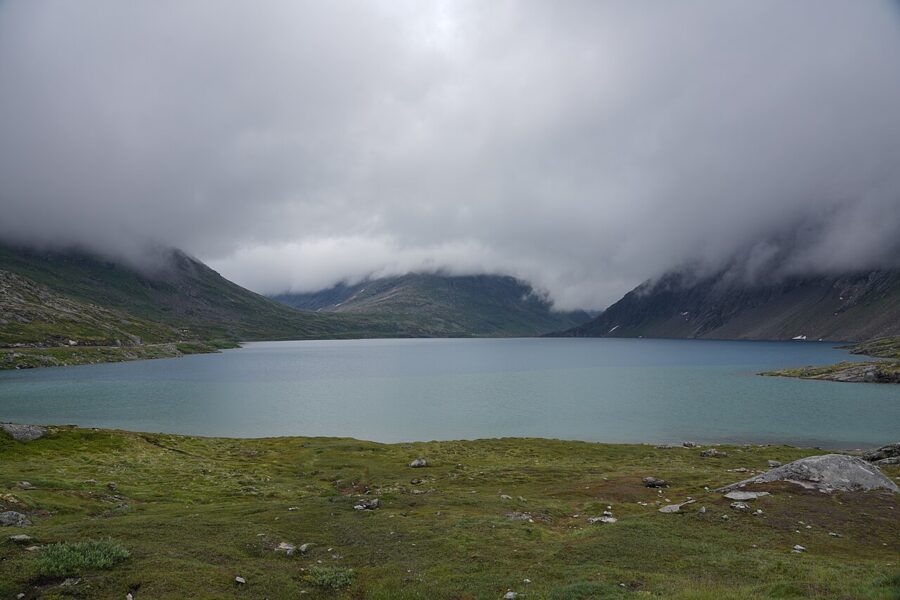
From Oslo it is about seven hours by car: the E6 up Gudbrandsdalen to Otta, the Rv15 west through Lom to Grotli, then the Fv63 past Djupvatnet and down the hairpins into Geiranger. The Langvatnet–Geiranger stretch is closed in winter; in recent years it has closed between mid-November and early January and reopened between late April and mid-June. When it is shut you come round by the coast and Eidsdal, which adds hours.
The summer express bus is the easy alternative. Vy 450 leaves Oslo bus terminal in the morning, crosses Valdres and the Valdresflye plateau, passes Gjendesheim and Lom, and reaches Geiranger in the late afternoon, about seven and a half hours later, before carrying on to Ålesund. The published 2027 timetable runs it daily from early June to the end of August.
By train, the nearest station is Åndalsnes, at the end of the Rauma Line from Dombås, about five and a half hours from Oslo. From June to September a Fjord Tours bus runs once a day from Geiranger over Trollstigen to Åndalsnes, so the train is a good way out even if it is an awkward way in.
From Bergen: Nordfjord and Stryn
Bergen to Geiranger is a full day by car, seven hours or more, north through Sogn and Nordfjord to Stryn, then up the Rv15 to Grotli and down the Fv63. Most road trips come this way after a day in Flåm and a ride on the Flåm Railway. If you have time, leave the Rv15 for the gravel Gamle Strynefjellsvegen, the old summer road between Grotli and Videseter. The other option from Stryn is Hellesylt and the ferry along the fjord, if it is running.
Without a car, it is not a one-day trip: the Vy coach from Bergen reaches Ålesund in the late afternoon, and you take the boat up the fjord next morning.
By sea: the Hurtigruten summer call
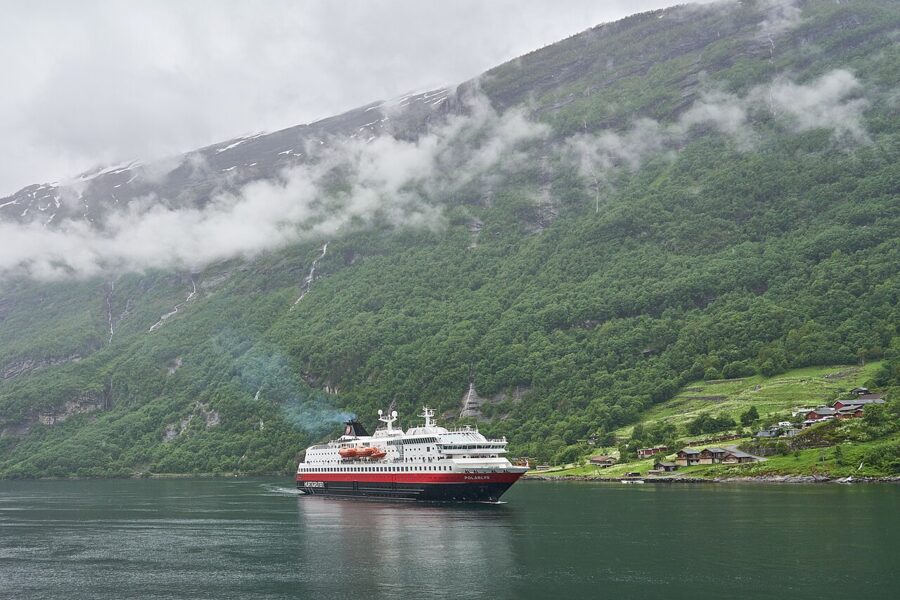
From June to August the northbound Hurtigruten ships leave the coastal route at Ålesund, sail up the Storfjord into the Geirangerfjord, and call at Geiranger in the afternoon before heading back out. In spring and autumn they go into the Hjørundfjord instead. You can board or leave at Geiranger, so a sea arrival from Bergen with a night on board is possible.
Whichever way you come, check the mountain roads first. The north road over the Eagle Road is the year-round one; the stretch between Korsmyra and Indreeide is exposed to avalanches but has a tunnel that stays open. The National Tourist Route Geiranger–Trollstigen page from the road authority lists the opening and closing dates of recent years, and after opening the mountain stretches can still close at night or in bad weather.
On the water
See the fjord from a boat at least once: only from the water do the walls look as high as they are. Since 2026 a new rule has decided which boats can run.
The zero-emission rule
From 1 January 2026, tourist ships and ferries under 10,000 gross tonnes must be zero-emission inside Norway’s five heritage fjords: the Geirangerfjord, the Sunnylvsfjord, the Tafjord, the Nærøyfjord and the Aurlandsfjord. Larger ships, meaning the big cruise ships, have until 1 January 2032. In practice the small boats on the Geirangerfjord are going electric, the old diesel ferries have had to stop, and the cruise ships still come in.
The Geiranger–Hellesylt car ferry
The crossing takes 45 to 65 minutes depending on the boat, and it is the best single hour on the fjord: the full length of the Geirangerfjord past the Seven Sisters, the Suitor and Skageflå, with your car on board. In 2026 it became a mess. Fjord1, which had run it for years with two old diesel ferries, Bolsøy from 1971 and Veøy, was refused a permanent exemption from the rule, lost its temporary one at the end of June, ran on through the summer under a court injunction, and stopped again in early September when the Oslo district court lifted it. Fjord1 is appealing.
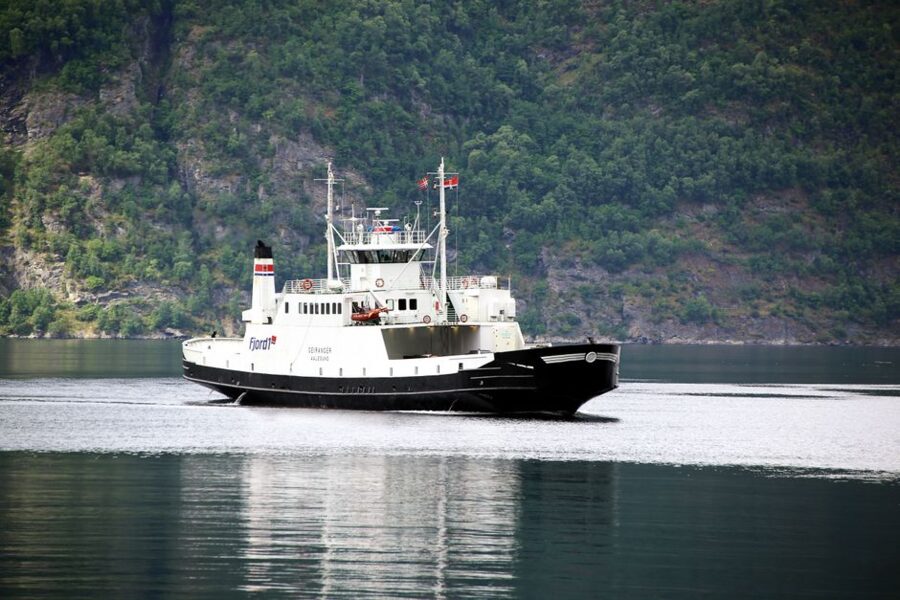
Vestlandske ran the route from the summer of 2026 until the end of October and says it will be back with electric ferries from April 2027, after a converted ferry was held up at the yard. Norway’s Best sells the crossing as Fjord Cruise Geirangerfjord, with a timetable from 1 March 2027 on two classic ferries until its own electric boats are built. Two operators, one fjord and a court case: check both for your dates, book vehicle space for June to August, and know your fallback, the long way round by road through Stranda and Eidsdal.
Sightseeing boats from Geiranger
If you only want to look, the round trips go closer to the waterfalls than the ferry. Geiranger Fjordservice’s sightseeing cruises leave from the quay behind the ticket office: 75 minutes on a smaller traditional boat to the main falls and the two big ledge farms, or two hours on a new electric catamaran out to the mouth of the fjord. Adults pay from NOK 641, children half. Download the audio guide app before you board.
RIB and kayak
The Fjordsafari by RIB spends about 50 minutes on the water in a 12-seat open boat, with a weatherproof suit over your clothes, and stops right under the Seven Sisters and the Suitor. It is quick, wet and the closest any boat goes to the falls.
A kayak is slower and better. The kayak centre at Homlong, a 20-minute walk along the sunny side of the harbour, rents kayaks from June to September between 09:00 and 17:00 and runs a 2.5-hour beginners’ tour and a four-hour tour to the Seven Sisters. Renting needs some experience; the tours do not. Dress for falling in, and remember the cruise ships make a wake.
From above: the viewpoints
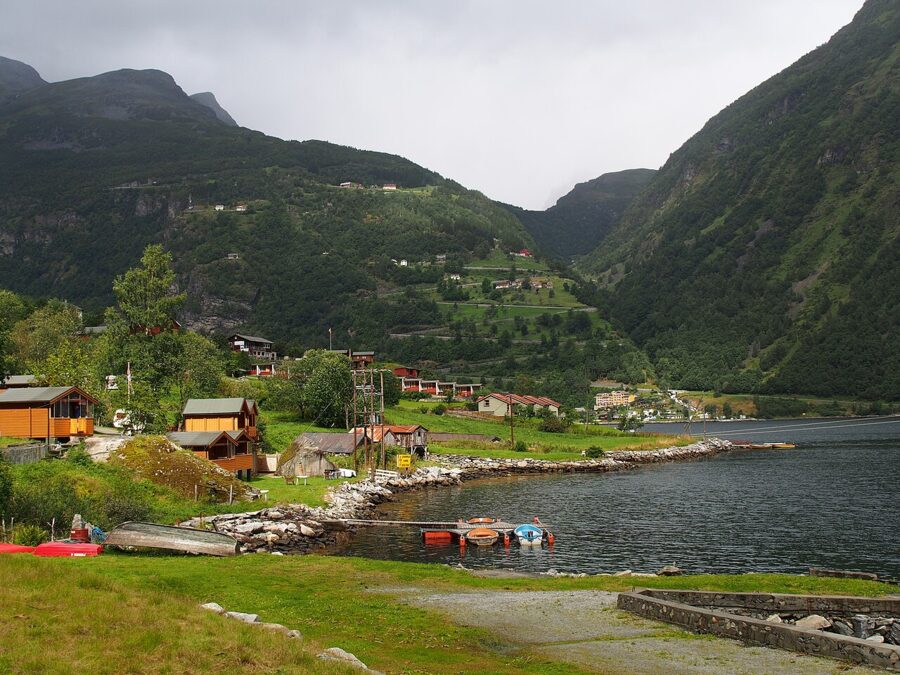
The three famous viewpoints sit on the same road at three heights: Ørnesvingen on the north side towards Eidsdal, Flydalsjuvet a few kilometres up the south side, and Dalsnibba at 1,500 metres above the pass. In clear weather you can do all three in a morning.
Ørnesvingen and the Eagle Road
Ørnevegen, the Eagle Road, is the eleven hairpins that climb from Geiranger through the farms at Møll towards Eidsdal. The platform at Ørnesvingen is at the top bend, with a small waterfall built into it and a glass artwork by May Elin Eikaas-Bjerk. Because the north road is open all year, this is the one big view you can have in January too.
Flydalsjuvet
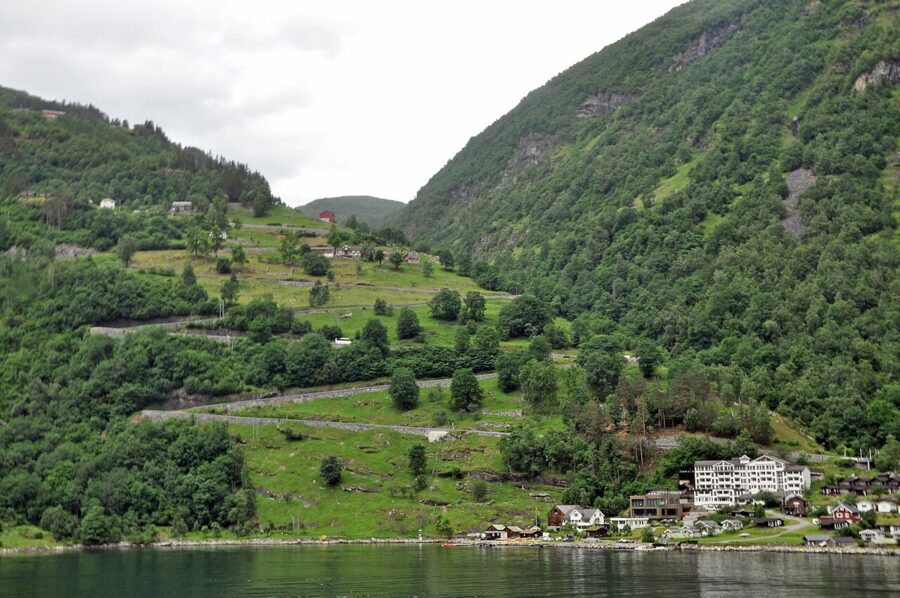
Flydalsjuvet is the postcard: a gorge above the village on the road south, with the fjord curling away below and Laushornet (1,502 m) and Eidshornet (1,629 m) on either side. The viewpoint is built on two levels, with toilets made from centuries-old stable timber. It is about four kilometres from the village, and the road is kept open in winter as far as the farms above it.
Dalsnibba and the Geiranger Skywalk
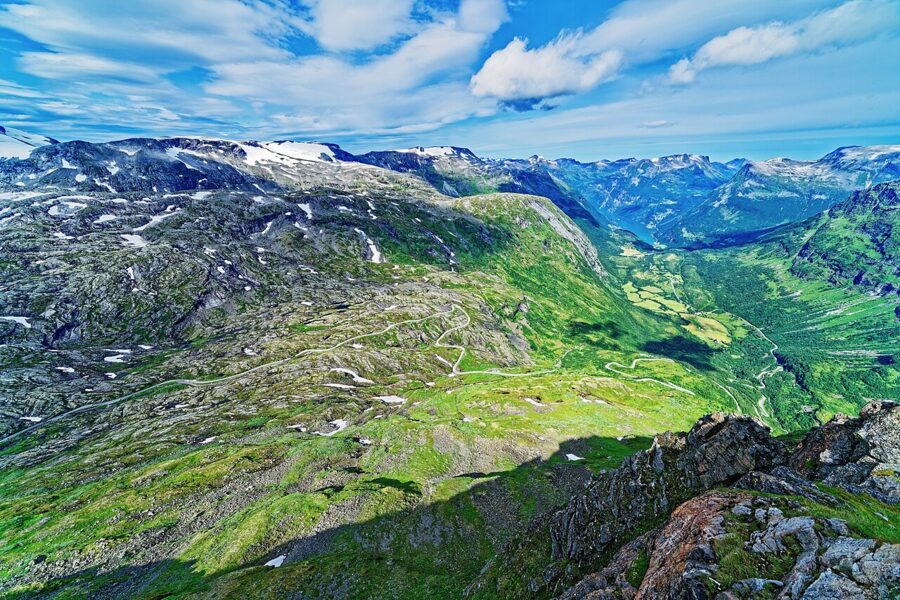
Dalsnibba is the highest by far. You leave the Fv63 at Djupvatnet and pay to drive the Nibbevegen, five kilometres of hairpins to a platform 1,500 metres above sea level, 21 km and about 30 minutes from Geiranger. The road opens in mid-May and closes in late September or early October; in 2025 it ran from 12 May to 3 October. In season it is open around the clock, so a summer sunrise up here is possible.
The 2027 toll is NOK 420 per car or motorhome and NOK 200 per motorcycle, up from NOK 350 for a car in 2026. You can buy a Dalsnibba ticket online from 5 January 2027 until 23:00 the day before, or pay at the machine by the barrier. At the top are a café, a shop and toilets, all step-free.
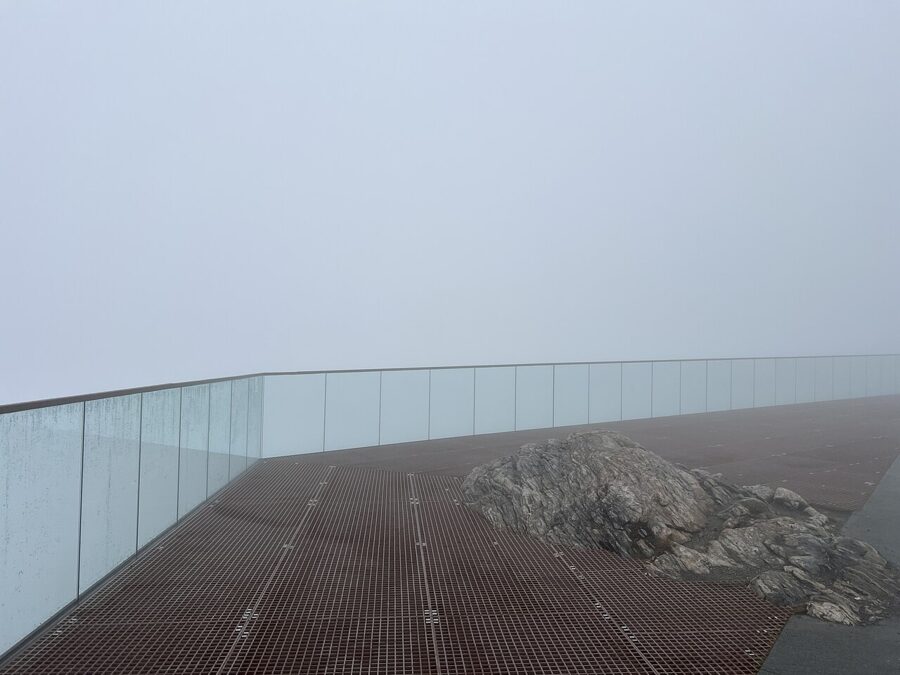
The weather is the catch. Dalsnibba can sit inside the cloud while Geiranger is in sunshine, and the reverse. Look at the summit webcam before you pay, and if the top is white, spend the money on a boat instead.
The waterfalls and the ledge farms
The Seven Sisters, the Suitor and the Bridal Veil
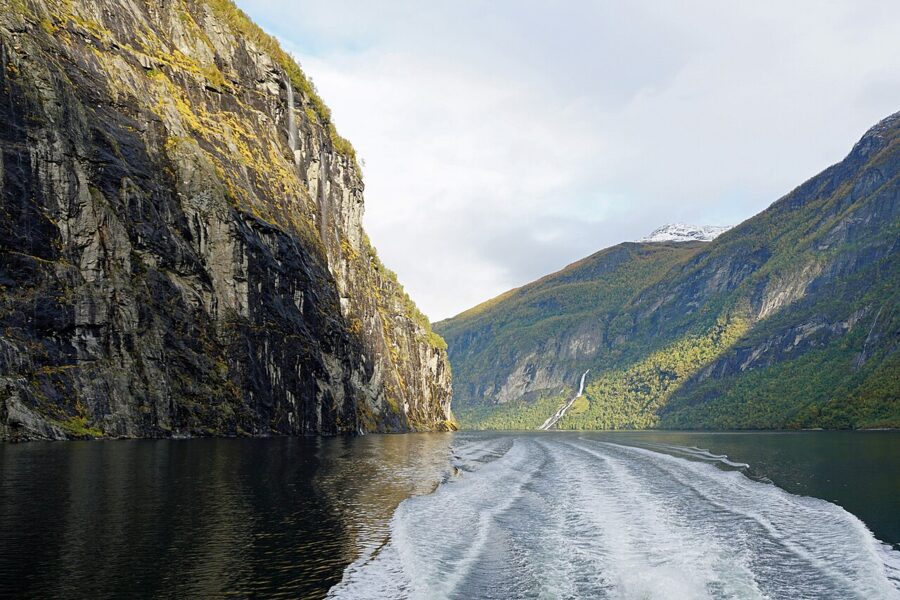
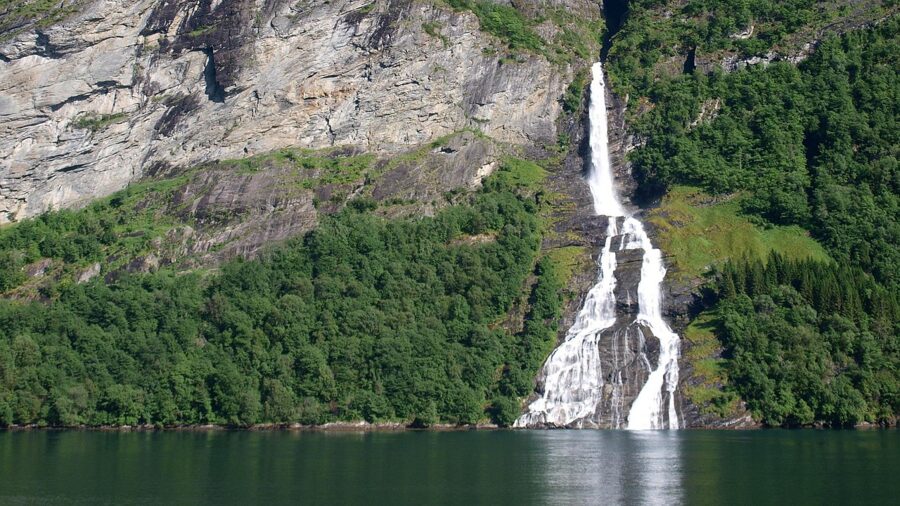
The Seven Sisters (De sju søstrene) is the row of streams on the north wall, a short boat ride out from Geiranger, fed by the rivers on the plateau around Knivsflå. Across the fjord is the Suitor (Friaren), a single fall that in the local story keeps proposing to the sisters and keeps being turned down; on the same side falls the Bridal Veil (Brudesløret), thin enough to look like gauze with the sun behind it. All three depend on snowmelt. In June there are seven sisters; in a dry August you may count four.
Skageflå
Skageflå is the farm everyone photographs: turf-roofed buildings on a grassy shelf about 250 metres above the south side, looking across at the Seven Sisters. It was once one of the better farms on the fjord, because the pastures above it were rich. King Harald and Queen Sonja celebrated their silver wedding up here in 1993.
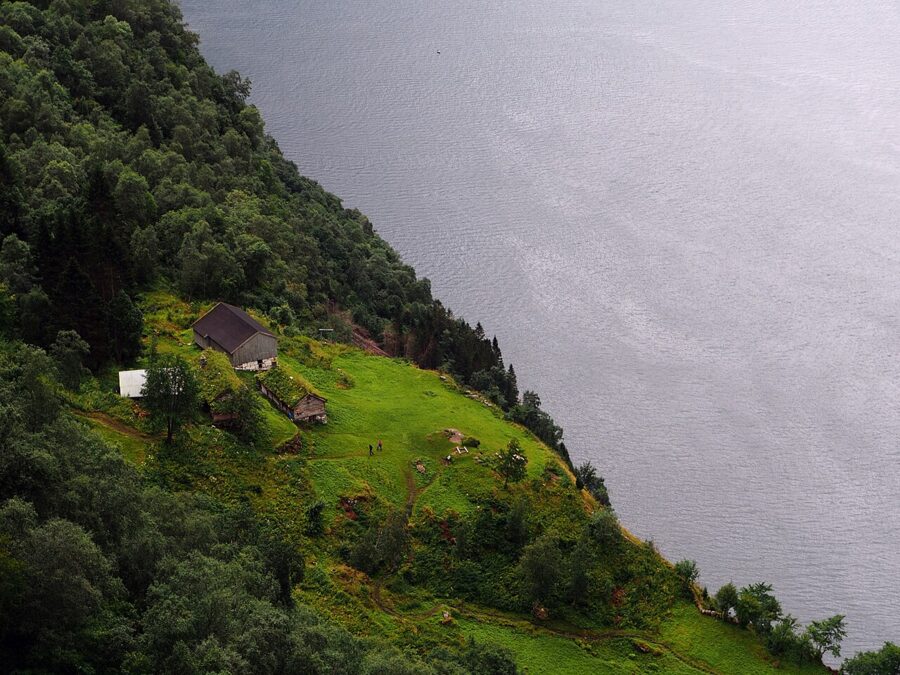
The usual way up is the boat drop-off at Skagehola, added to the 75-minute sightseeing trip with a NOK 50 landowners’ fee. You are put ashore on the way back to Geiranger and climb about 45 minutes on a path with steps cut into the rock and railings on the exposed bits. Then either walk back down for a pick-up on a later boat, or carry on to Geiranger on foot, about four hours along the cliff edge via Homlongsætra and Homlong. Without a boat, the whole walk from Geiranger and back is a day of six hours or more.
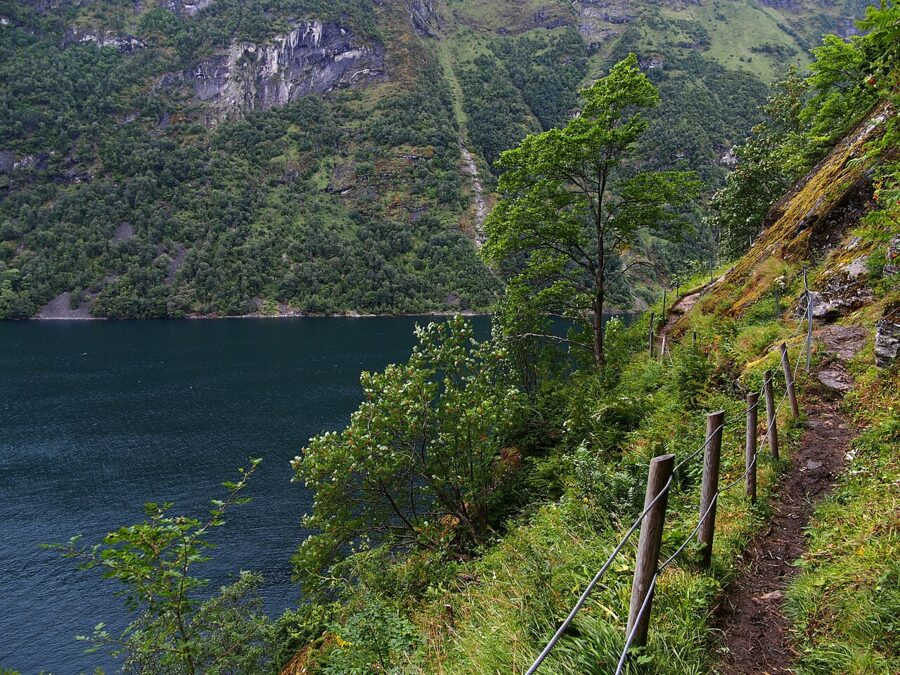
The farm is private land, restored partly by a local association, Storfjordens venner. You cannot pitch a tent or hang a hammock on the grass around the houses without the owner’s permission, the exception to the right to roam people tend to forget. There is a toilet but no paper, so bring your own, and carry everything back down.
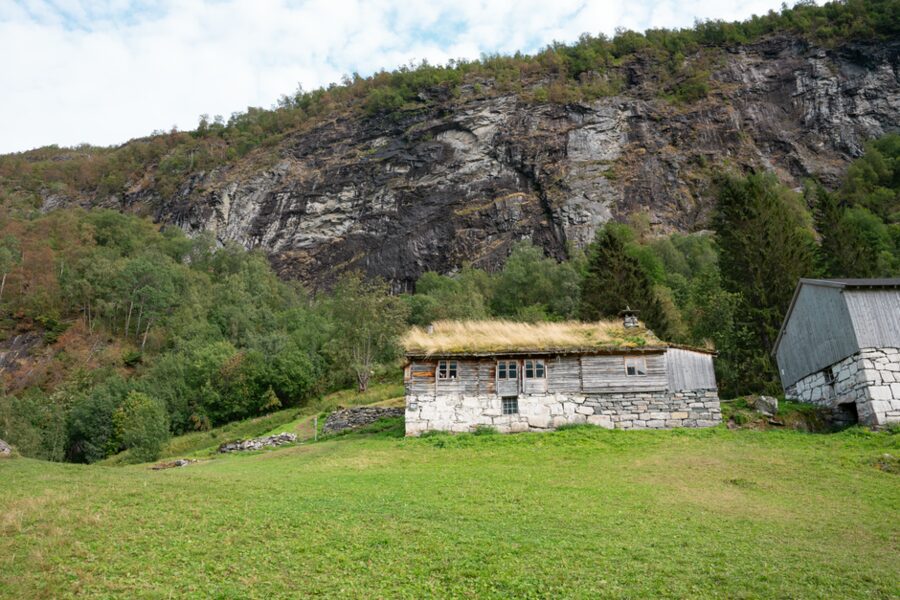
Knivsflå and the other farms
Knivsflå is Skageflå’s opposite number: two farms on a ledge about 260 metres up on the north wall, right beside the Seven Sisters. There is no shore path from either village, so you need a boat or a kayak to reach the landing below it. Most people see it from the water, or from Skageflå across the fjord, which is the better view anyway.
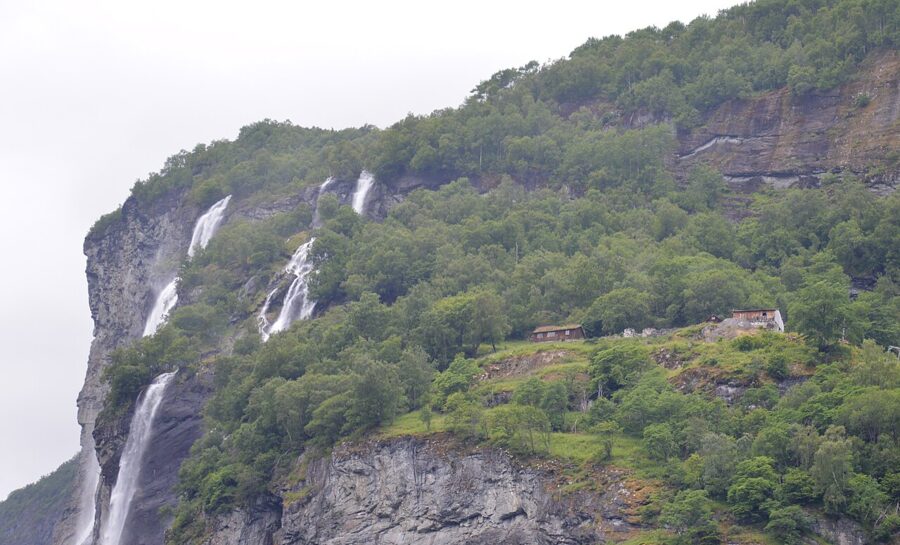
Further out are Blomberg, Horvadrag and Matvik. Matvik, close to the water near the outer end of the fjord, was one of the last to be given up, in 1961, and grew 150 plum trees and even apricots in the shelter of the walls.
Fosseråsa: the walk up from the village
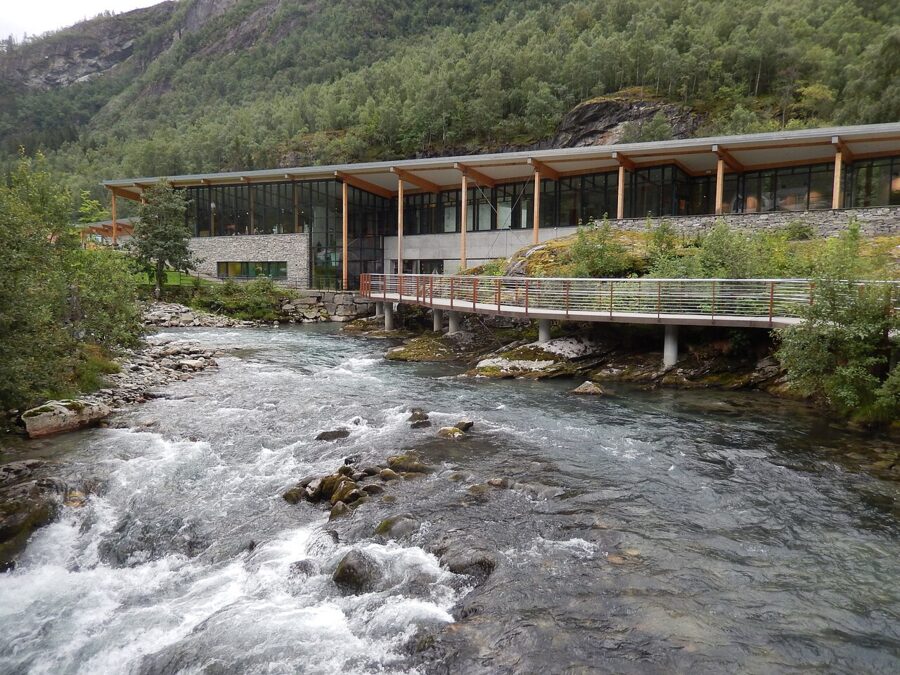
If you do one walk from Geiranger itself, make it Fosseråsa, named Norway’s first national hiking trail in 2019. It starts in the centre with the 327 steps of the waterfall trail, comes out at the Norwegian Fjord Centre, then climbs past Westerås farm to Storsæterfossen at 550 metres, where the path goes behind the fall. Allow half a day. Short of time, do just the steps: they are the prettiest part and they are free.
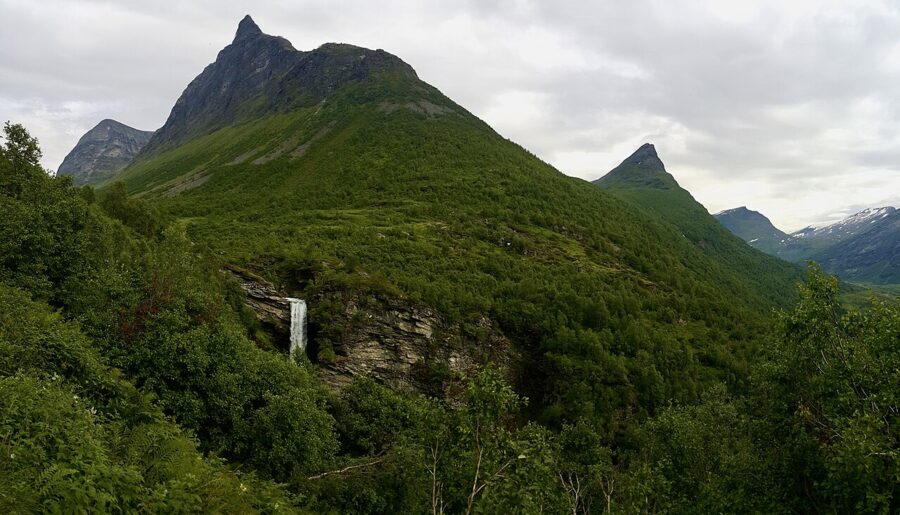
At the top of the steps, the Norwegian Fjord Centre is the World Heritage visitor centre, open 09:00–16:00, NOK 160 for adults and NOK 85 for children aged 5–15. It explains how the fjord was cut, how the ledge farms got through winter, and what would happen if the cracked mountainside at Åkerneset on the Sunnylvsfjord let go. That slope is watched around the clock, and the disaster film The Wave was built on it.
Cruise-ship days and how to sidestep them
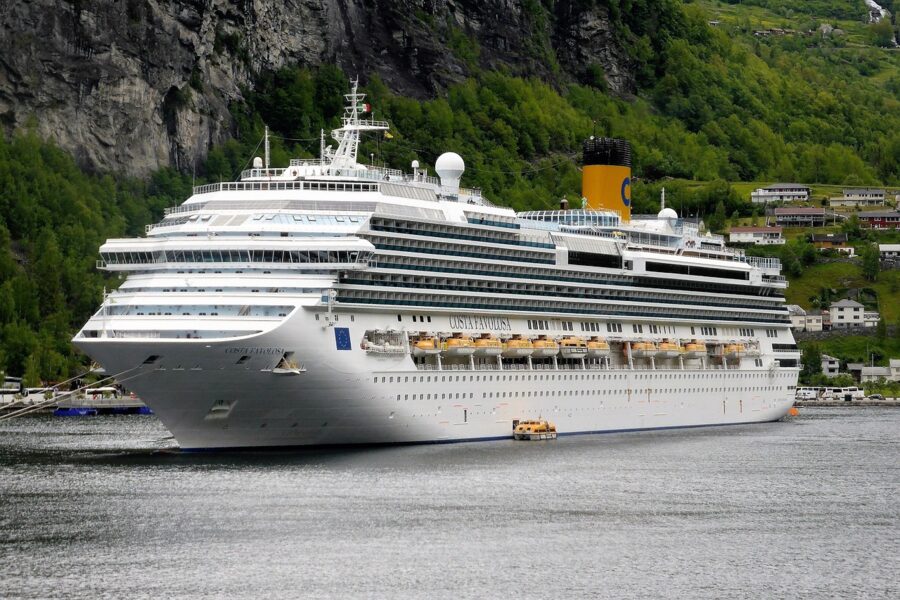
Geiranger is a village of about 250 people with a cruise season. Around 134 cruise calls were expected at Geiranger and Hellesylt in 2026, most between May and September, and on a two-ship day thousands of passengers can come ashore in one morning. They go where you would go: the waterfall steps, Ørnesvingen, Flydalsjuvet and Dalsnibba, mostly by coach.
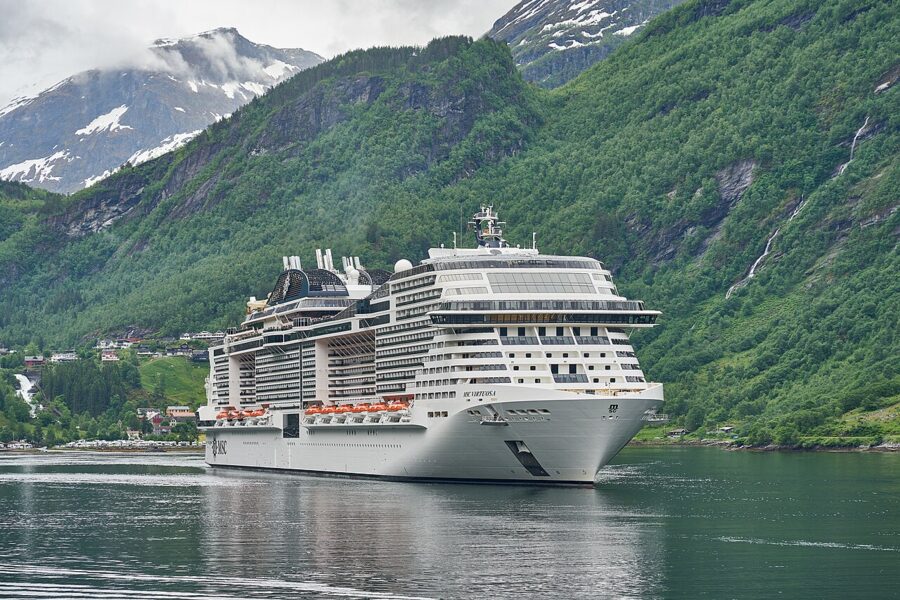
The fix is timing, and staying the night. Most ships arrive in the morning and leave in the afternoon, so the viewpoints are yours before about 09:00 and after about 18:00. The Dalsnibba road is open around the clock in season, and in June the light lasts past 23:00. Take an early boat or the kayak while passengers are still coming ashore, and spend the middle of the day on the Skageflå path, where no coach can follow.
The port publishes its list of calls for the season, so look up your dates before you book a room; a day with no ship is a different village. If every day of your trip has two, sleep in Valldal or Hellesylt and come to Geiranger for the evening. In recent summers some ships have also landed passengers at Eidsdal or Hellesylt and bussed them in, which puts the crowds on the Eagle Road: one more reason to drive it early.
When to go, month by month
The roads set the season. This is the pattern of recent years; a mountain road can open a fortnight early or late.
| Months | Roads | On the water | What it is like |
|---|---|---|---|
| January–March | Only the Fv63 from Eidsdal | Ålesund boat on some days; no car ferry | Snow to the fjord, frozen falls, little open |
| April–May | Langvatnet road opens late April to mid-June; Dalsnibba from mid-May | Ålesund boat daily from April; car ferry restarts | Waterfalls rising, snow walls on the pass |
| June | Everything open by mid-June in most years | Full timetables; Hurtigruten calls | Fullest waterfalls, longest days; the best month |
| July–August | Everything open | Everything running; Vy bus daily | Warmest and busiest, ships most days |
| September | All open; Dalsnibba closes late September or early October | Kayak centre closes at month end | Quieter, autumn colour, good light |
| October–December | Trollstigen closes early October to early December; Langvatnet road mid-November to early January | Car ferry ended its 2026 season in late October; Ålesund boat continues | Wet, dark and very quiet |
Parking in Geiranger is paid from April to the end of September. The village car parks charge roughly NOK 30–75 an hour for a car between 08:00 and 20:00, by app or at the machine.
The Golden Route: Trollstigen, Valldal and Åndalsnes
The road north from Geiranger to Åndalsnes is half of the National Tourist Route Geiranger–Trollstigen, which runs 104 km from Langvatnet to Sogge bru in Romsdalen; with Ålesund added it is sold as the Golden Route. Driving it takes about three hours without stops. With stops it takes a day, and it should.
Eidsdal, the ferry and Valldal
Over the Eagle Road the Fv63 drops to Eidsdal, crosses the Norddalsfjord to Linge and runs into Valldal, a wide valley known across Norway for its strawberries. In summer the farms sell them straight from the field, and the Lingebakken farm shop sells fruit and juice from its own farm. Valldal is the natural second base: quieter than Geiranger and a short drive from both the fjord and Trollstigen.
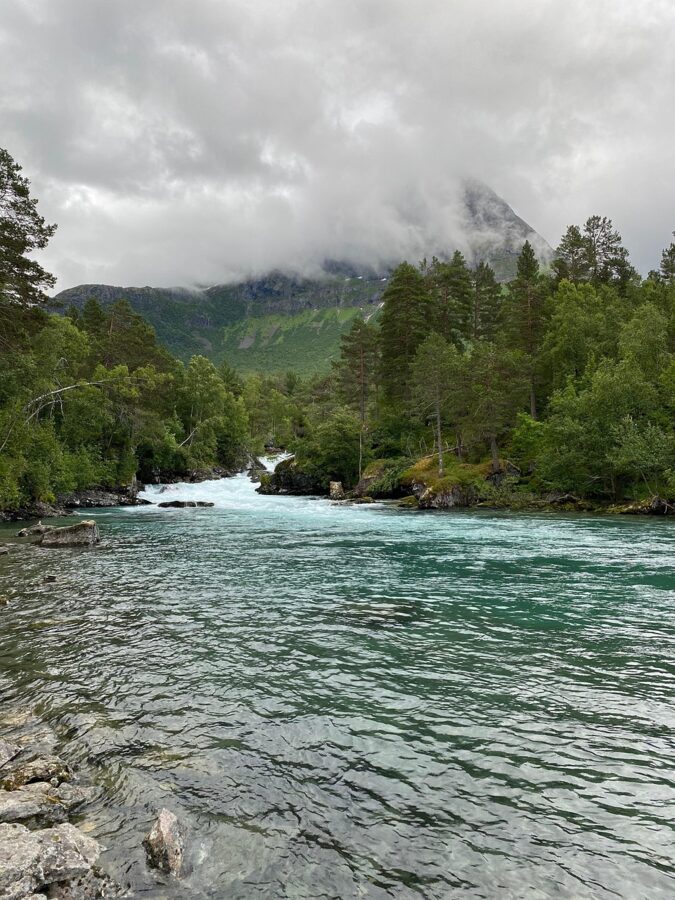
Gudbrandsjuvet
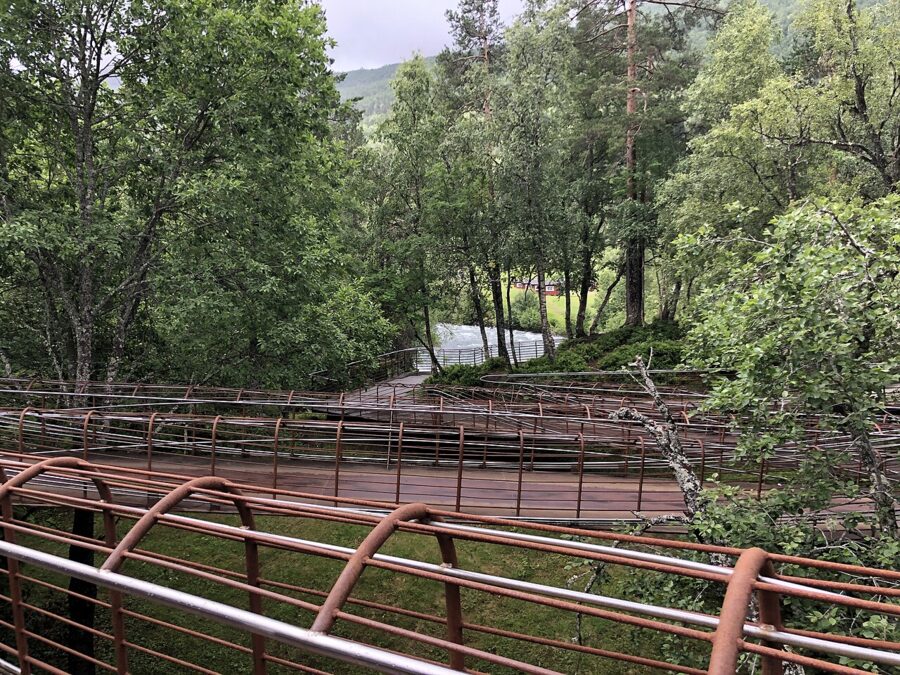
About 20 minutes up the valley from Valldal is Gudbrandsjuvet, a narrow gorge where the river cuts through the rock just below the road, with walkways and platforms over and along it. The Juvet hotel sits in the trees beside the gorge.
Trollstigen
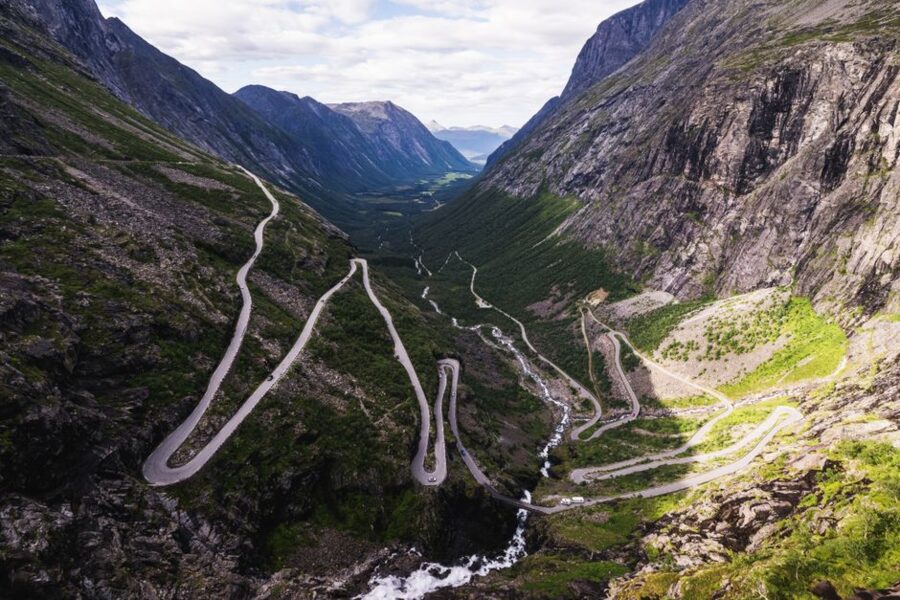
At the top of the valley the road crosses the plateau and tips over the edge into Isterdalen down Trollstigen, eleven hairpins under the peaks of Bispen and Kongen, with Stigfossen falling beside them. From the bottom, Trollstigfoten, you can walk up the old pack-horse path, Kløvstien, in about three hours.
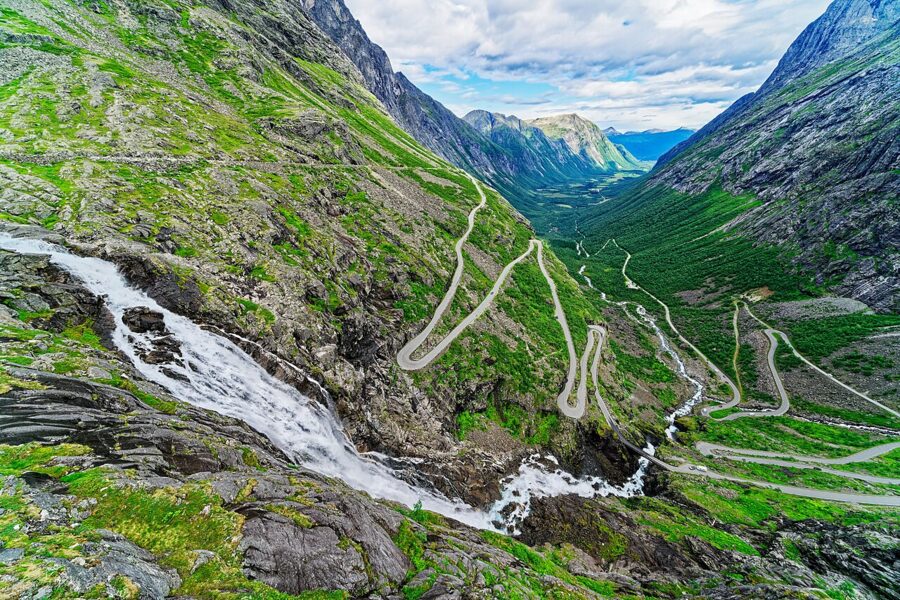
Trollstigen has the tightest season on the route: in recent years it has opened between late April and mid-June and closed between early October and early December. Before you drive it, check the regional tourist board’s Trollstigen status page and the road authority’s traffic map. Go early or late: the bends are narrow, and the coaches have right of way in practice if not in law.
At the bottom, Åndalsnes has the railway and the road back to Ålesund on the E136. Done the other way round, from Åndalsnes over Trollstigen to Geiranger, the route saves the fjord for the end, which is the order I’d choose.
Where to stay and eat
Geiranger
Sleeping in Geiranger is what makes the early and late hours possible. Book well ahead for July. Most hotels sit above the harbour, which helps on a cruise day.
- Union Geiranger Resort & Spa, the big family-owned hotel at the top of the waterfall steps by the Fjord Centre, has a spa and Restaurant Julie for lunch and dinner with a fjord view.
- Hotel Utsikten stands higher on the road to Flydalsjuvet, and the name, “the view”, is accurate; ask for a fjord-view room.
- Havila Hotel Geiranger is in the village, with a restaurant named after Skageflå.
- Grande Fjord Hotel is about two kilometres out on the north shore, away from the harbour, and opens only in summer.
- Westerås Gard is a farm 4 km up the valley on the Fosseråsa trail, with two apartments, five cabins and a seasonal restaurant, open May to September.
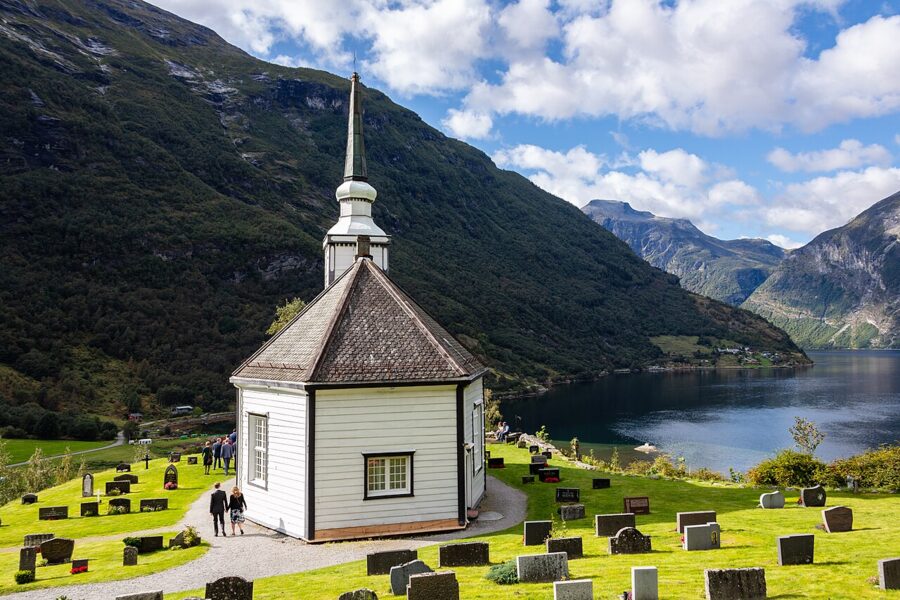
In the village, Brasserie Posten on the waterfront serves lunch and dinner; in 2026 it opened from late April to the end of September and again in November and December, and its sister Café Olé is open all year for coffee and light meals. Restaurant Julie at the Union and Restaurant Skageflå at the Havila are the hotel options.
Hellesylt
Hellesylt, at the other end of the ferry, is a small village with a campsite by the quay, a waterfall through the middle and very little else, which is the point. It is a sensible night if you are coming from Stryn for the morning ferry, or heading south through Norangsdalen to the Hjørundfjord, the quieter fjord next door. Check the ferry first: without it, Hellesylt is a long way from Geiranger by road.
Valldal and Eidsdal
In Valldal, Valldal Fjordhotell is in the centre, with à la carte dinners in its Restaurant Heilage Olav in summer and a set dinner for guests the rest of the year. Up the valley, Juvet Landscape Hotel is the architectural one, with glass-walled rooms in the forest by Gudbrandsjuvet; book it for itself, not as a base. Eidsdal is a ferry village of farms and holiday cabins, fine for a quiet night between the two ferries if Geiranger is full.
What it costs on the ground
| What | Price |
|---|---|
| Sightseeing boat from Geiranger, 75 minutes or 2 hours | From NOK 641 adult, children half |
| Ålesund–Geiranger fjord cruise, one way | From NOK 1,124 adult |
| Skageflå landowners’ fee with the boat drop-off | NOK 50 |
| Dalsnibba toll road, 2027 | NOK 420 car or motorhome, NOK 200 motorcycle |
| Norwegian Fjord Centre | NOK 160 adult, NOK 85 child |
| Parking in Geiranger, April–September | About NOK 30–75 an hour for a car |
Back at the top bend
Drive up to Ørnesvingen once more on your last evening, after 18:00, when the ships have gone and the coaches are back in their car parks. The fjord turns grey, the Seven Sisters keep falling with nobody watching, and the Eidsdal road behind you is empty all the way to the ferry. Tomorrow you can be first in the queue for it.