

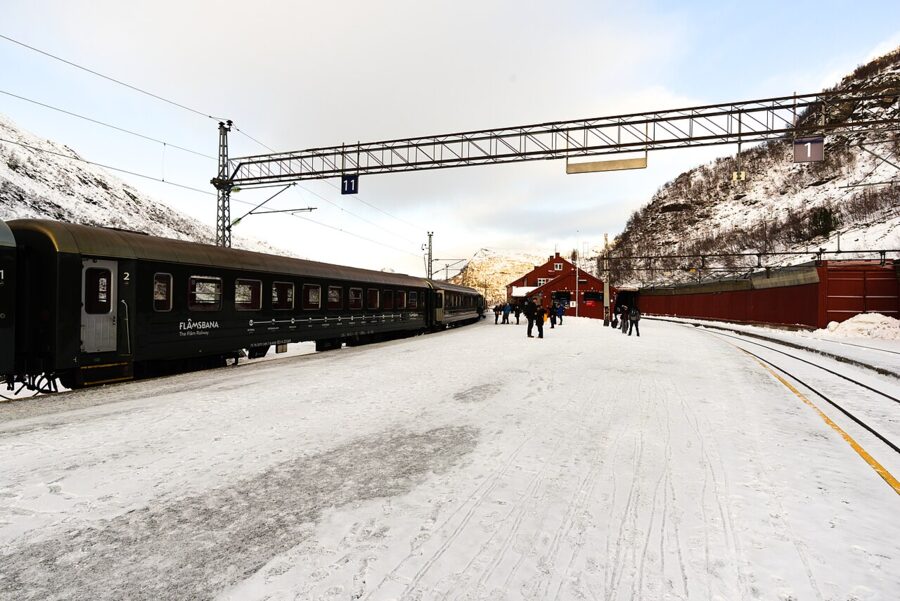
Myrdal has a station, a café, a waiting room that never locks and no road at all. The Bergen Line train from Oslo lets you down there at 867 metres after about five hours, and the Flåm Railway train waits at the station for the hour-long drop to the fjord. Everything people mean by Norway in a Nutshell turns on that change of trains.

Norway in a Nutshell is a bundle of tickets with no guide attached. Fjord Tours, a Bergen company that has sold it since 1982, bundles five public legs into one booking: the Bergen Line from Oslo to Myrdal, the Flåm Railway down to Flåm, an electric boat through the Nærøyfjord to Gudvangen, a bus up the Nærøydalen valley to Voss, and the train on to Bergen. Nobody guides you. You get the tickets, a digital travel guide with every change spelled out, and a phone number for when a connection fails.
It runs all year, in either direction, and you can do the whole thing in a day: an early train out of Oslo reaches Bergen in the evening, and the round trip from Bergen leaves after breakfast and is back for dinner. Fjord Tours lists the Bergen round trip at NOK 2,482–2,698 per adult and Oslo to Bergen one way at NOK 3,131–3,474, depending on the season. Booked leg by leg, the three fixed-price legs in the middle come to about NOK 1,240 before you buy a train ticket, which is where the do-it-yourself argument starts.
When to go depends on what you want from it. June to August has the full timetable, six boats a day each way and the longest light, and the heaviest crowds. In winter the boat sails twice a day, the railway four times, and the valleys are white and quiet; May and September sit in between, and they are the months I would pick.


The five legs at a glance
The route is a loop of public transport that happens to pass the best of the inner Sognefjord. Each leg has its own operator, its own timetable and its own season, and the package simply lines them up. This is the shape of it from Oslo; from Bergen, read it bottom to top.
| Leg | Who runs or sells it | Time | Departures | Adult fare |
|---|---|---|---|---|
| Oslo–Myrdal, Bergen Line | Vy | about 5 h | 6 day trains each way, plus one night train | varies by date and how early you book |
| Myrdal–Flåm, Flåm Railway | Vy; Norway’s Best for round trips | 1 h | 4 a day November–March, 10 from late April to mid-September | from NOK 399 |
| Flåm–Gudvangen, Nærøyfjord boat | Norway’s Best | about 2 h | 2 a day mid-October–April, 4 in May and September, 6 in June–August | from NOK 640 |
| Gudvangen–Voss, bus | Fjord Tours, Norway’s Best | about 1 h | 2 each way, all year | from NOK 200 |
| Voss–Bergen, Bergen Line | Vy | 1–1.5 h | through trains to Bergen plus local R40 trains | varies |
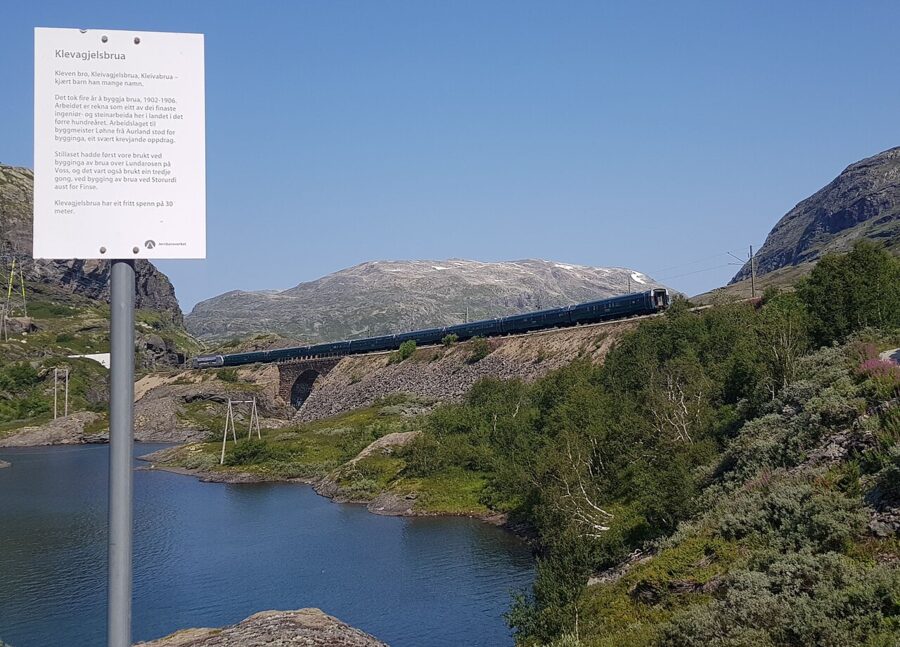

Oslo to Bergen, leg by leg
The Bergen Line to Myrdal
The Bergen Line is 471 km long, opened in 1909, and runs through 182 tunnels on its way across the roof of southern Norway. The first half is forest, river and lake: Drammen, Hønefoss, the long Hallingdal valley past Gol. After Ål the line starts to climb, and beyond Geilo you are on open mountain, with Hardangervidda National Park on one side and Hallingskarvet on the other.
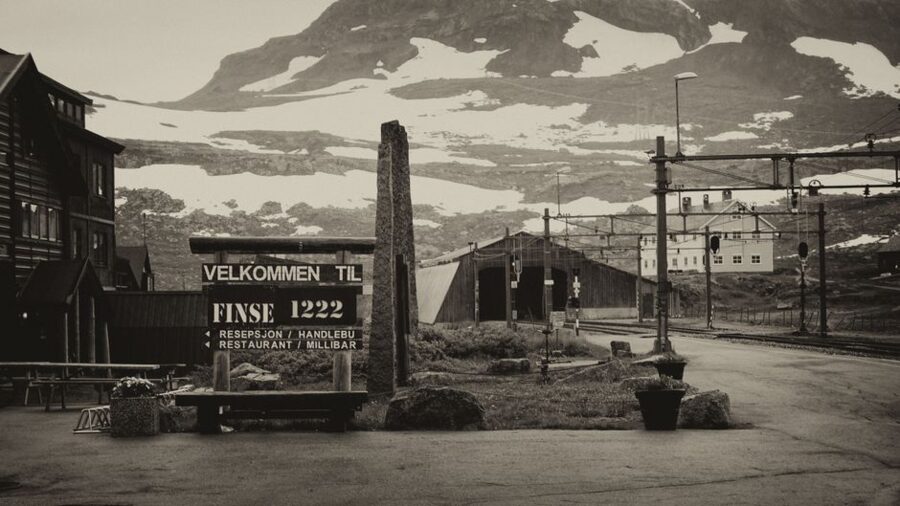
Finse station, at 1,222 metres, sits near the highest point of the Norwegian rail network and can only be reached by train or on foot. If the sky is clear, this is the stretch to have the camera ready for. Then come Hallingskeid, the snow sheds and the descent to Myrdal.
Vy’s own advice on seats is worth following. From Oslo, sit on the left for Hardangervidda and on the right for the steep valleys of the west; from Bergen it is the other way round. A Lavpris (lowfare) ticket on the Bergen Line comes with an allocated seat, so you take what you are given; only the Flex fare lets you choose. The café car has the biggest windows on the train, and on a clear day it fills up after Geilo.
Myrdal: the change
Myrdal is a station and not a village, in the municipality of Aurland, with a handful of houses and no road link. It has toilets, a waiting room open around the clock and no luggage storage, so whatever you arrive with comes down to Flåm with you. Café Rallaren in the station is open daily in summer and on shorter hours through the winter.
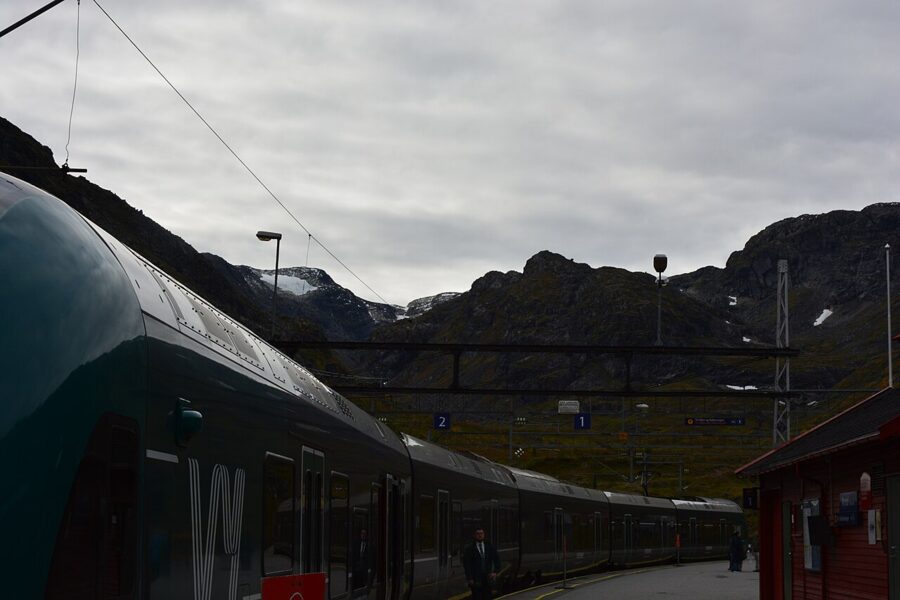

The Flåm Railway has free seating: no reservations, first come, first seated. The Bergen Line train empties onto the platform at once in summer, and the people who walk briskly get the window seats. That sounds petty until you are standing in the aisle at Kjosfossen.
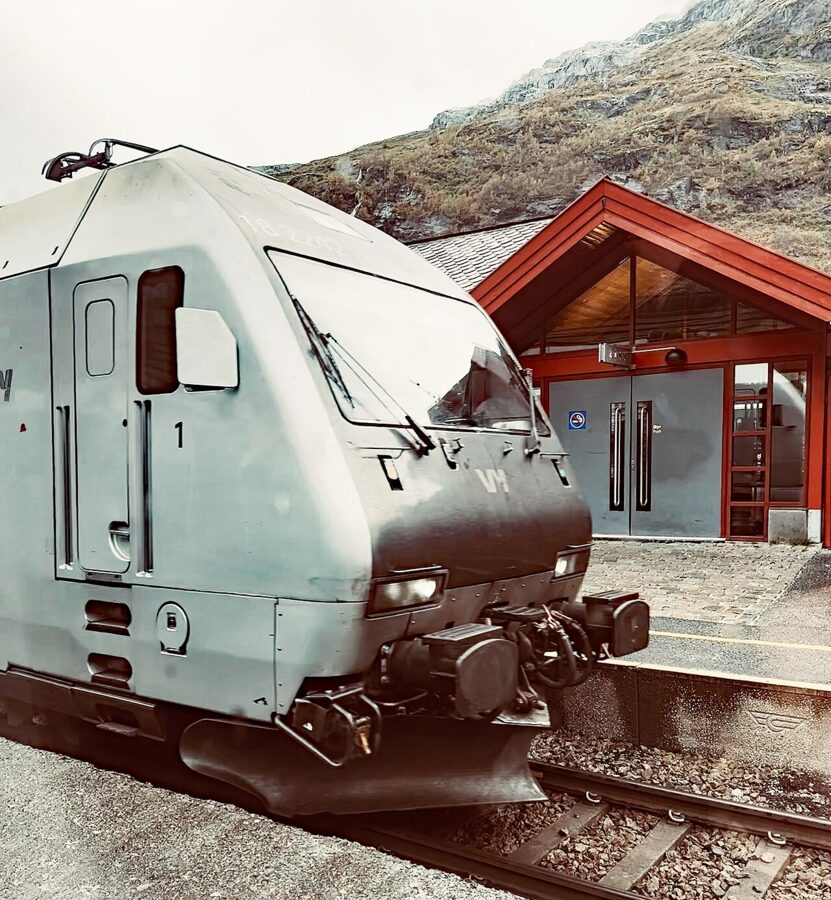
The Flåm Railway
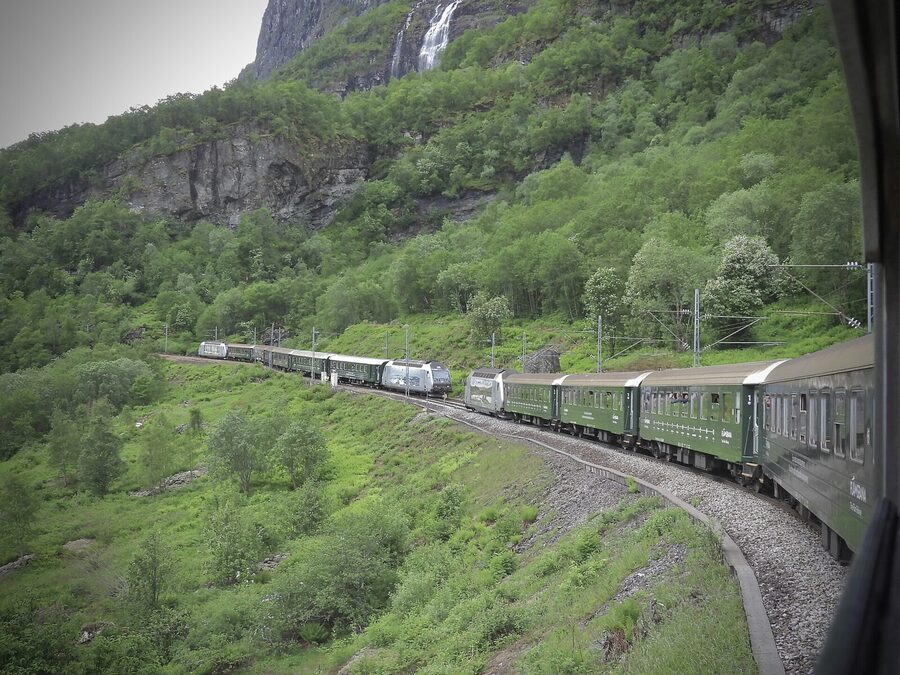
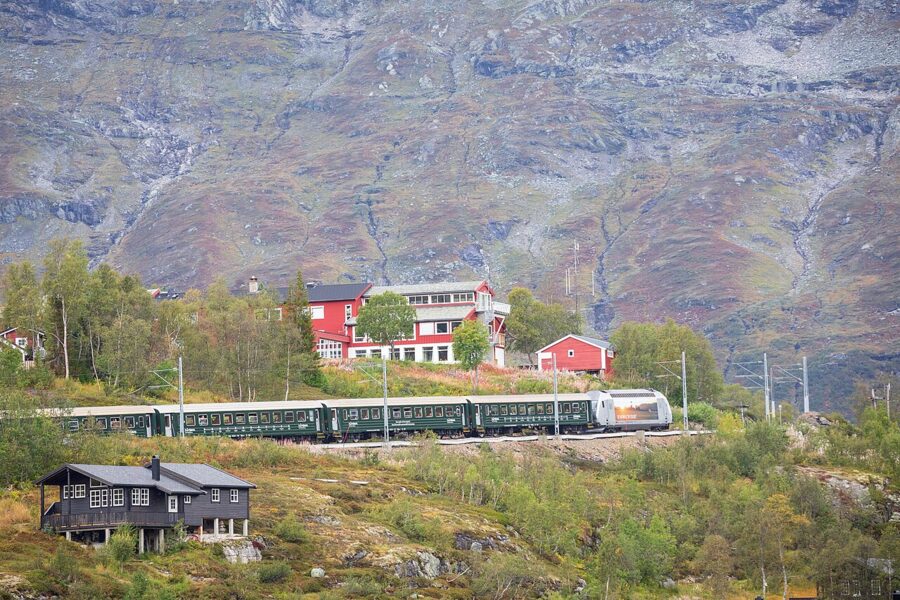
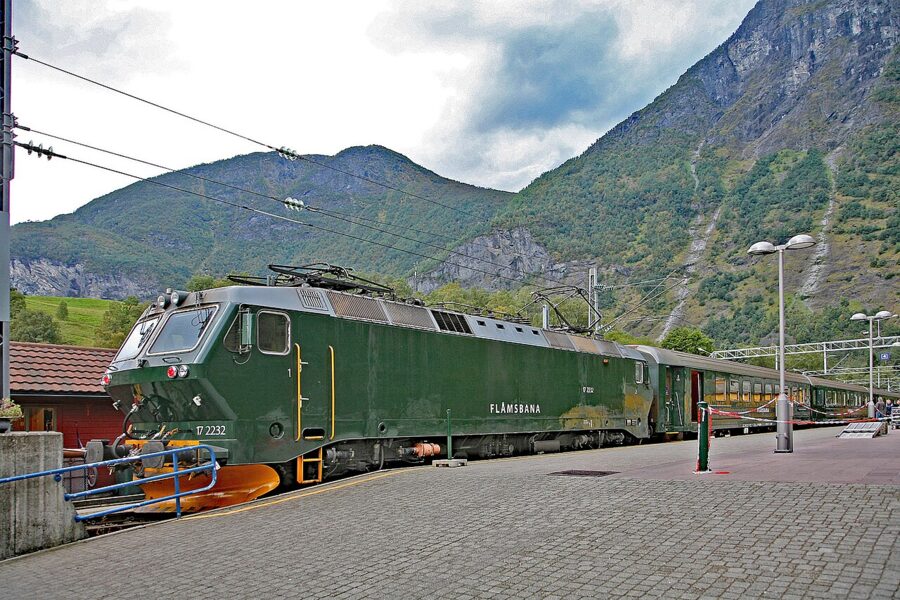
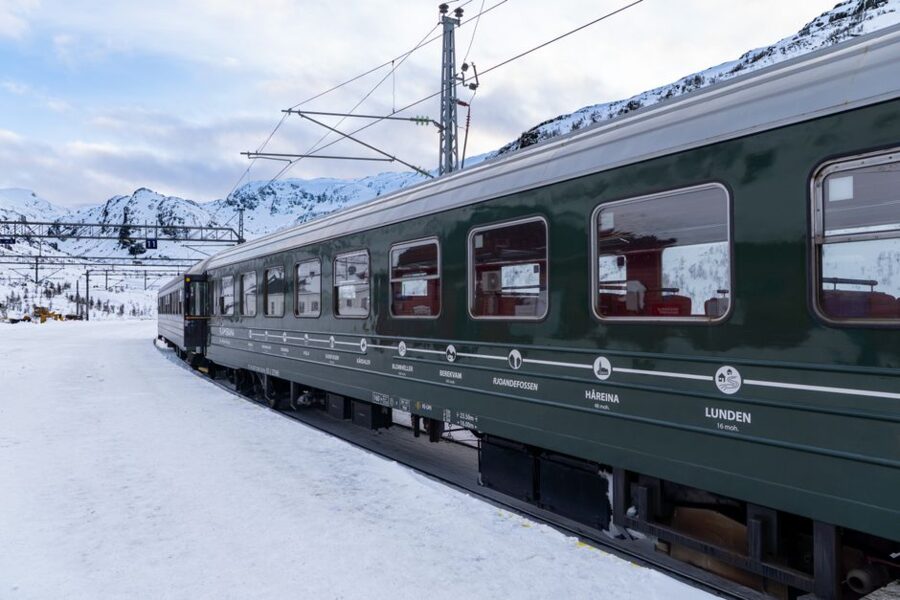
The Flåm Railway (Flåmsbana) drops 863 metres in 20.2 km, with most of the line on a gradient of 5.5 per cent, one of the steepest standard-gauge railways anywhere. It took from 1923 to 1940 to build; 18 of its 20 tunnels were dug by hand, and one of them turns a full 180 degrees inside the mountain. The ride takes an hour, and adult singles start at NOK 399, with children aged 6–17 at half price.
Sit on the left going down. Leaving Myrdal the line swings left, right and left again on the Myrdal bends, and the left-hand windows get the valley and Rjoandefossen; near Flåm the church and Brekkefossen are also on the left. In the middle section it hardly matters, because the views swap sides every few hundred metres. Coming up from Flåm, sit on the right.
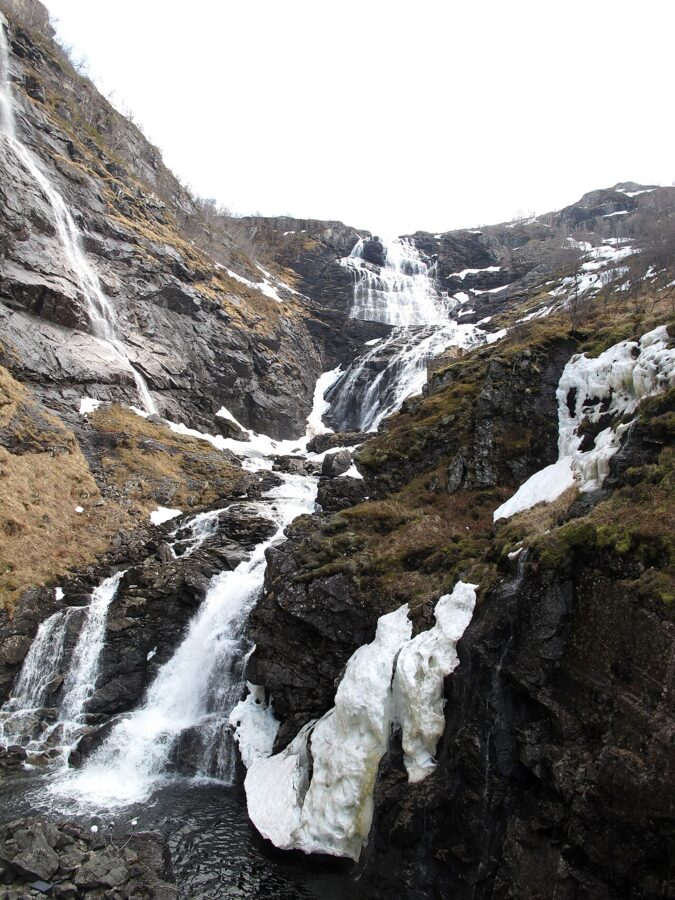

Kjosfossen falls 93 metres beside the track, and the train stops there for about five minutes. In summer a dancer in red appears on the rocks as the huldra, the forest spirit of Norwegian folklore, and performs over the roar; people either love it or check their watches. Interrail and Eurail holders with an active travel day get 30 per cent off single tickets, bought at a staffed station or by phone rather than online.

Flåm
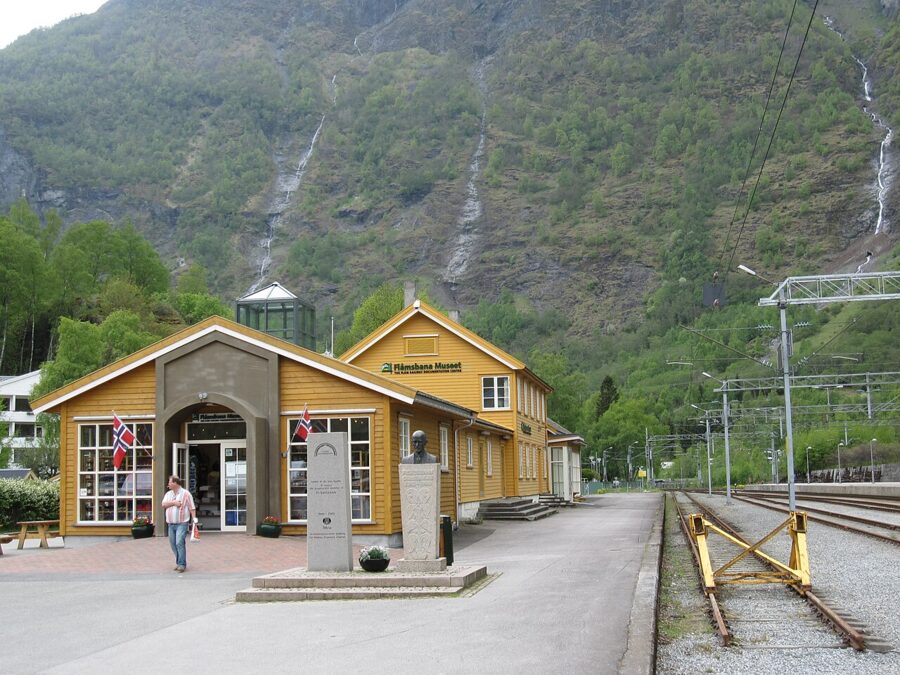
Flåm has about 350 residents and a quay that can take a ship carrying several thousand passengers, which explains a lot about the place in July. Station, quay, bus stops and visitor centre sit within a couple of hundred metres of each other at the head of the Aurlandsfjord. The Flåm Railway Museum beside the station is free and does a better job of the railway’s construction than any leaflet.

If you have two hours between train and boat, walk. The trail to the Raokjen viewpoint over Brekkefossen is just under 5 km and takes about an hour and a half, up stone steps from the valley floor. Bags go in the self-service lockers by the visitor centre, which cost NOK 150–200 a day by size and take a card.

The boat through the Nærøyfjord
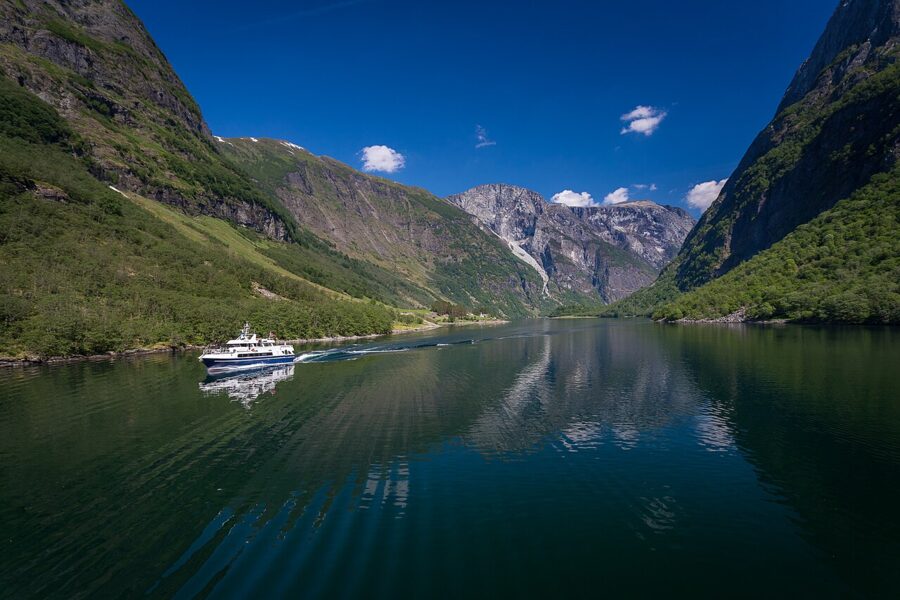
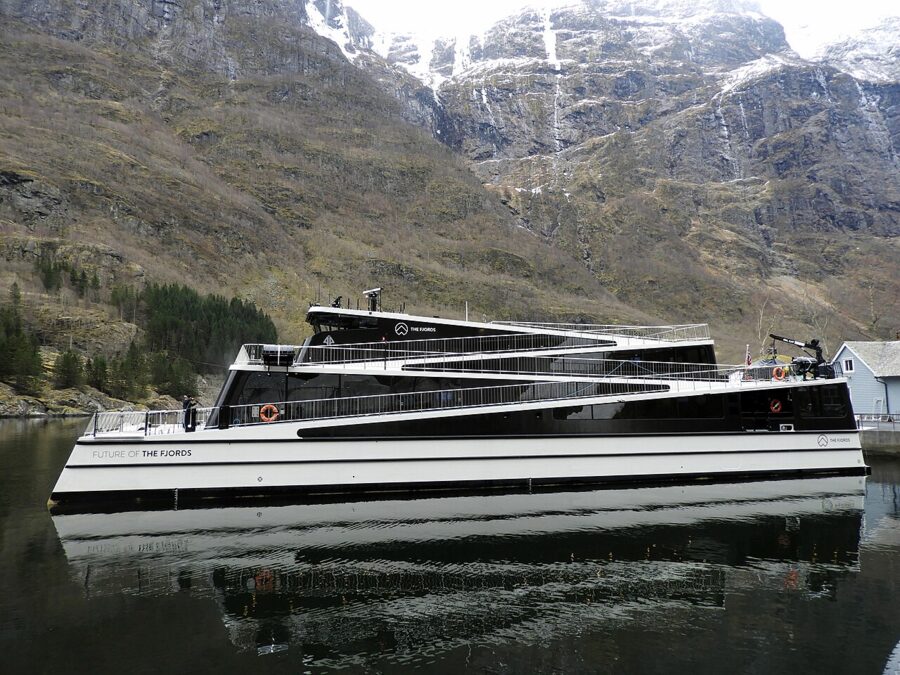
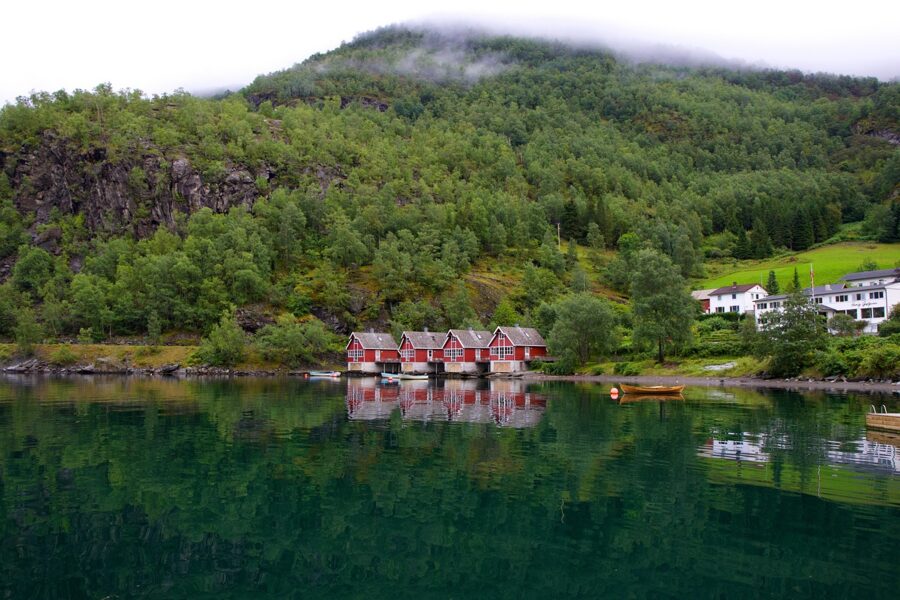
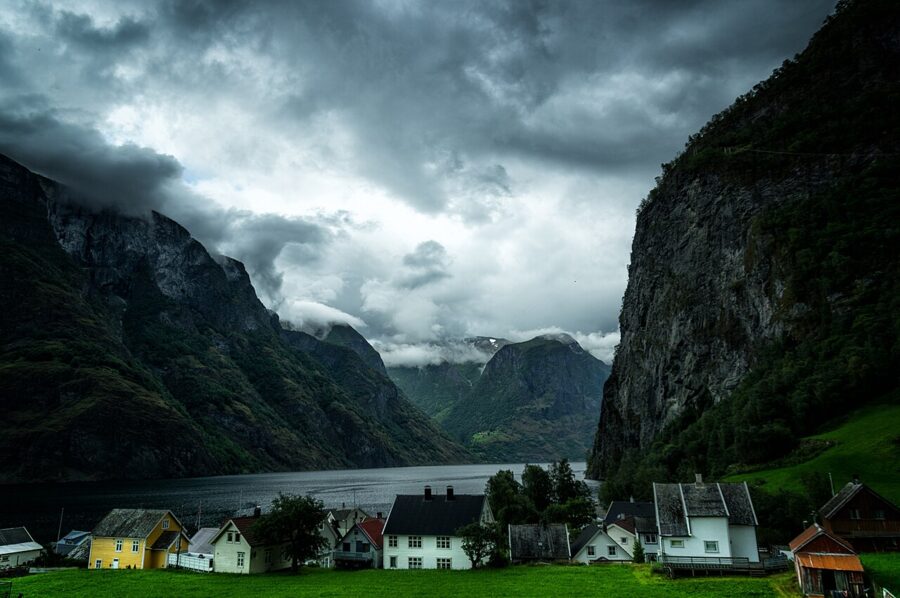
The Nærøyfjord boat is run by The Fjords and sold through Norway’s Best, on silent electric catamarans with tall windows and outdoor walkways. From Flåm it heads north up the Aurlandsfjord past Aurland and Undredal, turns into the Nærøyfjord and ties up at Gudvangen about two hours later. At its narrowest the Nærøyfjord is about 250 metres across, and the farms on its ledges are reached only by boat or steep path.
Some sailings call at Aurland, Undredal, Dyrdal and Styvi, but only if you book that stop before the boat leaves; otherwise it sails straight past. The café on board sells sandwiches, pastries, coffee, wine and beer, and you may not eat or drink anything you brought. Luggage goes on open shelves by the entrance, unwatched, so keep valuables with you.
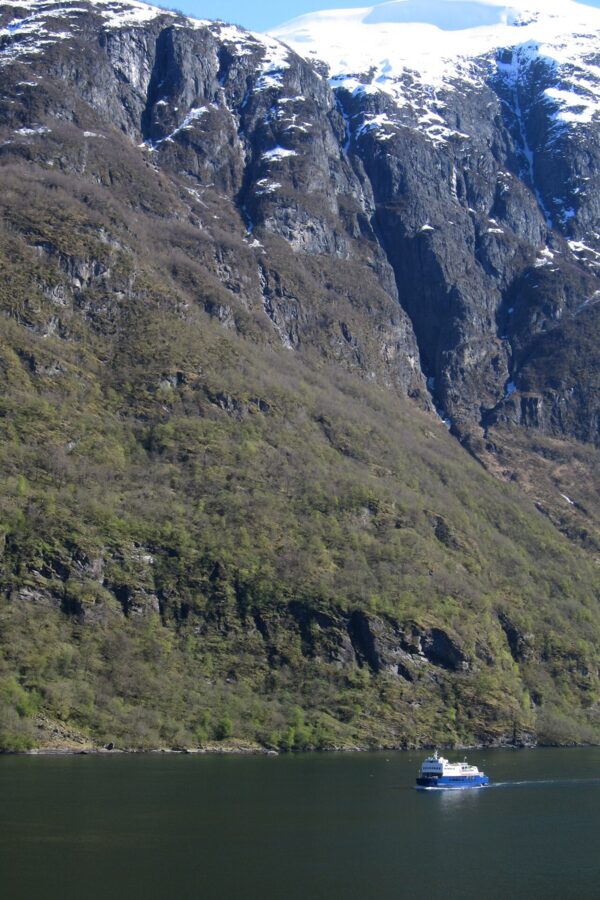

In winter the operator warns that the route can change at short notice. In bad weather it can sail out and back from Flåm with no intermediate stops, with a bus to Gudvangen for onward connections. Keep a little slack in a winter day for it.
Gudvangen
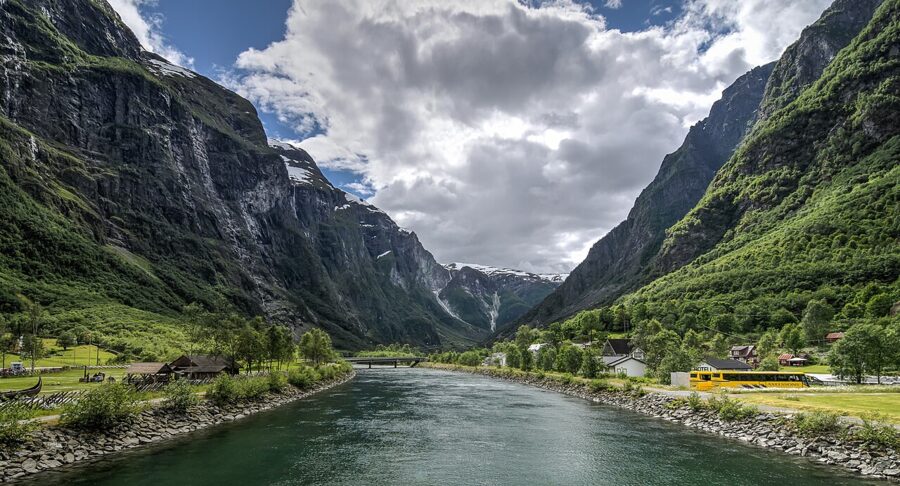
Gudvangen is a quay, a couple of hotels and a valley floor at the inner end of the Nærøyfjord, with walls rising almost straight from the water. Njardarheimr, a reconstructed Viking village staffed by people in Viking dress, is a few minutes’ walk from the boat; Norway’s Best sells entry from NOK 260. The bus to Voss leaves from stop H, on the median strip by the ferry terminal, less than 100 metres from where you step off.

The bus to Voss, and what happened to Stalheimskleiva
The Gudvangen–Voss bus takes about an hour through Nærøydalen and costs from NOK 200. Buy the ticket before you board: you cannot pay the driver. In Voss it stops at bus terminal stop A, right outside the railway station.
The route has changed recently, and older guides are wrong about it. Since 1 May 2026 the county operator Skyss runs only the school and commuter departures on route 950; the midday departures that suit the boat are run for visitors and sold by Fjord Tours and Norway’s Best. There are two each way, all year, and from May to mid-October the bus stops at Stalheim if you book that stop by the day before.
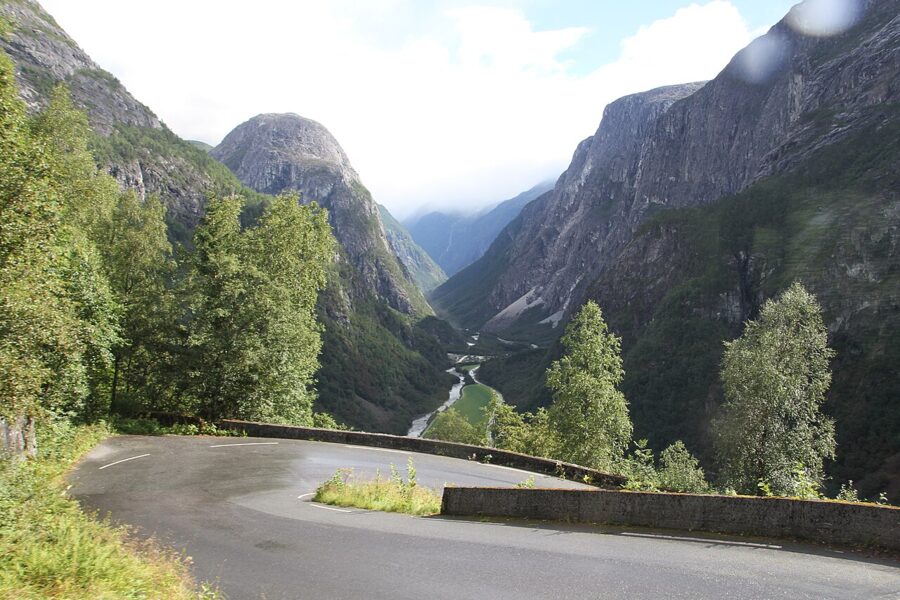

The famous part of the old trip was the descent of Stalheimskleiva, the hairpin road from Stalheim Hotel down to the valley floor, 14 bends and 270 metres of drop. It was closed permanently to motor vehicles in 2021, and the bus now climbs out of Nærøydalen through the Stalheim and Sivle tunnels on the E16. If you want the bends, get off at Stalheim in summer and look down from beside the hotel; the old road is now a protected monument.

Voss to Bergen
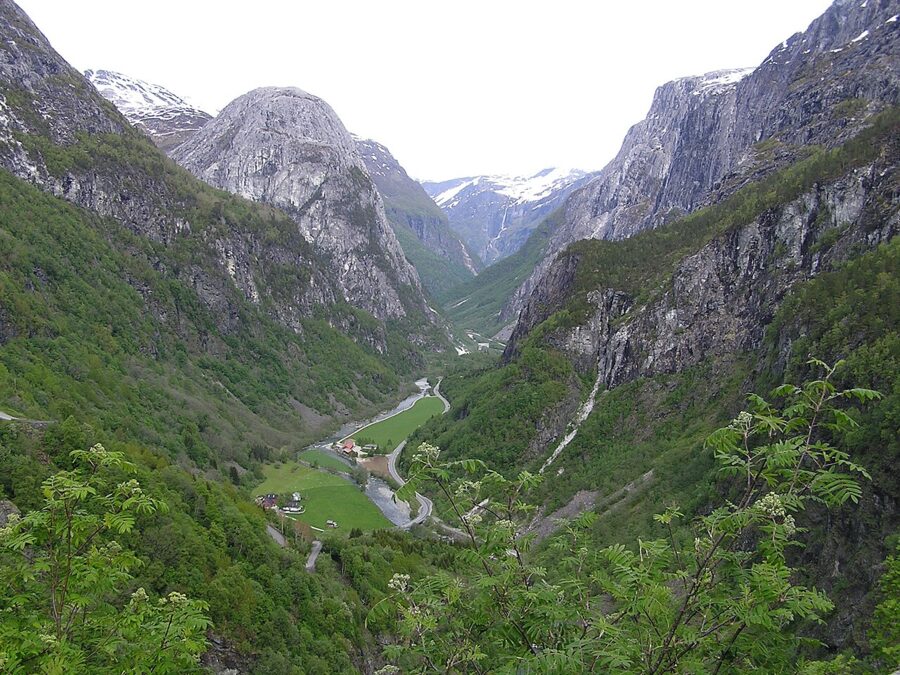
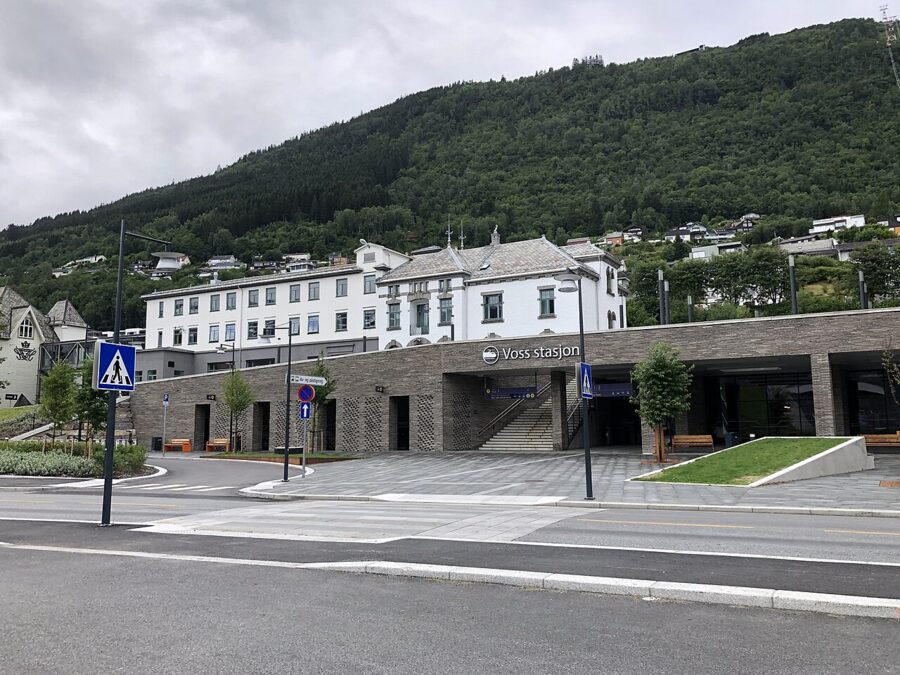
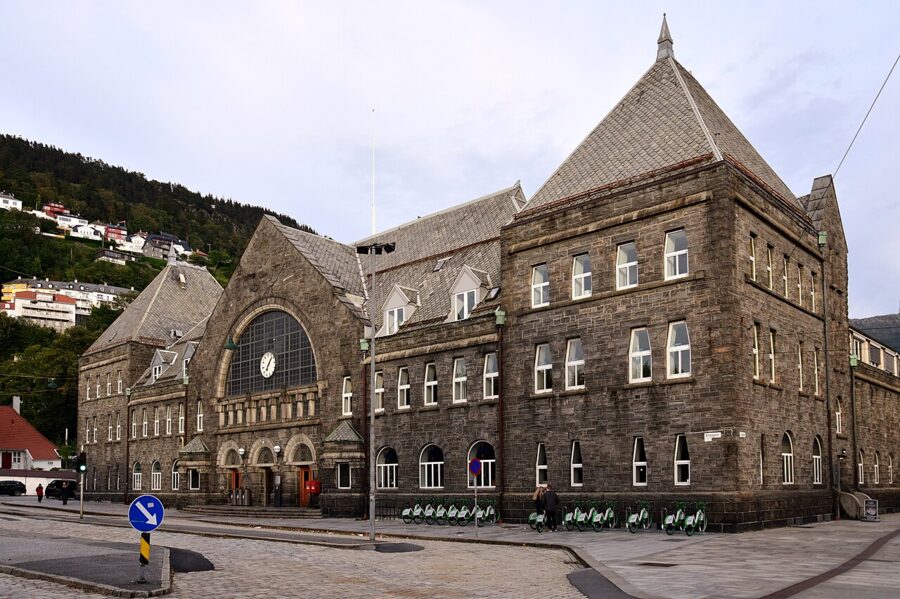
Voss is a small town known for skiing and its extreme-sports week, and the Voss Gondola leaves from beside the station if your timing allows a ride up. Trains to Bergen are either through trains from Oslo or the local R40, which stops at every halt on the way down through Evanger, Dale and Vaksdal to Arna. Either way the last stretch follows lakes and narrow fjord arms into the city, and Bergen station is a ten-minute walk from Bryggen.

Starting in Bergen simply runs all of this backwards: train to Voss, bus to Gudvangen, boat to Flåm, the Flåm Railway up to Myrdal, then the Bergen Line home or on to Oslo. The Bergen round trip is the version I would pick for a first time. It drops the long Oslo run, keeps every highlight and leaves you a night in Bergen at each end.

What the package includes, and what it costs
Norway in a Nutshell includes the Bergen Line, the Flåm Railway, the Nærøyfjord boat and the Gudvangen–Voss bus for the route you choose, plus the digital guide and customer support during the trip. Meals, hotels, activities and luggage transfer cost extra. You can add overnight stops along the way when you book, in places such as Flåm or Gudvangen, which is the most useful thing the package lets you do.
These are the adult fares Fjord Tours lists for the main versions, with the range covering the cheaper and dearer seasons. Children travel for less.
| Version | Adult fare |
|---|---|
| Bergen round trip (via Voss and Flåm, either direction) | NOK 2,482–2,698 |
| Oslo to Bergen, or Bergen to Oslo, one way | NOK 3,131–3,474 |
| Oslo round trip, turning at Voss | NOK 4,030–4,522 |
| Oslo round trip via Bergen | NOK 4,496–5,008 |
| Voss or Flåm round trip (the fjord loop only) | NOK 1,700–2,149 |
| Geilo round trip | NOK 2,517–2,829 |
What you are paying for beyond the tickets is the joined-up booking. If a train is late and you miss the boat, Fjord Tours arranges the alternative; book the legs yourself and that problem is yours. The transfers are all within a five-minute walk, so the guide is reassurance more than navigation.
Doing it yourself, and what it saves
Every leg is public and bookable on its own. Vy sells the Bergen Line and the Flåm Railway, including through tickets such as Oslo to Flåm with the change at Myrdal; Norway’s Best sells the boat and the Flåm Railway round trip; Fjord Tours and Norway’s Best both sell the bus. That is three websites and four or five bookings, and it takes about half an hour once you have the times in front of you.
The saving lives in the Bergen Line fares. Lavpris (Lowfare), the fare older guides call Minipris, is the cheapest Vy ticket, sold in limited numbers with the cheapest seats going first; it cannot be changed or refunded, though there is a four-hour cancellation window after purchase. Vy’s low-fare calendar shows the cheapest fare day by day for the next four months, which is the quickest way to see whether your dates are cheap.
The fixed legs are easy to add up. The Flåm Railway from NOK 399, the boat from NOK 640 and the bus from NOK 200 come to about NOK 1,240 per adult. Against the NOK 2,482–2,698 package from Bergen, you save money whenever your two Bergen Line tickets cost less than about NOK 1,250 between them, which early Lavpris fares can manage and a last-minute summer fare may not.
Here is how I would decide:
- Book the package if your dates are fixed in July or August, you are travelling with children or with a lot of luggage, or a missed connection would ruin the trip. The rebooking cover is worth real money in a month when departures fill.
- Book it yourself if you are flexible, you want the first or last boat of the day rather than the one everyone else is on, or you plan to stop overnight somewhere the package does not suggest.
- Book it yourself, early, if cost is the point. Lavpris seats are limited and the cheapest go first, so buy as soon as your dates are on sale.
One day, or a night on the fjord
The one-day version works, and plenty of people do it, but it is long, and it puts you on whichever boat and bus line up with the trains, which in summer are the busiest ones. A night in the middle changes the trip completely. You get the fjord in the evening, when the day boats have gone, and the next morning before they come back.
Flåm is the obvious place, with the Fretheim Hotel, Flåmsbrygga Hotell and Flåm Camping & Hostel all in the village. Gudvangen has the Gudvangen Fjordtell and a budget hotel by the quay. The quieter choices are the two villages the boat passes on the way up the Aurlandsfjord.
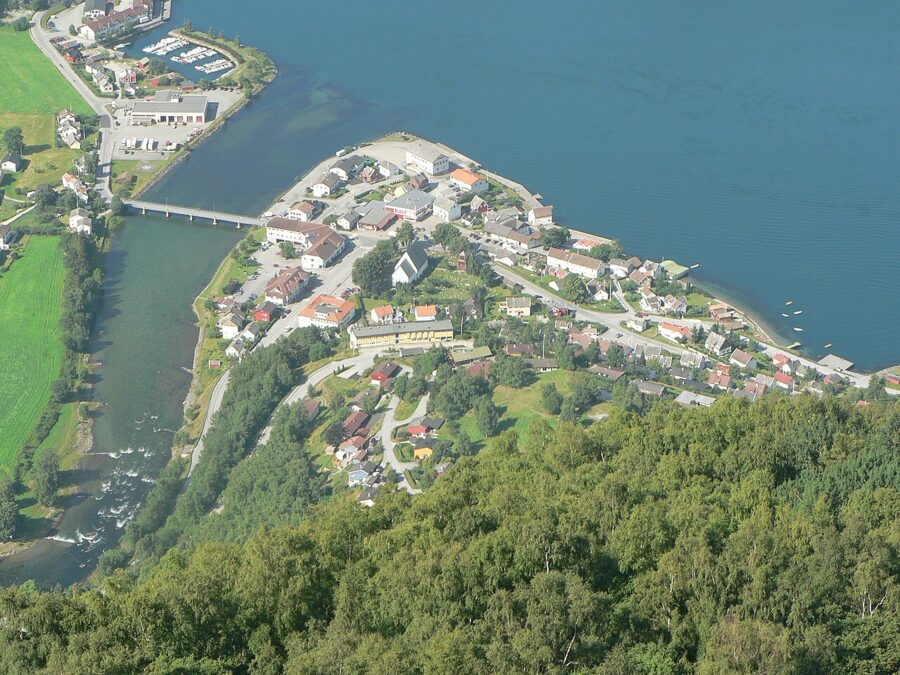

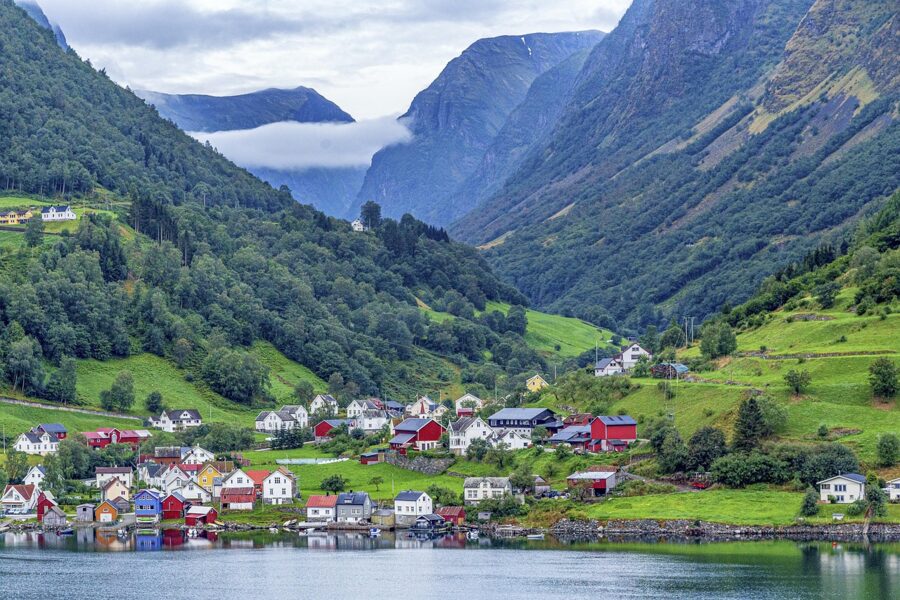
Aurland (Aurlandsvangen on the signs) is a proper village with a stone church and the road up to Stegastein. Undredal, a little further out, is a cluster of houses, goats and a tiny white stave church; its goat cheese is the thing people take home. Both are stops on the Nærøyfjord boat, but only on sailings that call there and only if you book the stop, so plan the night around the timetable.

Luggage
You can take luggage on every leg, and the Flåm Railway has overhead racks, but a big suitcase on a crowded summer train is nobody’s idea of fun. Fjord Tours offers luggage transfer between participating hotels in Oslo and Bergen on selected journeys, at extra cost, so your case goes direct while you carry a day bag. If you are doing it yourself, the lockers in Flåm take bags for up to three days and the ones at Bergen station for up to seven; there is nowhere to leave anything at Myrdal.
Summer, winter and the months between
The Nutshell runs every day of the year, but the timetable behind it changes several times. This is the pattern in the operators’ published timetables for 2026–27; the exact times move a little each season, so check before you book.
| November–March | April | May | June–August | September–mid-October | |
|---|---|---|---|---|---|
| Flåm Railway, round trips a day | 4 | 6 | 10 | 10 | 10, then 9 from mid-September, 6 in October |
| Nærøyfjord boat, each way a day | 2 | 2 | 4 | 6 | 4 |
| Gudvangen–Voss bus, each way a day | 2 | 2 | 2 | 2 | 2 |
| Flåm–Gudvangen shuttle bus, each way a day | 3 | 4 | 9 | 17 | 9 |
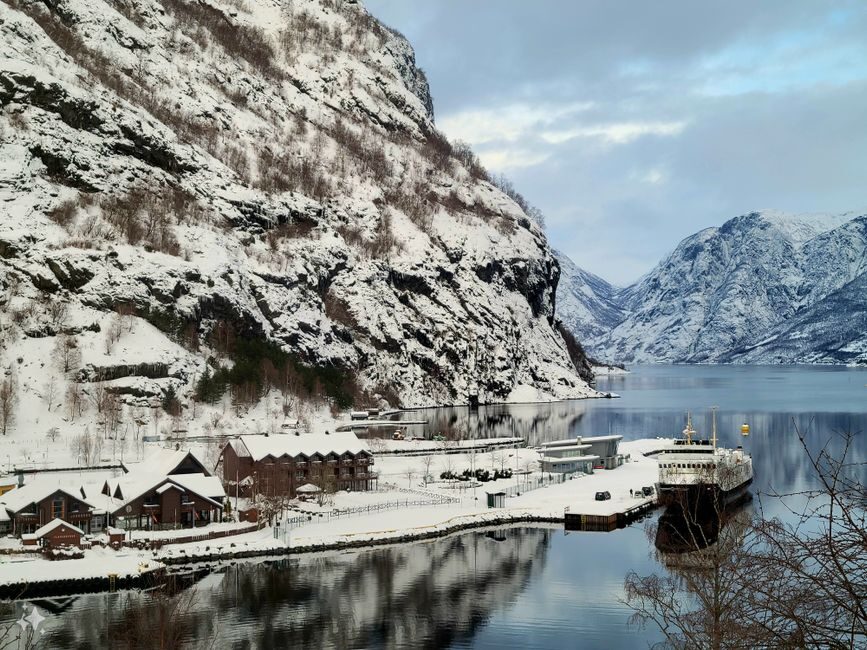
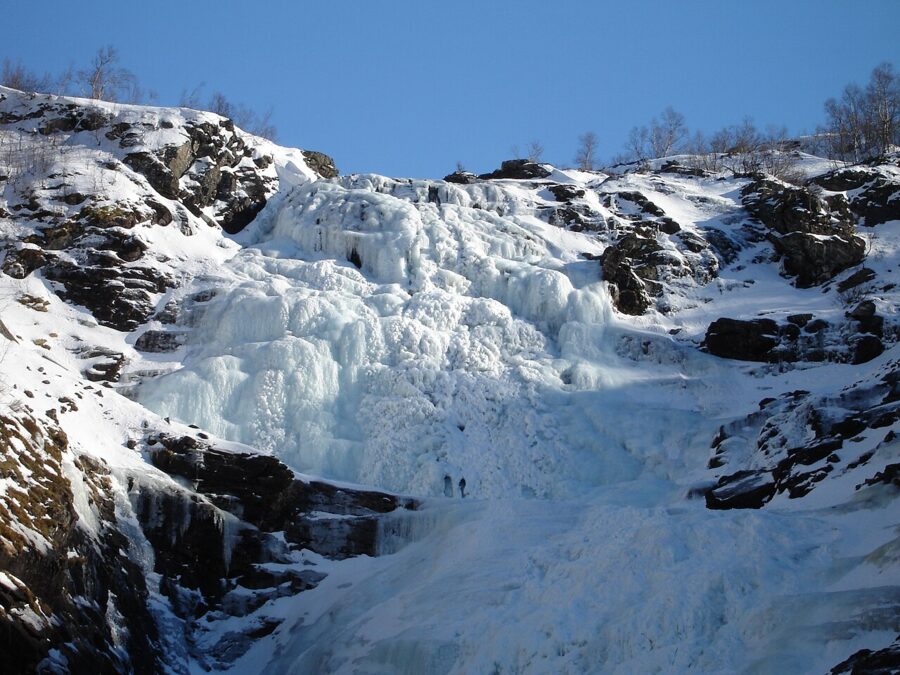
Winter makes a different trip, and in some ways a better one. The Bergen Line crosses a white plateau, Kjosfossen hangs frozen beside the halt, and the Nærøyfjord is dark water under snowy walls with almost nobody else on the boat. The costs are short days, two boats instead of six, a slightly slower Bergen Line through the exposed mountain section, and the chance of a weather change on the fjord.

In December and January the light is the limit. A one-day trip from Oslo spends much of the Bergen Line in darkness, so the winter trip is better from Bergen, or with a night in Flåm so the boat and the railway both fall in daylight. Spring brings the biggest waterfalls; autumn turns Flåmsdalen red and yellow and empties the villages again.
Engineering works and closures on the Bergen Line
Bane NOR, which owns the track, does its big maintenance jobs when traffic is lightest: Easter and the summer holidays. Over Easter 2026 about 200 people worked on the Bergen Line between Hønefoss and Geilo, renewing overhead lines, sleepers and points. For summer 2027, Vy has announced that Oslo S will be closed to trains from 17 July to 3 August, with trains turning at the nearest stations instead.
Unplanned closures happen too. In October 2024 a fire in a snow shed at Hallingskeid closed the line between Finse and Myrdal for several days, which is the one section of the route with no road alternative. Vy advises allowing 30–60 minutes extra when a replacement bus is running; if your dates fall at Easter or in late July, check the journey planner for your exact day before you buy anything that cannot be refunded.
Variations on the route
The Sognefjord express boat from Bergen
From 1 April to 31 October, Norled’s express boat sails daily from the Strandkai terminal in Bergen up the Sognefjord to Flåm, calling at places such as Balestrand, Vik, Leikanger and Aurland. It leaves Bergen in the morning, takes about five and a half hours, and returns from Flåm in the afternoon; the adult fare Bergen–Flåm is NOK 1,295. It is passenger-only, and you can break the trip at Balestrand if you book each stretch separately.
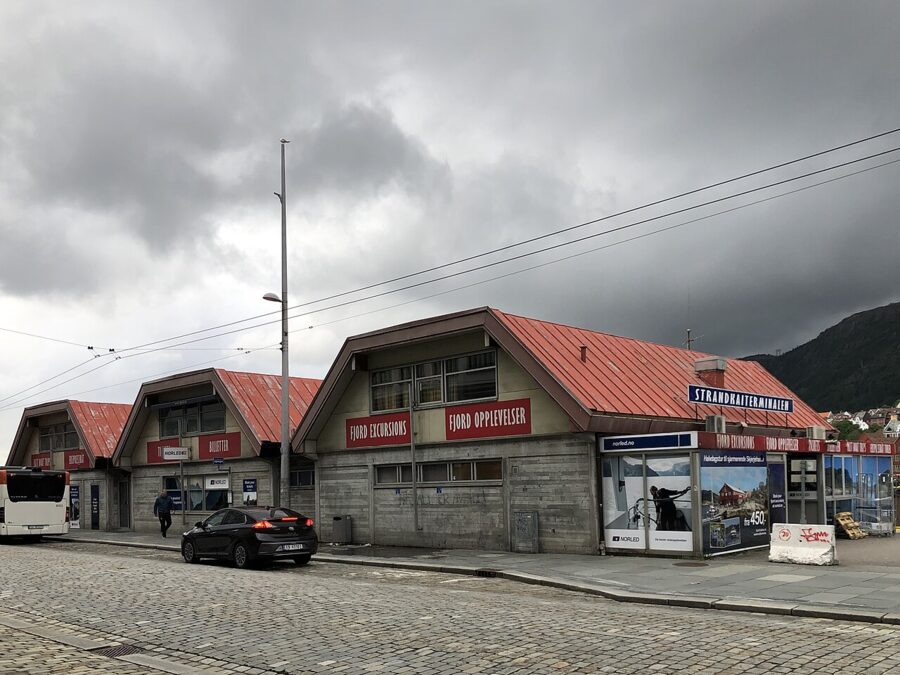

The neat way to use it is as one half of a loop from Bergen: the boat to Flåm, the Flåm Railway up to Myrdal and the Bergen Line home, or the reverse. You trade Gudvangen and the Nærøyfjord for the full length of the Sognefjord. Fjord Tours sells this combination as Sognefjord in a Nutshell, and you can book the same legs yourself.
Stegastein
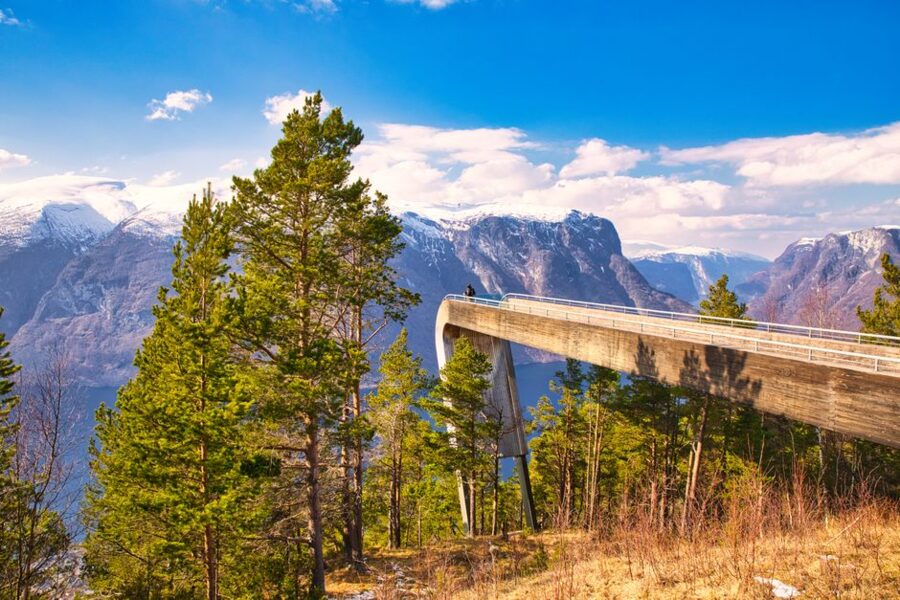
Stegastein is a timber and steel platform that sticks out 650 metres above the Aurlandsfjord, on the road climbing out of Aurland. The road is kept open to the viewpoint all year, though the mountain road beyond it is not. Without a car, Norway’s Best runs a bus up from Flåm from NOK 440, with time for photos at the top; that fits easily into a night in Flåm, less easily into a one-day trip.
Doing it by car
You can drive most of the Nutshell, but not all of it. There is no road to Myrdal, so drivers park in Flåm and ride the Flåm Railway up and back, a round trip Norway’s Best sells from NOK 675. Stalheimskleiva is closed to cars, and between Gudvangen and Voss you are on the E16 through the same tunnels as the bus.
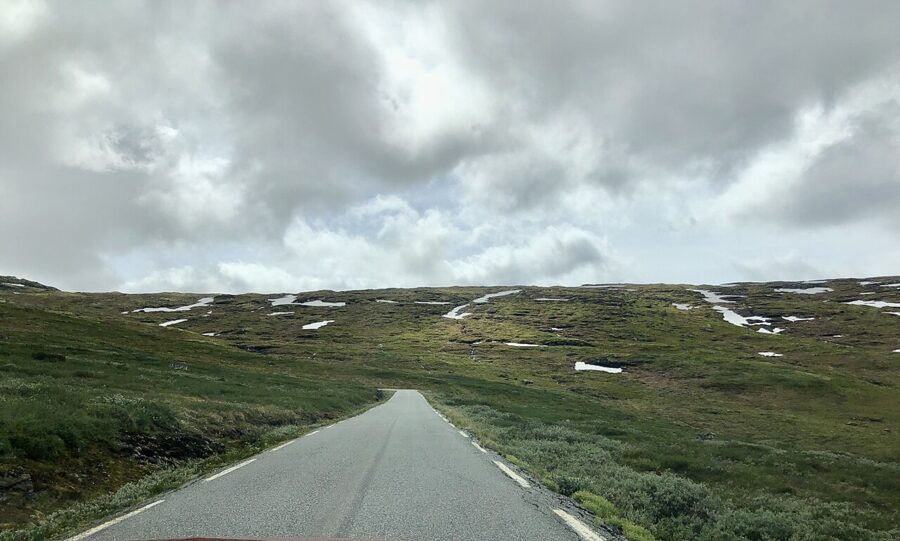
What a car adds is the mountain road over Aurlandsfjellet, the 47 km Norwegian Scenic Route between Aurlandsvangen and Lærdalsøyri that climbs to 1,308 metres. It closes for the winter; in recent years it has opened between early May and early June and closed between early October and early November, and it can shut at night after opening. Come back through the 24.5 km Lærdal Tunnel and you have the round trip the road authority itself recommends.

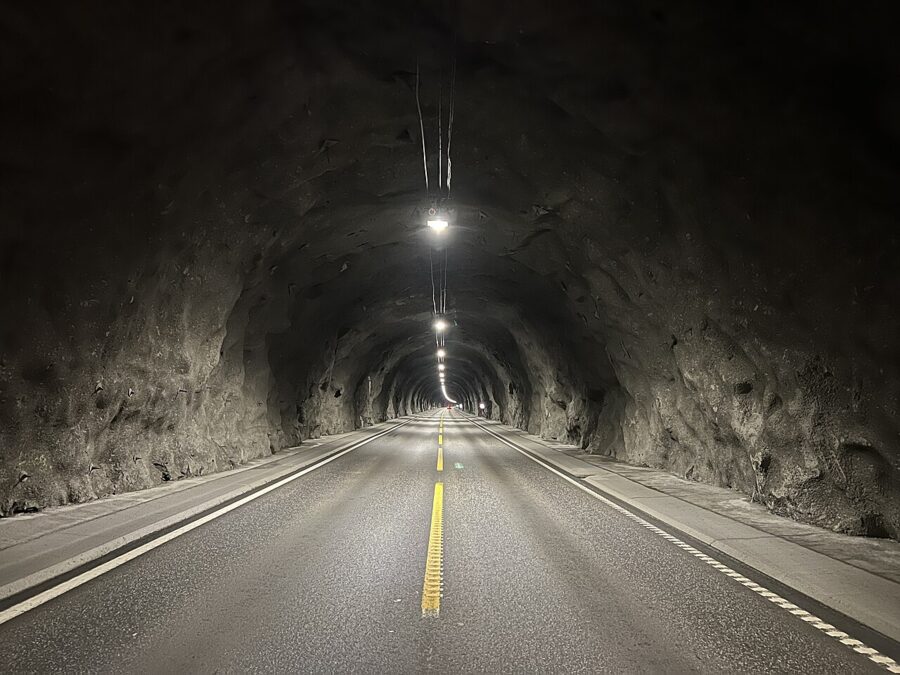

With a car you can also see the Nærøyfjord from the water on the Kaupanger–Gudvangen car ferry, which runs from late May to mid-September and carries the car through the fjord to the Sognefjord. If the trip is heading north rather than home, Bergen is also where the coastal ships start their run up the coast towards Lofoten and Tromsø.
Cruise-ship days in Flåm, and the quieter way through
The Port of Flåm’s arrival list for 2027 shows a cruise ship on about 19 to 23 days a month from May to August, and on 17 days in September. The port takes one ship at a time, but the ships are big: many carry 4,000 to 6,600 passengers, and they are typically alongside from about 07:00 until 17:00 or 18:00. In a village of 350, that crowd goes straight to the Flåm Railway, the Nærøyfjord boat and the Stegastein bus.
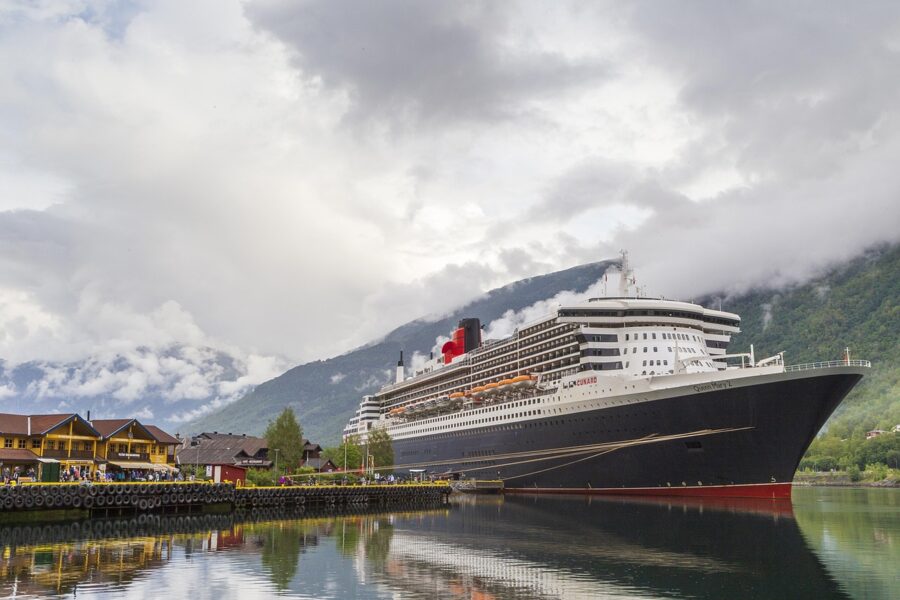
You cannot avoid them in summer, but you can sidestep them. Look up your date on the arrival list before you book; it is public and runs more than a year ahead. On a ship day, take the first boat of the morning or the last of the afternoon, ride the Flåm Railway early or in the evening, and spend the middle of the day out of Flåm, in Undredal or on the Brekkefossen path.
The quieter version of the whole route has a night in the middle. Leave Bergen early for Voss, take the morning bus to Gudvangen and the boat to Flåm, sleep in Flåm or Aurland, and ride one of the early Flåm Railway trains up to Myrdal the next morning for the Bergen Line east or back to Bergen. May and September give you most of the summer timetable with fewer people on every leg.
Up at Myrdal again, the Flåm Railway train waits for the next arrival from Oslo, and the people who walk briskly from the Bergen Line will get the left-hand windows. Book that railway and the boat as soon as your dates are fixed. In July those are the departures that fill.