

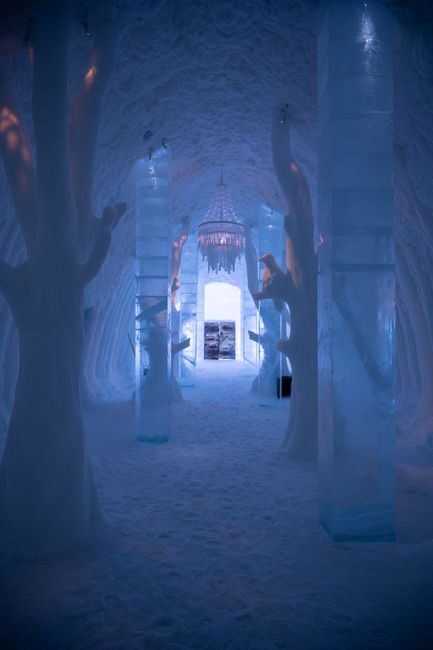
At 18:00 the last day visitors are walked out of the ice, the curtains are let down over the doorways, and the rooms become bedrooms. Inside it is about minus five whatever the night is doing outside. You lay a sleeping bag rated to minus 25 on a mattress of reindeer hides, pull a wool hat down over your ears, and the loudest thing in the room is your own breathing.
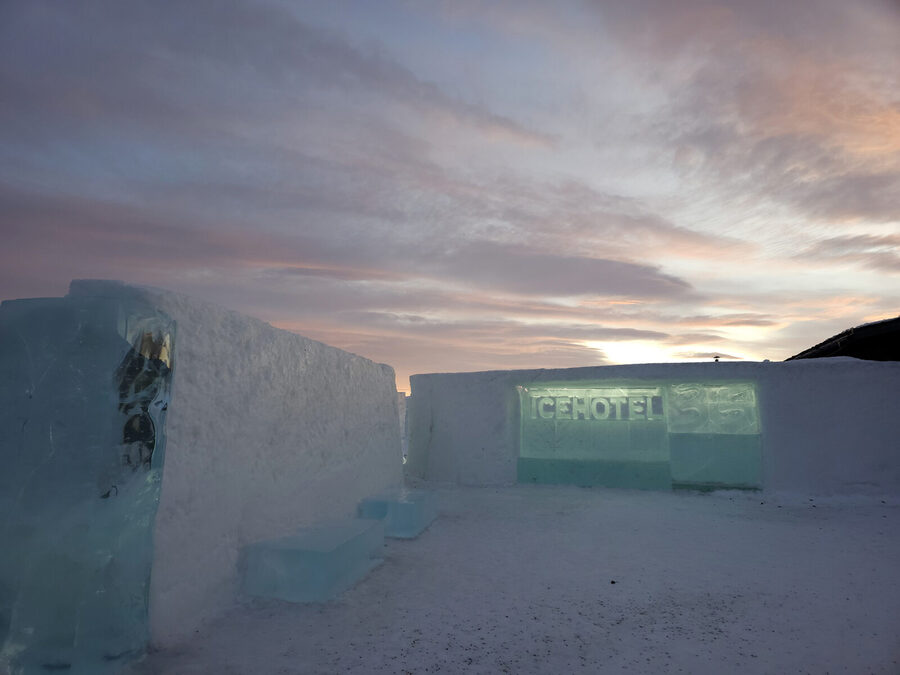

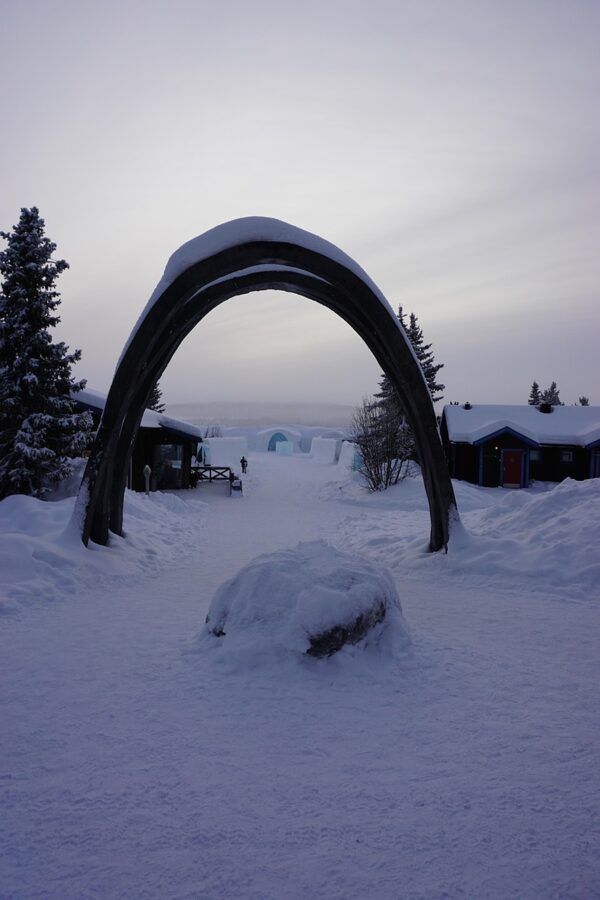
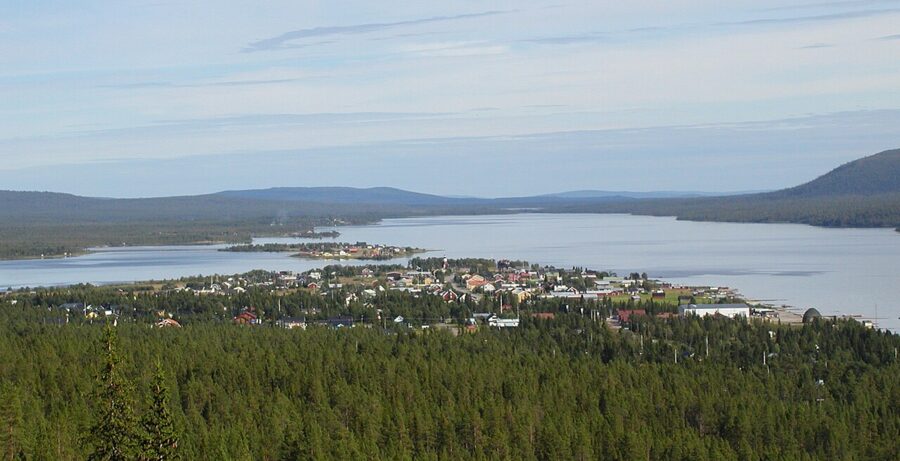
Icehotel stands on the bank of the Torne River (Torneälven) in Jukkasjärvi, a village of under a thousand people 17 km east of Kiruna and about 145 km north of the Arctic Circle. Every winter a new hotel is built from river ice and snow, filled with suites carved by invited artists, and left to melt back into the river in spring. Beside it, Icehotel 365 keeps eighteen ice suites and a bar frozen all year, so you can sleep on ice in July as well as in February.
The winter building this season is ICEHOTEL 37, which opens on 11 December 2026 and stays open into April. Rooms are priced per room and per date on the hotel’s own booking pages, with breakfast and entry included; nobody publishes a flat rate, and the art and deluxe suites cost more than the plain ice rooms. If you only want to look, a day ticket is SEK 325 for an adult outside the winter season.
Getting there is simple. Kiruna Airport is about 15 minutes away by road, with flights of around 90 minutes from Stockholm Arlanda, and the night train from Stockholm reaches Kiruna station in roughly 14 hours. From either, a transfer, a taxi or Länstrafiken Norrbotten’s bus 501 covers the last stretch.
How the hotel is made from the Torne River
The building starts in spring, not winter. When the river ice is at its thickest, in March or April, blocks are sawn out and lifted from the Torne, each weighing up to two tonnes, and kept frozen in storage through the summer. The river runs 520 km from the mountains to the Gulf of Bothnia and is one of Sweden’s four national rivers, a status that keeps hydropower dams off it; its clear ice is the hotel’s raw material.
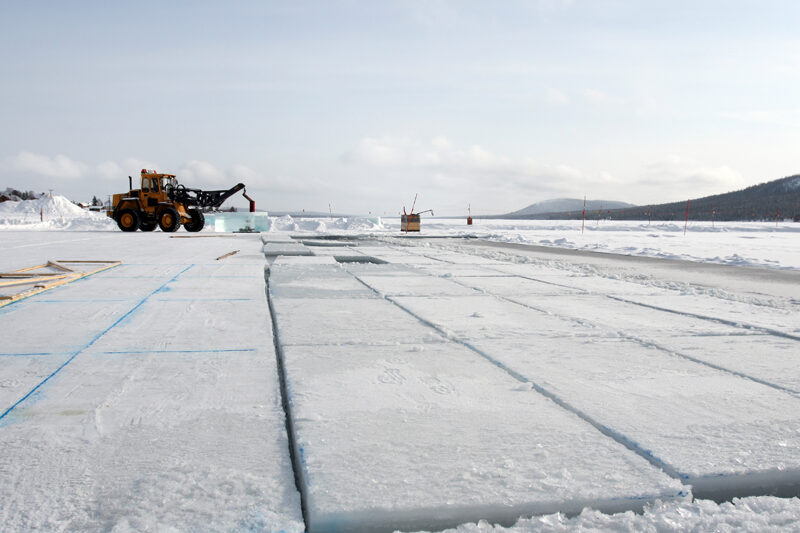

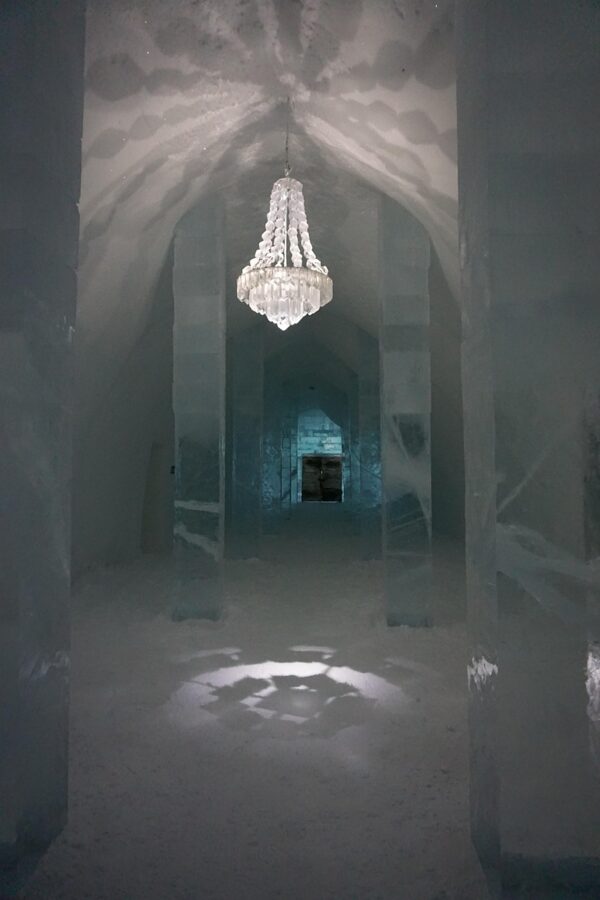
Construction begins in November once it is cold enough to make snow. Moulds are set up along the riverbank and sprayed with snice, a mix of snow and ice, which sets hard enough within days for the moulds to be pulled away. The corridors and rooms are arches, the strongest shape for the material, and the shell takes about six weeks.
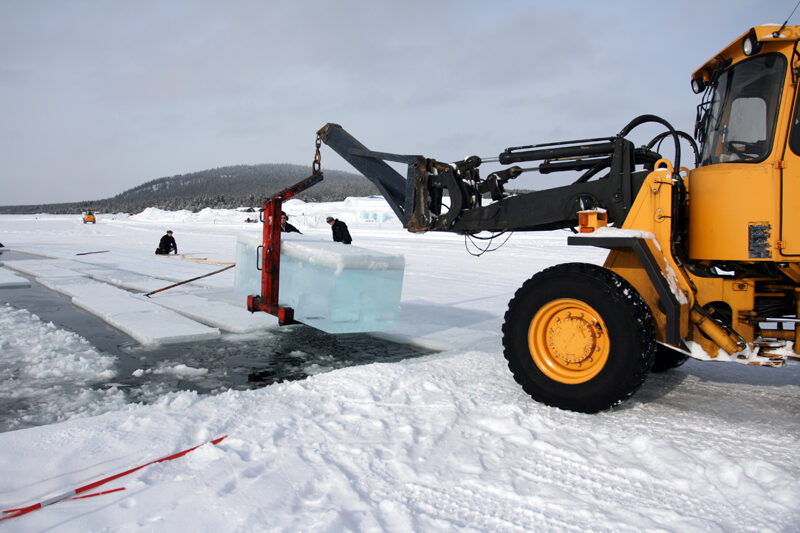

Then the artists arrive. Each spring Icehotel opens applications for the next winter, and from a field it puts at somewhere between 150 proposals and 200 applicants, around fifteen designers, architects and sculptors are chosen. They gather in Jukkasjärvi in November to carve the art suites, while lighting designers work beside them. The hotel opens in sections, so in the first days of the season some rooms may still be behind a rope.
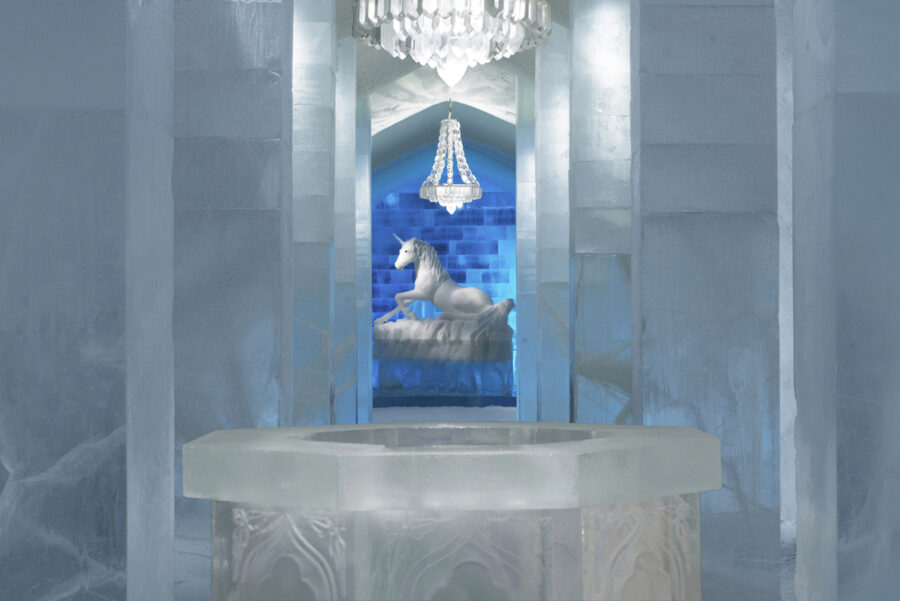

By April the sun is back and the walls start to soften. The winter hotel closes, the art goes with it, and by early summer the river has the water back. The story Icehotel tells about its own beginning is short: in 1989 Yngve Bergqvist built an exhibition hall of ice and snow by the river, the cabins in the village were full, and a group of visitors asked to sleep inside it. The full version is on the hotel’s own story of the build.

Icehotel 365: the part that stays
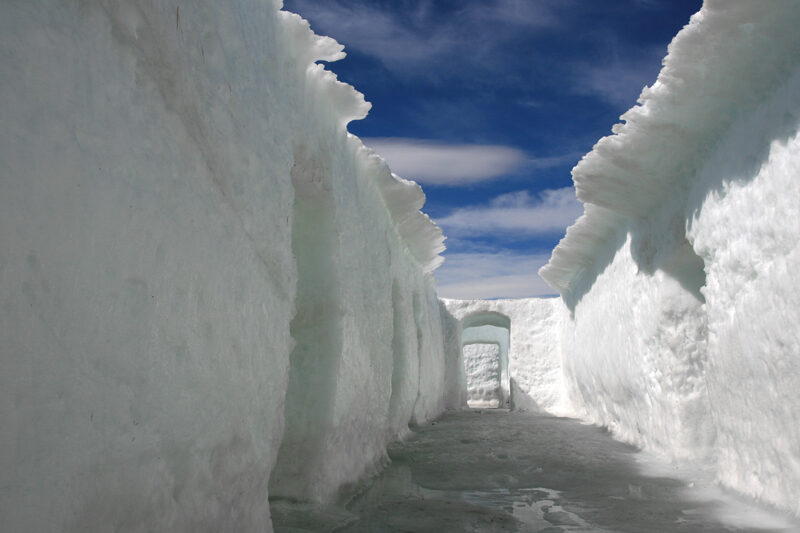
The permanent building opened in November 2016, and since 2017 Icehotel has sold nights on ice every day of the year. It holds nine art suites and nine deluxe suites, an ice bar, an ice gallery and an Experience Room that screens films on the hotel’s history. Solar panels run the cooling, so in Icehotel’s own description the summer sun outside keeps the suites at minus five inside.
In winter the two buildings look like one site. In summer the year-round building disappears under a grass roof and becomes the only ice on the riverbank. The suites have real doors, unlike the winter hotel’s curtains, and the deluxe suites carry Sámi names: one Johka (river), four Hilla (glow) and four Jáuvre.
If you are deciding between seasons, the art is the difference. The winter building is new each year and much larger; Icehotel 365 keeps the same eighteen suites through the year, and its main pull is that it exists in July. A summer visitor gets less ice and more river.
Cold rooms, warm rooms and how to split the stay
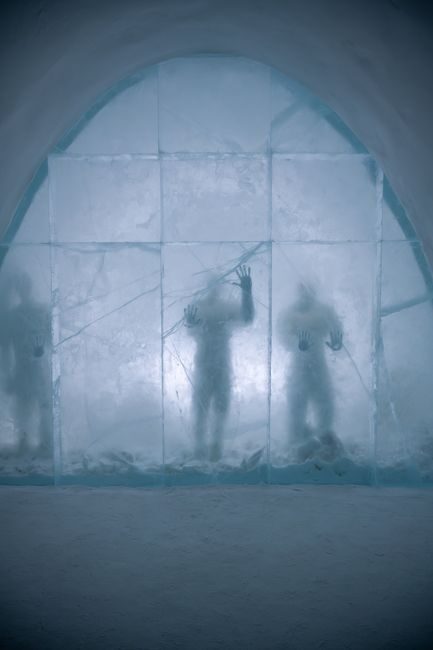
Every booking is either cold (sleeping on ice) or warm (an ordinary heated room), and Icehotel’s own advice is one cold night and the rest warm. I agree with it. The cold night is an experience rather than a rest, and two or three warm nights around it leave room for the dogs, the river and the dark.
The cold rooms
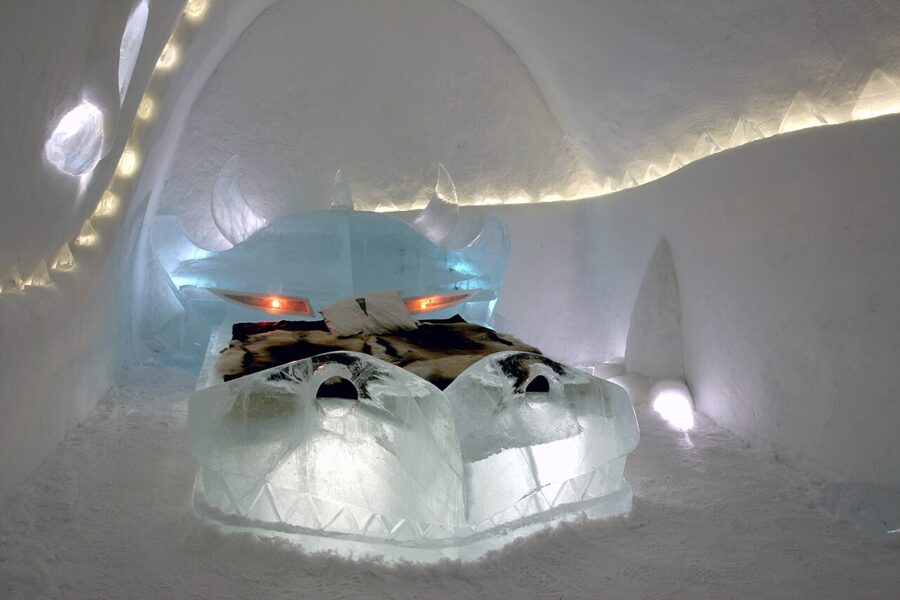
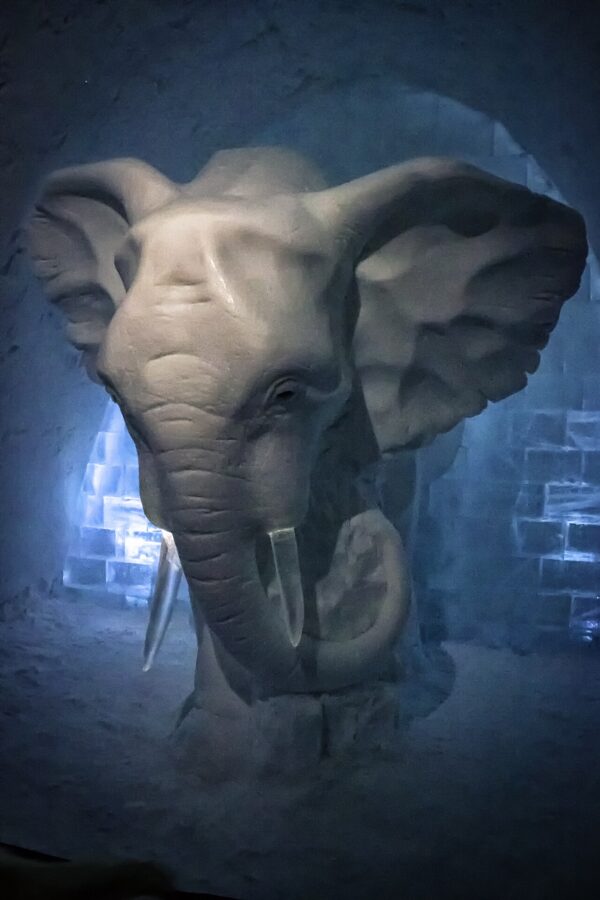
Ice rooms in the winter hotel are the entry level: a clean, carved room with a double, triple or quadruple bed, a locker in the heated Riverside building and the same minus five as everywhere else. Art suites are the individually designed rooms, each by a different artist, with a private changing booth at Riverside instead of a locker. Both close with curtains, not doors.
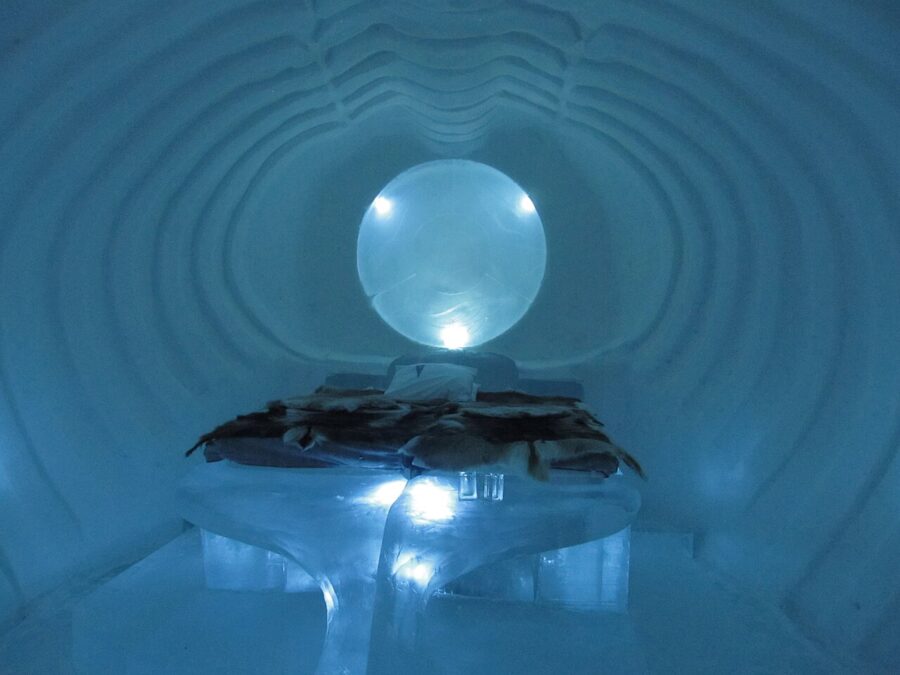

In Icehotel 365, the Art Suite 365 is 27 square metres with a double or triple bed. The Deluxe Suites 365 are the only cold rooms with their own warm bathroom, sauna and shower attached, which changes the night more than anything else on the list; the Hilla suites are 40 square metres. If cold feet are your worry, a deluxe suite is the one that solves it.


The warm rooms
The Kaamos hotel rooms (28 square metres) are in low wooden buildings of six to eight rooms each, a few minutes’ walk from the ice, with heated stone floors in the hall and bathroom; they take dogs. The Arctic Cabins (33 square metres) have two bedrooms, sleep four and have a small kitchenette, but no dogs. Both include breakfast and entry to the ice, like the cold rooms.
For the order, put the cold night first or last so you only move once. A cold last night before a morning flight is the one plan I would avoid; you will be up early and in no mood to repack in a changing booth.

What a night on ice is actually like
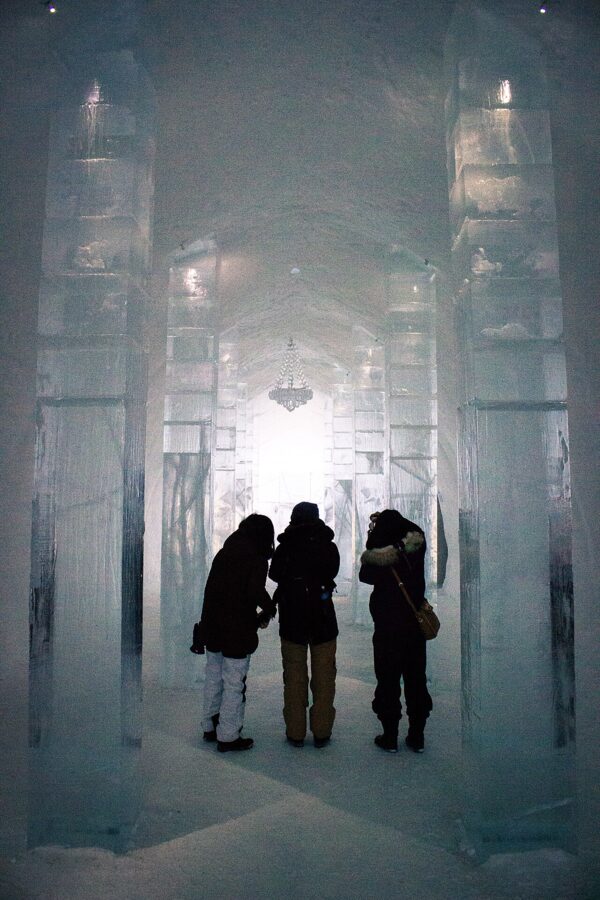
The day runs to a fixed shape. Warm rooms are ready from 15:00. The cold rooms belong to day visitors until 18:00, when the hotel closes to the public and overnight guests can go to their rooms. Before that you are briefed on how to sleep in the cold, pick up your sleeping bag, and are given a locker or booth in Riverside, the warm building on the riverbank with the toilets, showers, saunas and luggage store.

The cold rooms have no toilets, no sockets and no luggage space, so the evening is a short list:
- Charge your phone and camera at Riverside; there are no power points anywhere in the ice.
- Take a sauna and get properly warm and dry before bed, because damp skin is what makes you cold.
- Change into a wool base layer, thick wool socks and a hat. That is all most people wear inside the sleeping bag; add a sweater if you run cold, and leave the down jacket off, since a sweating sleeper wakes up chilled.
- Carry a small bag with only what you need overnight. The rest stays in the locker.
- Know the route to Riverside. A night-time trip to the toilet means putting boots and the borrowed overalls back on and walking across.
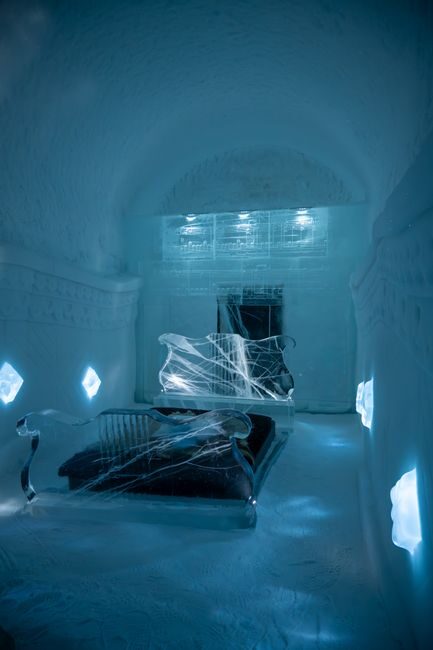
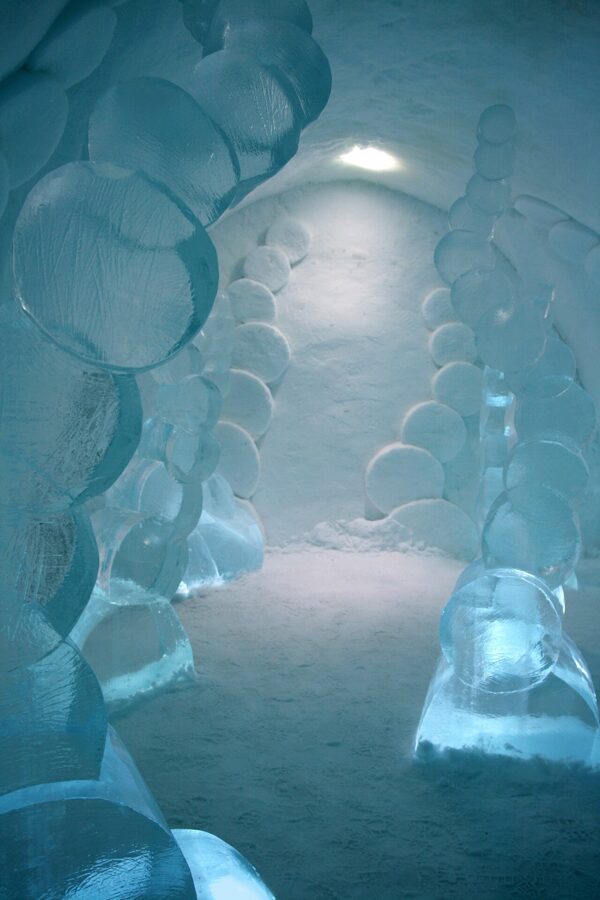
The bed is a block of ice with a wooden frame on top, a thick mattress, reindeer hides and pillows. Icehotel’s sleeping bags are rated to minus 25, a long way below the room’s minus five, and the hotel’s overnight guide is plain that the problem is rarely the cold itself. In my view the problem is noise and novelty: the curtains do not stop a neighbour’s voice, and most people sleep in shifts.

The morning is the part people remember. Warm lingonberry juice is waiting in Riverside, the sauna is hot again, and breakfast is in the warm restaurant. Children can sleep in the ice, but Icehotel recommends it only for those over seven.
One practical catch: switching from a cold room to a warm one, or the reverse, leaves a few hours with no room to go back to. Plan an activity into that gap rather than sitting in the lobby. The hotel lends snowmobile overalls, boots and gloves for exactly this, and its clothing advice runs from just below zero down to minus 40.
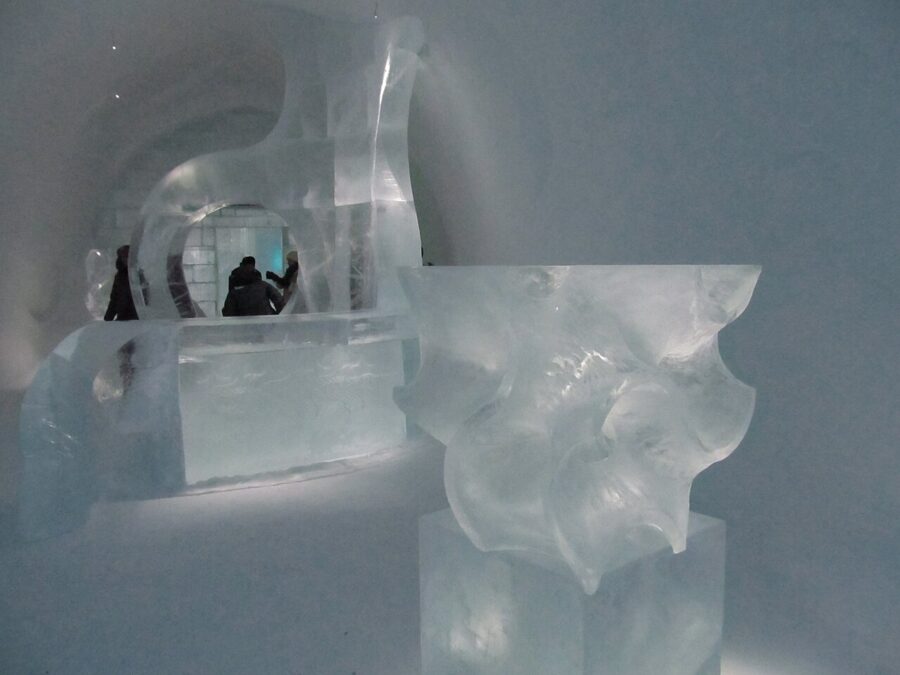

Prices and what is included
Room rates are set per date, per room and per room type on Icehotel’s booking pages, in SEK, and they move with the season, the weekday and how full the hotel is. There is no published rate card, so price your actual dates. The order is predictable: the ice room is the hotel’s standard cold room, the art suites sit above it, and the deluxe suites are its most exclusive rooms and priced that way.
Every room, cold or warm, includes breakfast, entry to both ice buildings, sauna access at Riverside, the loan of a snowsuit and boots, wifi and free parking. Activities and dinner are extra unless you book a package. The winter package, for example, combines one cold and one warm night with the ice menu, a dog-sledding tour, a snowmobile aurora safari with dinner, and ice sculpting; between April and June and between August and November the hotel runs without full service, which is worth asking about before you book a shoulder-season stay.
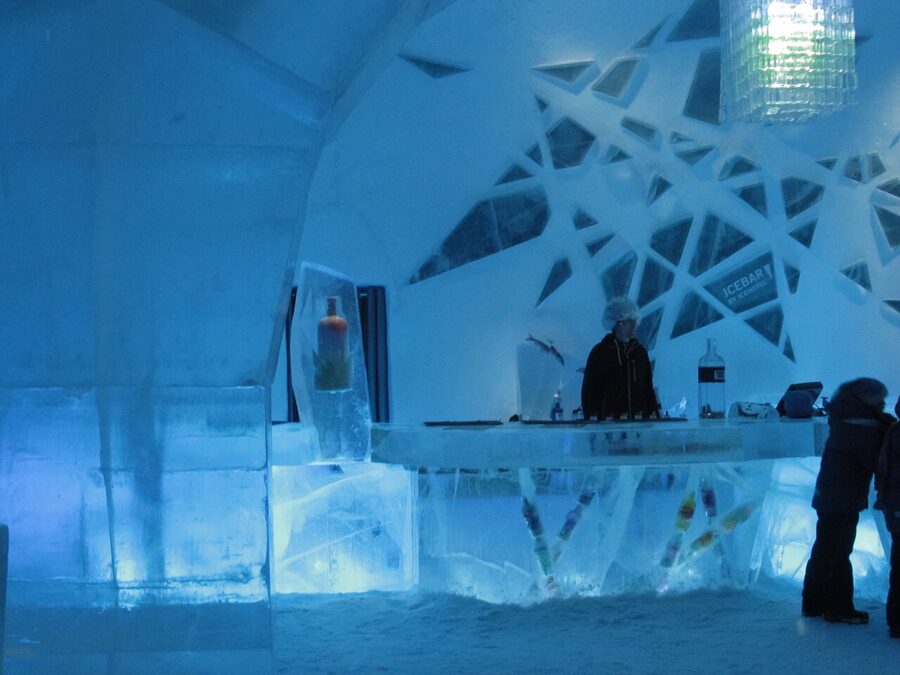

Day visits
You do not need to stay the night to see the ice. Day tickets are sold at the door or online, the site is cash-free, and overnight guests get in free. For the season running 13 April to 30 November 2026, Icehotel’s tickets and opening hours list:
| Ticket | Price |
|---|---|
| Adult | SEK 325 |
| Student or senior | SEK 225 |
| Child, 4–12 | SEK 39 |
| Child, 0–3 | Free with a paying adult |
| Group of 10 or more | SEK 275 per person |
The winter ticket, which adds the seasonal hotel, costs more; Kiruna Lapland’s Icehotel entry listing gives SEK 375 for an adult and SEK 275 for students and seniors. In winter 2026–27 the art exhibition is open 10:00–18:00 from 12 December, and the overnight guests take over at 18:00. Give it two hours; the ice bar and the Experience Room in Icehotel 365 are part of the same ticket.
Getting there from Kiruna
Everything runs through Kiruna. The town is the airport, the station and the bus hub; Jukkasjärvi is a turn off the E10 a quarter of an hour east. Icehotel’s travel page covers all the options, and this is how I would use them.
By air
SAS and Norwegian fly from Stockholm Arlanda to Kiruna Airport in about 90 minutes. For winter 2026–27 Icehotel also lists direct flights from Copenhagen with SAS and from Düsseldorf with Eurowings; check those on the airlines’ own schedules before you plan around them. The airport is about 15 minutes from the hotel by road.
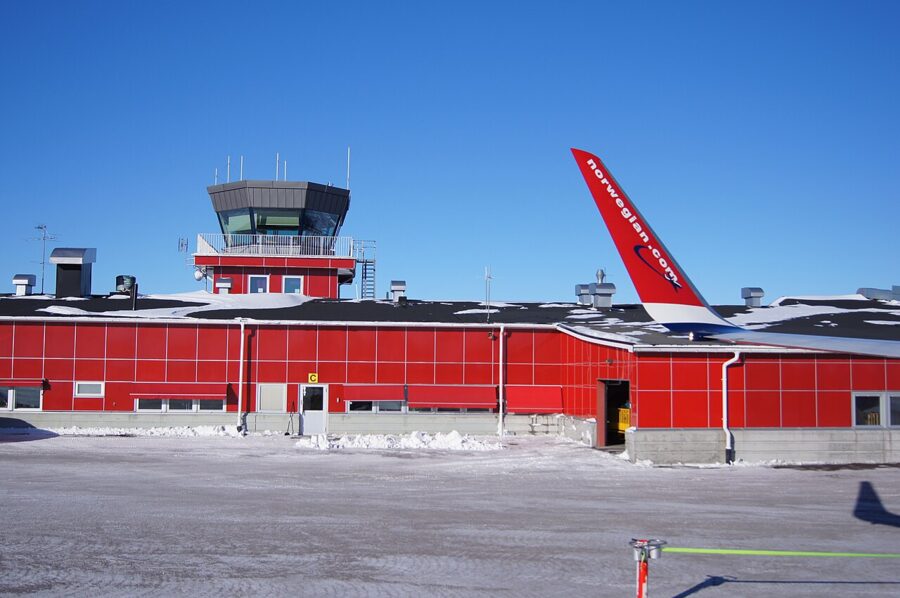

By night train
The train from Stockholm Central to Kiruna takes around 14 hours, depending on the departure and the route; Kiruna Lapland says the night train has two departures a day. SJ has run the line’s night trains since December 2024, and its site sells the through tickets, including from Narvik or Luleå. Timetables reset each December, so check that your date shows a through train, not a change, before you book a sleeper.
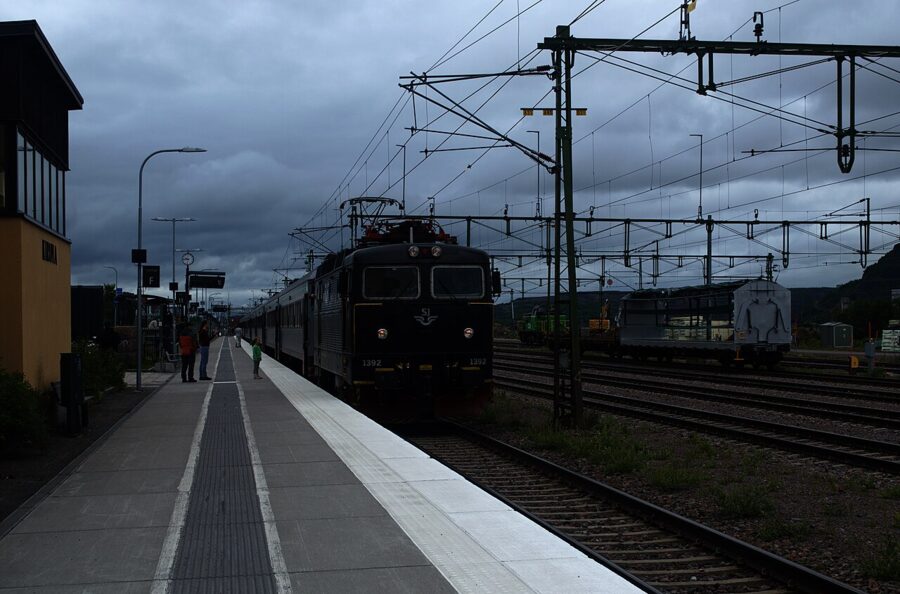

Transfers, taxi and bus 501
Icehotel runs its own transfer bus and taxis from the airport and the station in the winter season only, and you must book by 15:00 the day before you arrive. From December to April you can also arrive by dog sled from the airport, a ride of about 75 minutes. Out of season, or on a budget, take a taxi or the bus.
Länstrafiken Norrbotten’s bus 501 runs from Kiruna to Jukkasjärvi, with a stop at Icehotel. You pay by card on board and need no ticket in advance, but departures are limited and thin at weekends, so read the timetable for the day in both directions before you rely on it. Kiruna Lapland’s Jukkasjärvi page has the current route details.
By car
From Kiruna, follow the E10 towards Luleå and turn off at the signs for Jukkasjärvi; the hotel is at Marknadsvägen 63. The E10 also links west to the E6 in Norway, which makes Icehotel an easy add-on to a road trip from Narvik. Watch for reindeer and moose on the road; Icehotel’s own directions warn about both.
Around Jukkasjärvi
Jukkasjärvi means “meeting place by the water” in Northern Sámi, and it was a market and trading village on the Torne long before anyone froze a hotel there. Its older houses, its church and the old market ground are all within about a kilometre of the ice, along the same village street.

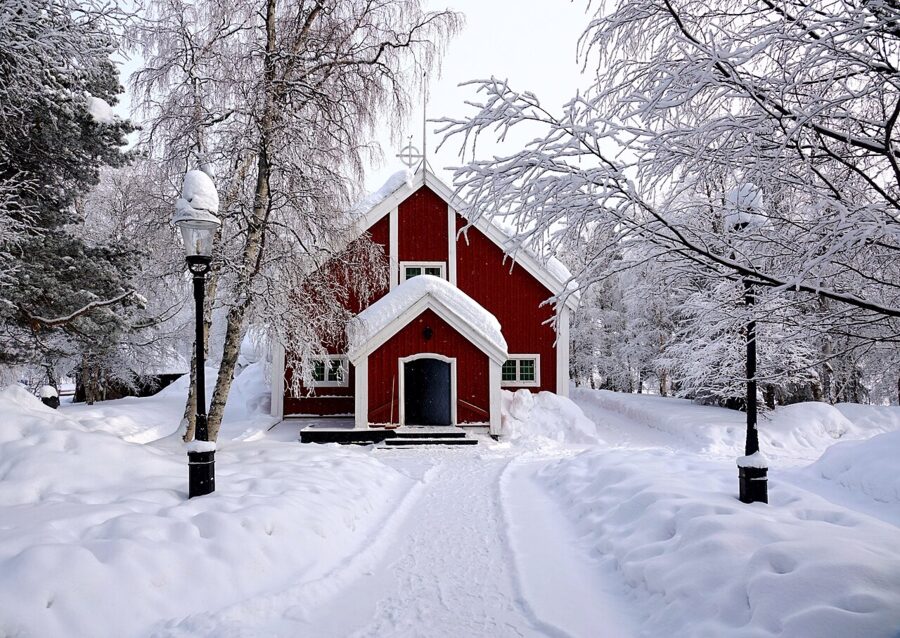
Jukkasjärvi church
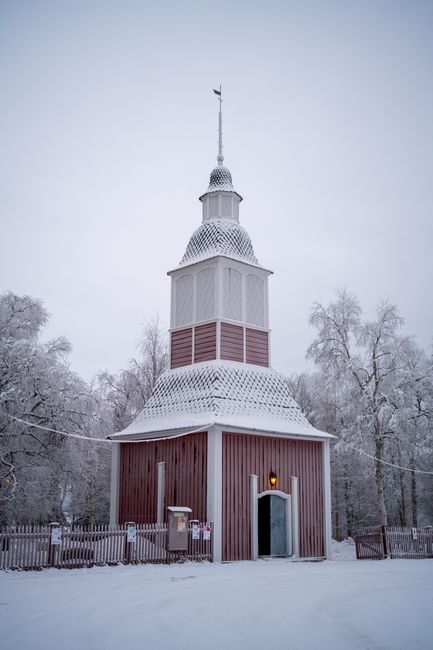
The red timber church at the far end of Marknadsvägen from the hotel is the oldest church in the province of Lapland. Its middle section dates from about 1607, the chancel and porch from a rebuilding in 1726, and the free-standing bell tower from the 1740s; it is the only church in Sweden built in this timber-box construction that still stands. The church is open daily, year-round, with a guide in summer, and the parish’s page on the church has the detail.

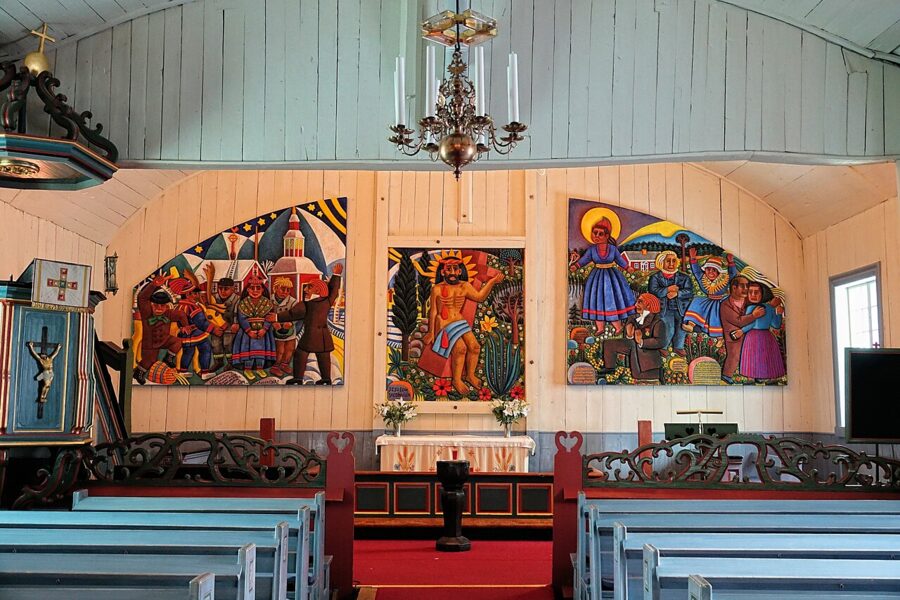
Go inside for the altarpiece. Bror Hjorth made it as a triptych carved in teak, a gift from the mining company LKAB for the church’s 350th anniversary in 1958, and its side panels tell part of the life of the preacher Lars Levi Laestadius. The organ, from 1997, uses curly birch, reindeer antler and raw-tanned hide.

Reindeer and the Sámi open-air museum
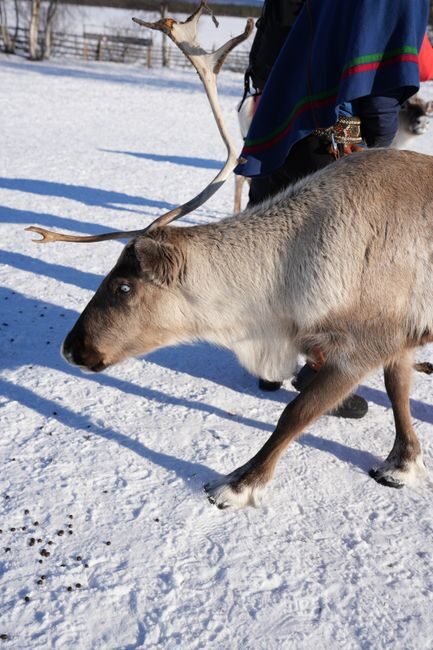
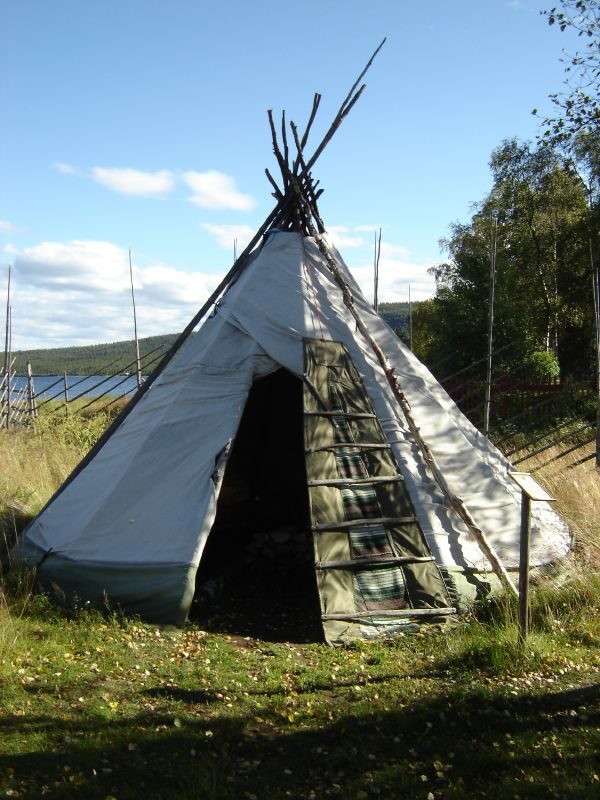
Across the road from the church, Nutti Sámi Siida runs Márkanbáiki, an open-air museum on the old market ground with reindeer in a corral and a café in a large kåta (a Sámi hut). It is open daily from 10:00 to 16:00, with shorter hours on Christmas Eve. The same company runs reindeer sledding and the Reindeer Lodge, where you can sleep in a lávvu, a goahti or a small forest cabin close to the reindeer.

Dog sledding and the northern lights
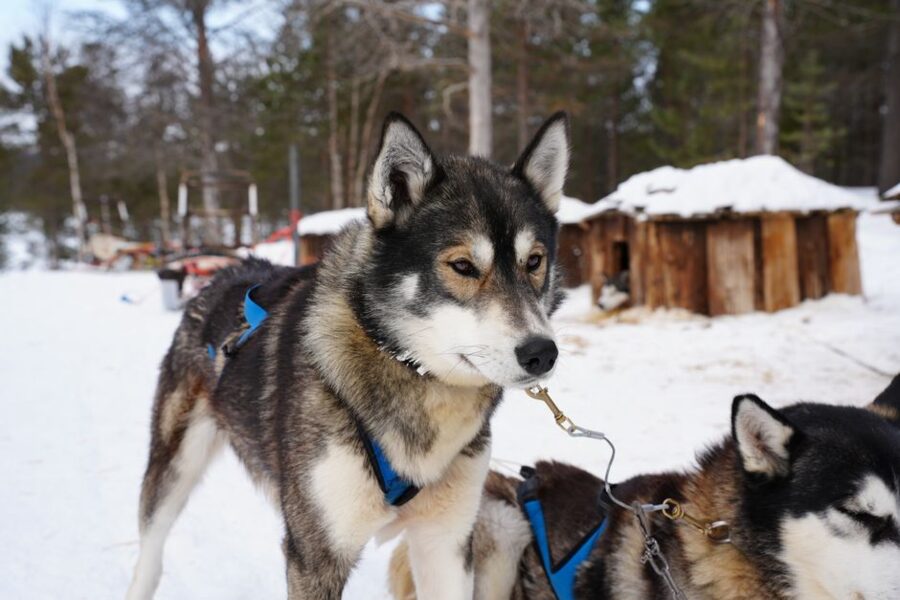
Dog sledding is the activity I would book first. Icehotel runs tours from the hotel, the standard one about an hour and a half, and it is the quietest way to see the forest along the river. Snowmobile tours go further and faster, and the evening ones double as an aurora hunt.
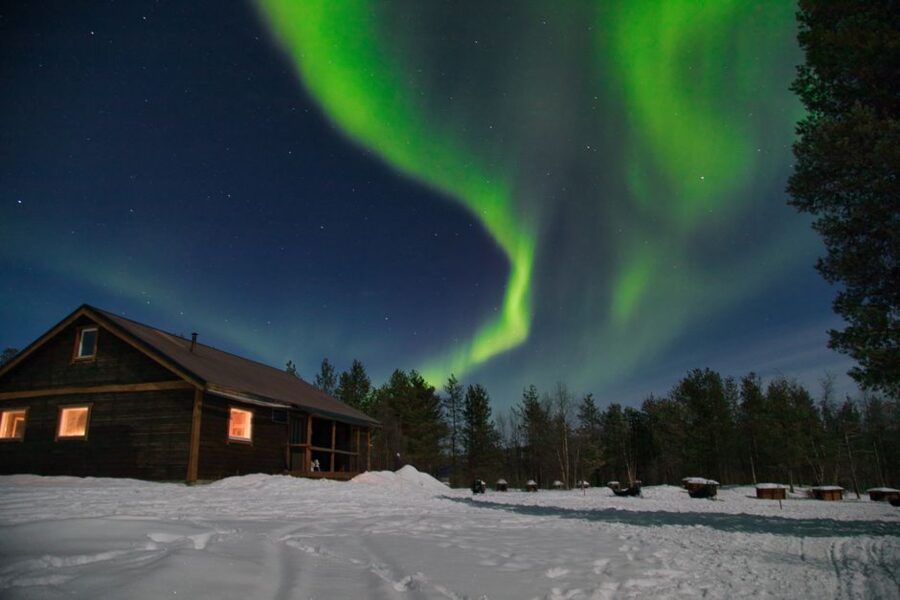
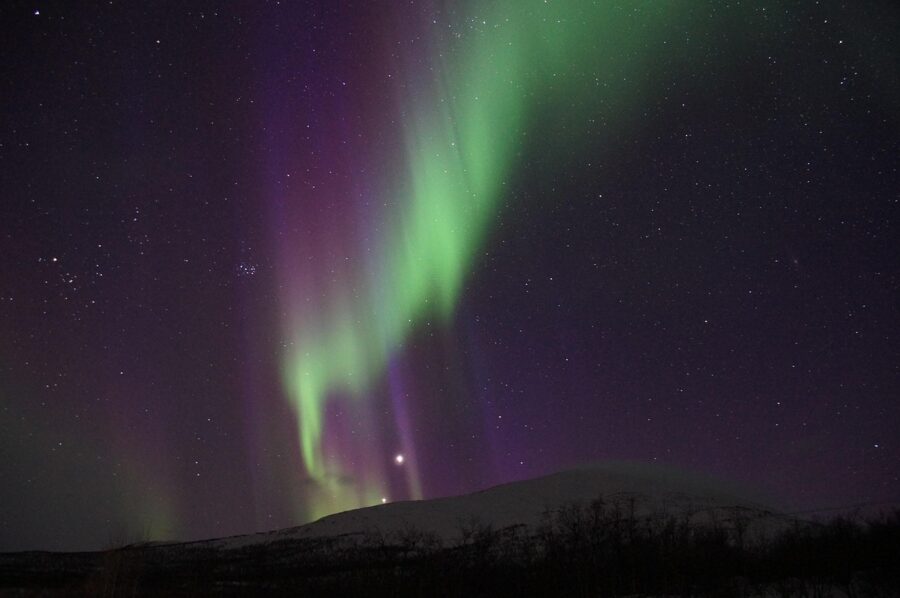
The northern lights are possible between September and March whenever the sky is dark and clear, and Jukkasjärvi has little light around it. No one can promise them. If the sky over Kiruna is cloudy, Abisko, about 100 km north-west on the E10 and the railway, is often clear; the northern lights there have a reputation of their own.
Kiruna, the town that moved
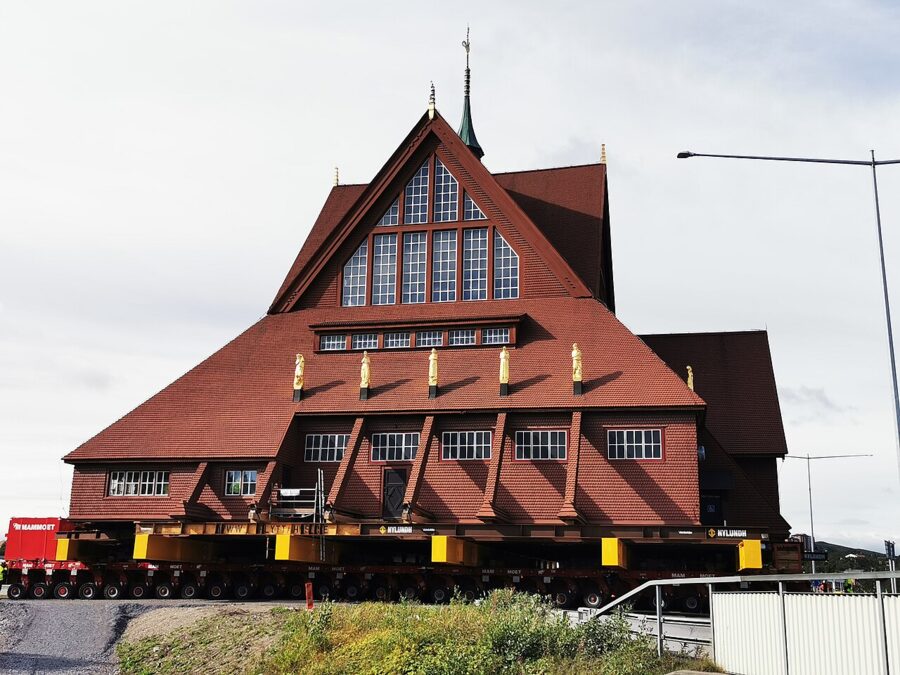
Kiruna itself is worth an afternoon for one reason: the town is being moved. LKAB’s iron ore mine is undermining the ground beneath the old centre, and a new centre has been built about 3 km east, starting with the Kristallen town hall in 2018. In August 2025 the wooden Kiruna church, 672 tonnes of it, was rolled whole about 5 km to its new site between the cemetery and the new centre, over two days; LKAB’s account of the church move has the figures.

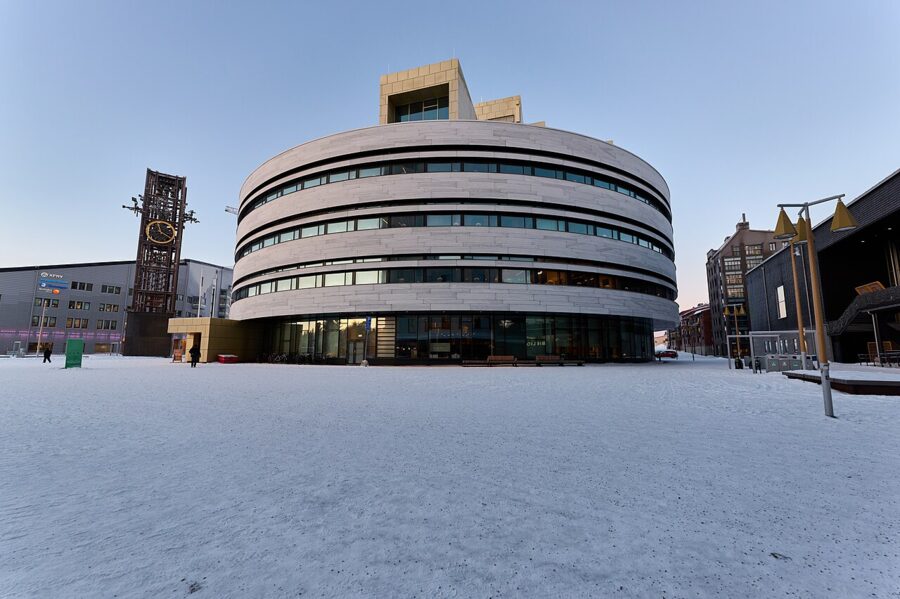
Kiruna Lapland’s page on the town’s transformation lists the guided walks and LKAB’s visitor centre. If one unusual bed is not enough for the trip, Treehotel near Harads and the Arctic glass huts take glamping into the north.
Summer at Icehotel
From about 27 May to 14 July the sun does not set over Jukkasjärvi, 47 days in a row, and the bright nights run on either side of that from late April to late August. Icehotel’s summer season covers late May to August, and the river takes over from the ice: rafting through the Torne’s rapids, fishing for grayling, boat trips, a wilderness dinner at a camp in the forest, and a sauna ritual that ends with a plunge into the river.
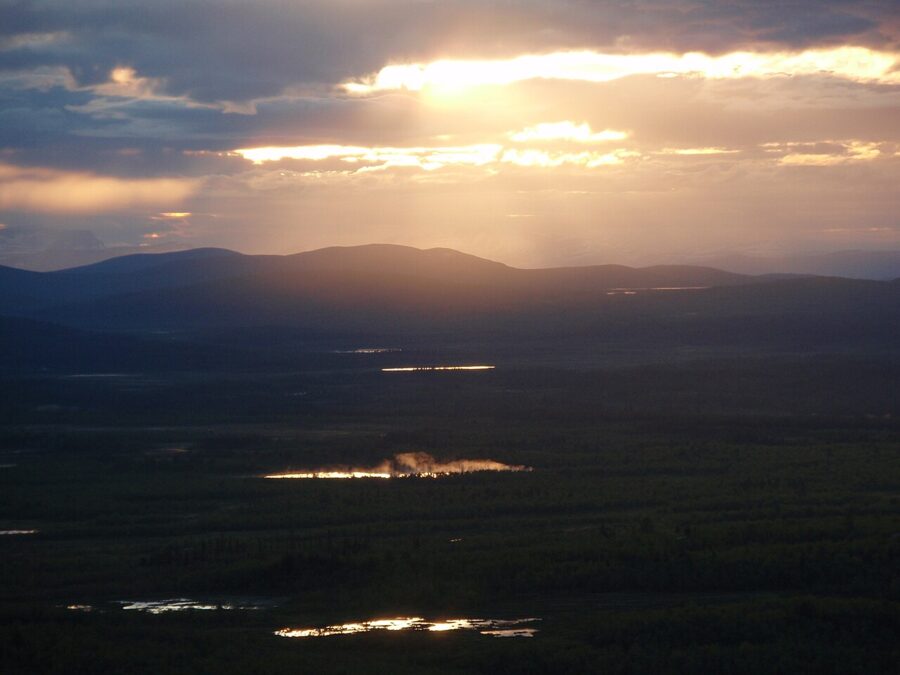

Icehotel 365 stays at minus five through all of it, which is the oddest part of a summer visit: you step out of a warm, bright midnight into a cold, dim suite, and back out again for breakfast in sunshine. The midnight sun guide on the hotel’s site is good on the timings. There are no northern lights between late May and mid-July, since there is no darkness to see them in.
Summer is also the quieter way to do this if the art matters less to you than the place. The rafting and the midnight light are not available in winter, and the reverse is true of the dogs and the winter hotel; plenty of people come back for the other half.
Which month to go
| Month | The ice | Worth knowing |
|---|---|---|
| November | Winter hotel being built; Icehotel 365 open | Artists at work along the river; warm rooms, restaurant and ice bar open as usual |
| December | ICEHOTEL 37 opens 11 December 2026, in sections | The sun stays below the horizon for a few weeks around the turn of the year |
| January | Winter hotel complete | Daylight returns; the coldest stretch, and Icehotel warns of minus 30 |
| February | Winter hotel complete | Longer days, good for dogs and aurora in the same trip |
| March | Winter hotel complete; the ice harvest for next winter starts in March or April | Bright days on snow; bring sunscreen |
| April | Winter hotel closes during the month | Icehotel 365 alone from mid-April |
| Late May–August | Icehotel 365 only | Midnight sun about 27 May–14 July; rafting and river trips |
For a first visit I would pick February or March. The building is finished, the days are long enough to do something with, and the nights are still dark for the sky. December has the opening and the polar dark, which some people come for, but the hotel may not have every room ready in the first week.
If you want to see the ice being cut, come late in March and walk down to the river in the morning. If the harvest has started, the saws will be working on the blocks for ICEHOTEL 38, and the river under your boots will be in the walls of next winter’s suites.